ICE Is Spiking Its Use of Flock Cameras to Apprehend Immigrants
US Immigration and Customs Enforcement is using local police proxies to query Flock Safety's network of over 100,000 automated license plate reader cameras.
By Dillip Chowdary • Nov 29, 2026 • Source: futurism.com
At a glance
- Product
- Automated license plate readers
- Camera network
- Over 100,000 cameras nationwide
- Agency involved
- US Immigration and Customs Enforcement
- Vendor status
- No direct Homeland Security contract
- Congressional action
- Late-October oversight letter sent
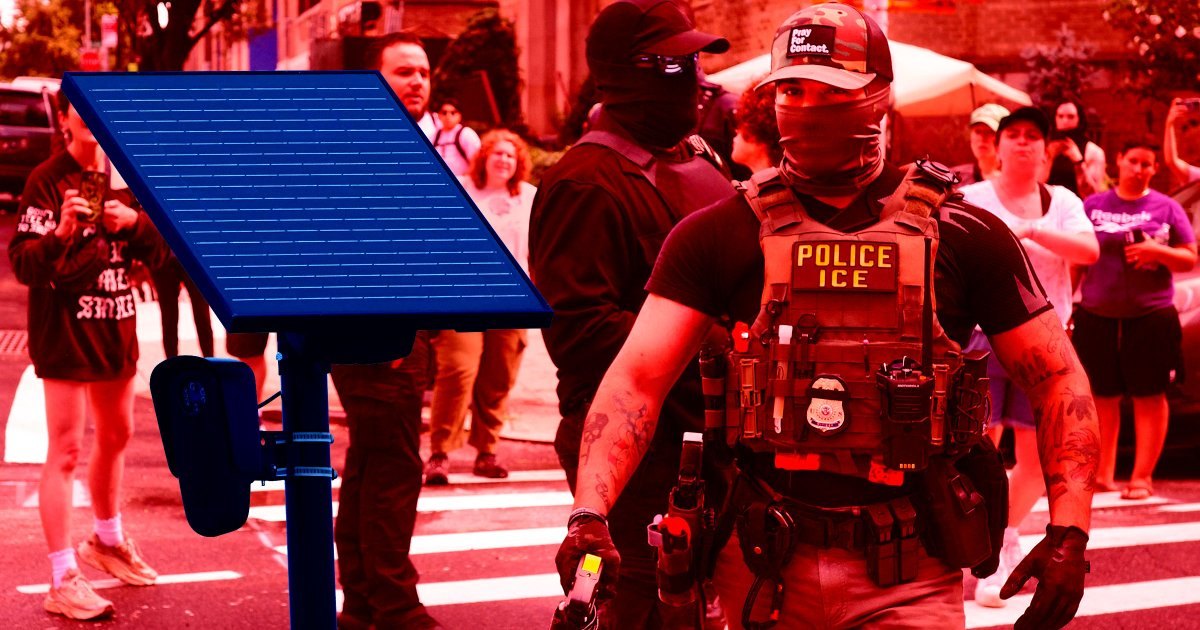
United States Immigration and Customs Enforcement has accelerated its deployment of artificial intelligence camera tracking networks to locate immigrants across the country, according to futurism.com's report on license plate monitoring partnerships. Surveillance technology firm Flock Safety has emerged as a central tracking provider for federal immigration officers operating under the Trump administration. While federal immigration authorities intensify vehicle tracking programs, the private surveillance provider continues to operate automated vehicle detection hardware across municipal and suburban jurisdictions.
This report breaks down the proxy lookup mechanisms federal agents use to query municipal surveillance databases, the scale of regional camera grids, and the regulatory disputes emerging over automated surveillance. It serves engineering teams, policy analysts, and municipal authorities evaluating the technical safeguards, compliance boundaries, and public data sharing protocols governing private camera hardware.
01Automated plate readers and nationwide camera deployments
Flock Safety maintains a rapidly expanding footprint of automatic license plate readers installed across municipal roadways, residential neighborhoods, and business districts nationwide. The company has deployed well over 100,000 motion-activated cameras across the United States to capture license plates and vehicle characteristics continuously. Immigration officers increasingly rely on this extensive automated vision network to locate target individuals and monitor regional vehicle movement patterns.
Federal immigration operations under the Trump administration have systematically integrated automated license plate detection data into routine field enforcement actions. Federal agents have conducted thousands of plate lookups across the commercial camera footprint to identify vehicle locations without maintaining direct camera ownership. This widespread usage transforms neighborhood traffic monitoring cameras into an ad hoc tracking network for federal deportation and apprehension units.
The rapid scaling of private camera networks creates a dense web of location sensors spanning thousands of American towns and cities. Because regional installations operate in both urban centers and suburban intersections, camera sensors generate persistent records of vehicle travel across geographic boundaries. Immigration authorities leverage this density to reconstruct travel routes and establish vehicle locations across states.
02Local police proxies and lookup requests
Federal agents bypass direct vendor restrictions by relying on state and municipal police departments as intermediary points of access. American Civil Liberties Union senior policy counselor Chad Marlow detailed how federal immigration personnel ask local police officers to submit search queries on their behalf. This informal proxy arrangement allows federal officers to access Flock Safety camera records without establishing a direct institutional portal.
By routing search requests through cooperative local police departments, federal immigration authorities tap into private camera feeds across jurisdictions that have no federal data-sharing mandate. Local officers execute the database queries through their municipal agency accounts, then forward the captured vehicle hits and location histories back to federal agents. This proxy workflow allows federal investigators to pull location intelligence across municipal databases instantly.
The reliance on municipal intermediaries creates an informal data pipeline that operates largely outside conventional inter-agency data agreements. Local police departments provide federal agents with real-time access to automated license plate detections captured across surrounding neighborhoods. This proxy mechanism effectively circumvents local oversight ordinances designed to limit municipal assistance in federal immigration enforcement activities.
03Investigation logs and search filter workarounds
Advertisement
Tech Pulse Daily
Get tomorrow's pulse first
Join engineers who read Tech Pulse before stand-up. Free, weekday mornings.
Flock Safety incorporates software filters and input safeguards intended to restrict users from conducting system searches based on immigration status. Despite those interface rules, federal and municipal officers routinely bypass search restrictions by entering meaningless placeholder text into required query fields. System controls fail to validate the legitimacy of entered case details, allowing personnel to initiate lookups with virtually no oversight.
Chad Marlow noted that internal audit logs revealed officers entering minimal or dismissive entries into mandatory search justification fields. Documented search records showed officers entering generic terms like investigation, or informal strings such as hehehe and LOL, into the reason prompts. Marlow explained that the platform provides no actual speed bumps to stop unauthorized or inappropriate searches from proceeding.
The absence of automated input validation means that policy-based query restrictions fail to function as effective operational guardrails. Officers can satisfy system prompts by typing arbitrary characters, granting them unrestricted access to historical plate captures and vehicle tracking records. The technical shortfall leaves the system vulnerable to unauthorized tracking while maintaining the outward appearance of access restrictions.
04Federal vendor contracts and homeland security boundaries
Flock Safety publicly emphasizes a strict legal boundary between its commercial operations and federal immigration authorities. Company spokesperson Courtney Terlecki stated that Flock Safety is the only major license plate reader provider that does not hold a direct contract with the Department of Homeland Security. This commercial positioning allows the firm to market its services to local municipalities while disavowing formal ties to federal deportation initiatives.
Note: Flock Safety maintains that it has no direct contractual relationship with the Department of Homeland Security. Despite that separation, the vendor continues to benefit from increased system utility among municipal law enforcement clients who regularly support federal tasks. The proxy search architecture allows the firm to protect its commercial branding while expanding the functional reach of its automated camera platform.
The contrast between contractual status and day-to-day database utilization highlights a major gap in modern surveillance governance. While Flock Safety avoids direct federal vendor audits, its municipal clients continue to funnel critical vehicle telemetry to immigration agents upon request. This dynamic allows private surveillance firms to claim non-involvement in controversial federal operations even as their hardware powers nationwide tracking efforts.
05Congressional oversight letters and surveillance inquiries
Federal lawmakers have mounted formal pushback against the unregulated sharing of automated license plate data between local police and immigration personnel. A coalition of approximately three dozen congressional representatives addressed a late-October letter to acting ICE director David Venturella demanding accountability for the program. Lawmakers warned that the arrangement constitutes an unauthorized expansion of domestic surveillance capabilities across American communities.
The congressional coalition argued that obtaining unrestrained surveillance data without judicial authorization, contractual safeguards, or public transparency represents far more than a minor procedural lapse. In their letter to Venturella, lawmakers stressed that the practice reflects the quiet expansion of a federal surveillance apparatus operating beyond meaningful public oversight. The inquiry questions whether federal agencies can lawfully exploit municipal technology relationships to evade statutory surveillance limits.
Legislators and civil rights advocates continue to demand clearer reporting mechanisms and enforceable technical barriers to prevent unauthorized federal queries. As municipal camera networks expand, privacy advocates urge local city councils to reevaluate their technology contracts and audit local data access. Future regulatory scrutiny will likely focus on closing third-party proxy lookups and establishing mandatory compliance verification across law enforcement networks.
Frequently asked questions
How does ICE access Flock Safety license plate cameras?
ICE agents ask state and local police officers to run plate lookups on their behalf as proxies. This arrangement allows federal agents to access Flock Safety records without maintaining a direct contract with the company.
How many cameras does Flock Safety operate in the United States?
Flock Safety has deployed well over 100,000 automatic license plate reader cameras across the country.
Does Flock Safety have a direct contract with the Department of Homeland Security?
Flock Safety spokesperson Courtney Terlecki stated that the company is the only major license plate reader provider without a contract with the Department of Homeland Security.
What search safeguards exist in the Flock Safety system?
The platform includes safeguards meant to restrict searches for terms like immigration, but users bypass them by entering text such as investigation, hehehe, or LOL. ACLU counselor Chad Marlow stated that the system contains no actual speed bumps to stop those queries.
Sources

Author
Dillip Chowdary
Writes Tech Bytes coverage of AI, engineering, and the tools that actually ship. Editor of Tech Pulse Daily.
Related on Tech Bytes
Advertisement