If Snap’s Specs are still ridiculously expensive, they’re also a lot
Snap opened pre-orders for its $2,200 Specs AR glasses ahead of a fall launch, cutting frame weight down to 132 grams while adding dual frame sizes.
By Dillip Chowdary • Nov 08, 2026 • Source: TechCrunch

Snap opened pre-orders for Specs, its long-gestating augmented reality glasses, following a public debut hosted by Chief Executive Evan Spiegel ahead of a broader consumer market launch scheduled for this fall. Priced at $2,200, the hardware represents the company's ambitious bid to commercialize an optical platform that management explicitly bills as a new kind of computer. Detailed hands-on evaluations, including TechCrunch's report, show that the hardware has undergone an extensive mechanical overhaul since initial prototypes appeared earlier in the year at CES in Las Vegas, shifting from an unwieldy development rig into a noticeably more wearable consumer frame.
This comprehensive analysis breaks down the physical engineering refinements, the current software capabilities, and the practical value proposition of Snap's latest AR investment. The assessment examines who can realistically benefit from the headset today, weighing media streaming and capture against office productivity and interactive gaming. It is written for prospective buyers, software developers, and enterprise technologists who want to understand whether Snap's ergonomics and feature set justify a $2,200 hardware commitment before committing capital or engineering hours to the emerging ecosystem.
If Snap’s Specs are still ridiculously: what actually changed
Snap significantly overhauled the industrial design of the glasses between early engineering prototypes shown at CES in Las Vegas and the production hardware demonstrated in late October at a Four Seasons in downtown San Francisco. Earlier units weighed approximately 8 ounces, squeezed the user's face uncomfortably, and suffered from severe thermal dissipation issues that generated skin-tingling heat during intensive on-device processing. The revised commercial model weighs 132 grams, or roughly 4.6 ounces, cutting mass nearly in half while maintaining a completely self-contained architecture that eliminates the external cables or battery tethers seen on competing platforms.
The physical frame also introduced mechanical additions designed to improve daily usability across a wide variety of facial structures. Snap manufactured the glasses in two distinct chassis sizes, 47mm and 52mm, ensuring that optical elements align accurately without pinching or sliding off narrower head profiles. The assembly incorporates flexible spring hinges that absorb lateral stress when slipping the glasses on or off. During hour-long operating trials, the newly engineered enclosures prevented the processors from overheating, entirely resolving the facial heat build-up that plagued the prototypes seen earlier in the year.
If Snap’s Specs are still ridiculously: how it works
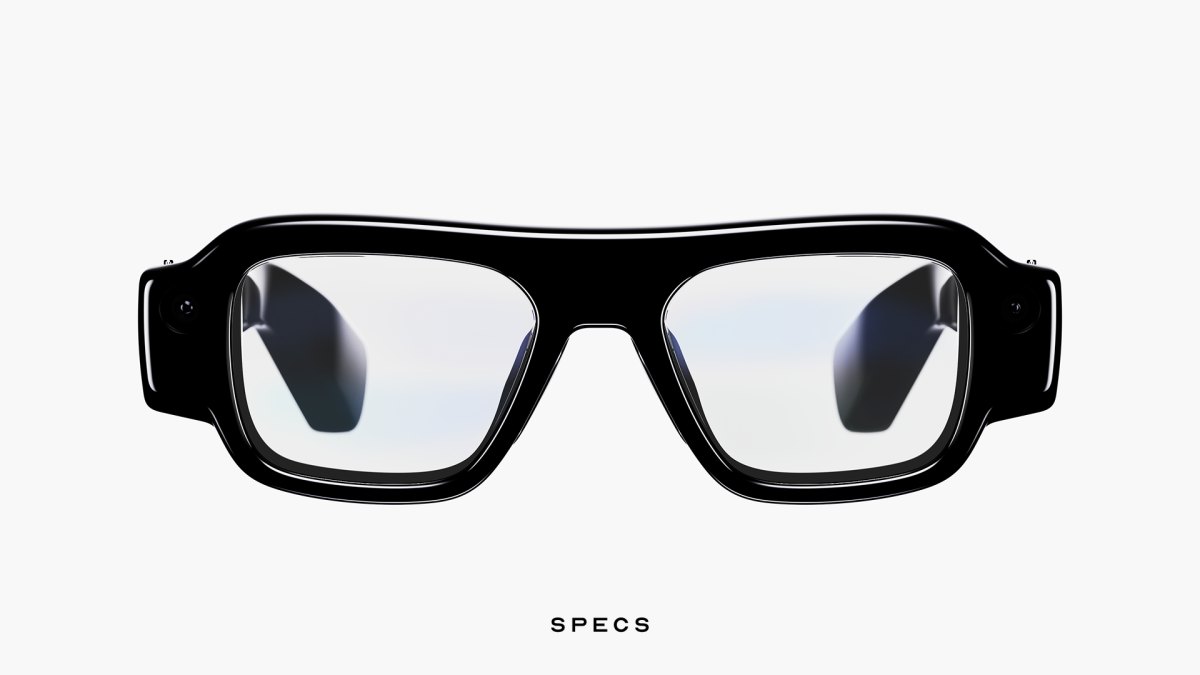
Snap built the glasses around a collection of display engines, spatial sensors, and capture cameras designed to blend digital graphics directly over the physical environment. Software layers allow wearers to access dedicated integrations for services like YouTube and HBO Max, turning idle transit time on buses or trains into private theater displays that lock visual media directly into the wearer's forward visual field. Because the digital overlay anchors firmly in space, reading extended text documents, digital news feeds, or Kindle-style readers feels like focusing on an immovable pane, concentrating visual attention without requiring a handheld screen.
The device also integrates outward-facing camera sensors that capture point-of-view photographs and wide-angle video clips reminiscent of wearable action cameras like a GoPro. Wearers can record short clips hands-free and immediately dispatch them to friends via text messaging. Beyond standalone playback and camera tools, the glasses feature advanced spatial syncing technology. This system tracks positioning and virtual geometry across local networks so that two nearby users wearing Specs can observe, manipulate, and inspect identical virtual objects at the exact same moment in shared physical space.
Advertisement
Tech Pulse Daily
Get tomorrow's pulse first
Join engineers who read Tech Pulse before stand-up. Free, weekday mornings.
If Snap’s Specs are still ridiculously: why it matters
Snap is attempting to establish standalone AR eyewear as a viable commercial category before traditional computing form factors lose their dominant consumer position. However, while the engineering team solved major thermal and weight obstacles, the device still suffers from an ambiguous software identity that makes the $2,200 asking price difficult to rationalize. When questioned directly regarding whether the hardware primarily targets entertainment or office work, company staff offered vague descriptions, leaving Specs feeling like an experimental multi-tool that attempts dozens of tasks simultaneously without mastering an essential everyday function.
The high purchase price also places the hardware in direct tension with specialized productivity and entertainment devices that consumers already own. Snap claims that the headset can transform almost any location into an immersive, flexible workspace, yet strapping glasses onto one's face and navigating menus with air gestures remains far less efficient than opening a laptop and typing on a physical keyboard. Furthermore, using the glasses as an interactive gaming system falters when dedicated home consoles like an Xbox cost less than half the price while delivering vastly deeper game libraries.
If Snap’s Specs are still ridiculously: who is affected
The immediate audience impacted by this rollout consists of early-adopter technologists, software developers, and frequent travelers who regularly consume content in confined public spaces. Travelers who spend long stretches seated on airplanes, commuter trains, or ride-shares gain a private widescreen monitor that outperforms small smartphone screens for video playback and focused reading. Developers building spatial computing software also receive a stable, wire-free hardware target equipped with multi-user spatial synchronization, allowing them to prototype interactive shared experiences without wrestling with bulky tethered enterprise visors.
Conversely, standard desk workers and corporate enterprise buyers are unlikely to adopt Specs into daily productivity workflows. The social friction of wearing prominent smart frames in shared offices, combined with the awkwardness of gesticulating in mid-air to manage digital windows, presents a significant barrier to mainstream workplace normalization. Mainstream mobile gamers and teenagers will likewise remain excluded by the $2,200 barrier to entry, ensuring that Snap's user community remains restricted to hardware enthusiasts and well-funded technical creators throughout the initial retail phase.
If Snap’s Specs are still ridiculously: what to watch
Industry observers should monitor how aggressively Snap attracts top-tier media and productivity partnerships following the headset's formal retail rollout this fall. While initial integrations with YouTube and HBO Max establish a strong entertainment baseline, the platform requires dedicated reading integrations, such as Kindle or major newspaper publishers, to solidify the device as a serious mobile utility. Observers should also track whether developer studios make practical use of the platform's multi-user spatial synchronization to construct cooperative applications that move beyond brief tech demos into functional enterprise software.
Finally, pricing and product iteration will dictate whether the line survives over the long term or remains an expensive curiosity. As manufacturing techniques mature and software updates roll out, Snap will need to demonstrate whether it can bring lower-cost variations to market that match the entry pricing of mobile phones and gaming hardware. Observers will be watching post-launch sales indicators closely to see if consumer interest expands beyond early Silicon Valley adopters, or if Snap must once again pivot its product roadmap to find a sustainable mass audience.
Developer Action Items
- ☐ Verify the claim on the official If Snap Specs still page (or TechCrunch), not from this recap alone.
- ☐ Name the surface that moved — API, policy, model, hardware, or commercial terms — before you Slack the thread.
- ☐ Assign one owner a day to read the primary material and decide: this-sprint, this-quarter, or noise.
- ☐ Do not change production on day-one coverage. Watch the vendor changelog and one independent write-up first.
If Snap’s Specs are still ridiculously FAQ
How much do Snap's new Specs glasses cost?
The glasses cost $2,200 per unit, and pre-orders began following a public debut led by CEO Evan Spiegel ahead of their fall launch.
How much do the new Specs weigh compared to earlier prototypes?
The production model weighs 132 grams (approximately 4.6 ounces), which is nearly half the weight of the previous 8-ounce prototype seen at CES.
What physical sizes are available for Snap Specs?
Snap offers the frames in two sizes, 47mm and 52mm, both featuring built-in spring hinges to fit different head shapes and sizes comfortably.
What media apps work on the glasses?
The headset features direct software integrations for streaming services like YouTube and HBO Max, allowing users to watch content on an immersive virtual display while traveling.
Sources

Author
Dillip Chowdary
Writes Tech Bytes coverage of AI, engineering, and the tools that actually ship. Editor of Tech Pulse Daily.
Related on Tech Bytes
Advertisement