iFixit’s look inside the iPhone Duo may explain those broken screens
An iFixit teardown gives Apple's iPhone Duo a 5/10 repairability score, showing a complex hinge and accordion cable that may trigger reported screen cracks.
By Dillip Chowdary • Oct 25, 2026 • Source: The Verge

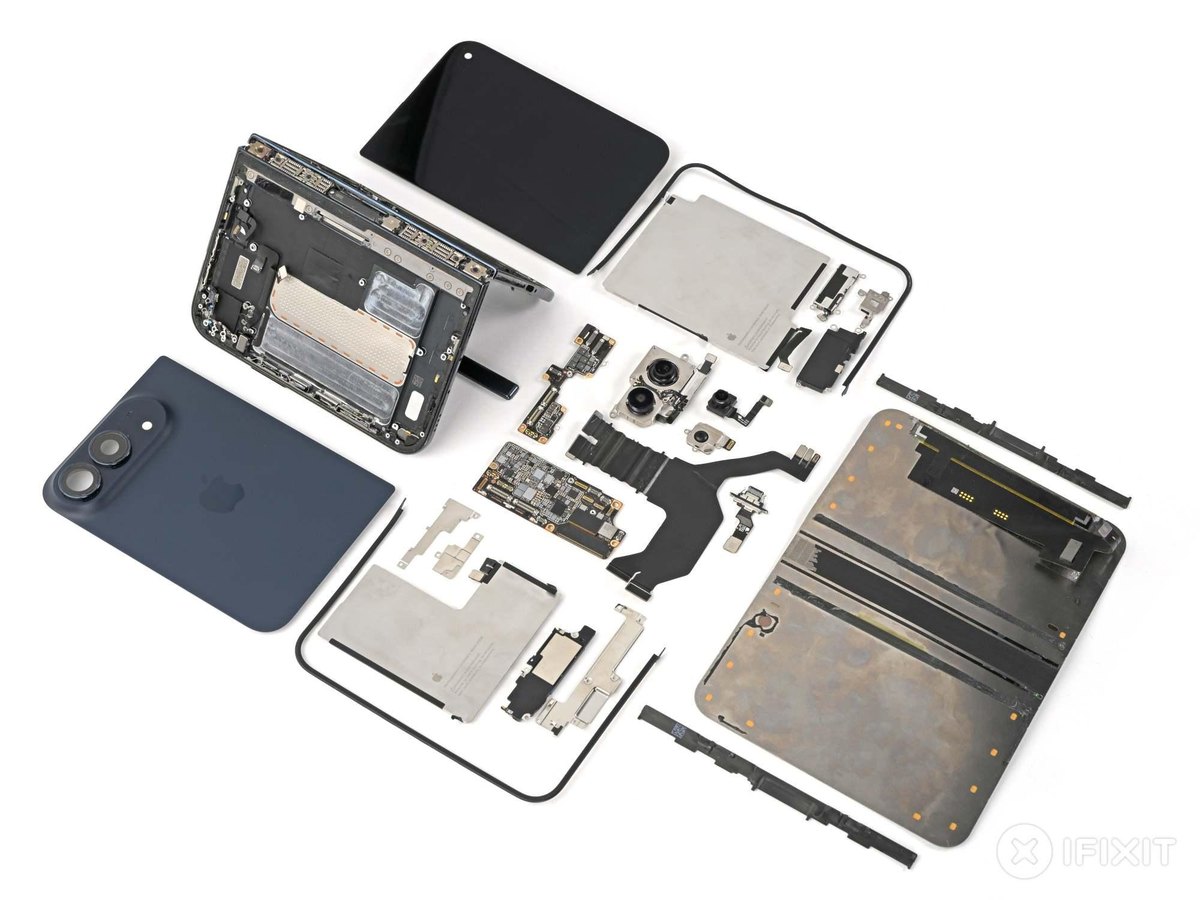
Apple introduced the iPhone Duo as its first foldable smartphone, and repair firm iFixit dismantled the device to evaluate its internal hardware. As detailed in The Verge's report, the teardown awarded a 5/10 repairability score, the highest mark the organization has granted to a foldable phone. The analysis reveals how Apple conceals the display crease while exposing structural pressure points that may cause cracked screens and broken hinges.
This report breaks down the internal engineering, screen reflection masking, dust resistance, and mechanical failure risks identified during the teardown. It serves technicians, IT administrators, and prospective buyers evaluating the long-term durability and servicing realities of Apple's folding architecture before committing capital to the platform.
IFixit’s look inside the iPhone Duo may: what actually changed
The physical architecture of the iPhone Duo establishes a fresh precedent by securing a 5/10 repairability score from iFixit. While five out of ten remains modest compared to conventional smartphones, it stands as the highest score the repair outfit has awarded to a foldable yet. Previous folding handsets suffered from glued chassis construction and inaccessible internal components that made repair work destructive. Apple achieved this score by incorporating modular design choices that permit technicians to access internal modules without ruining neighboring components.
The most notable structural shift appears on the folding display, where Apple separated the protective surface from the emissive panel beneath. Technicians discovered that the screen features a matte nano-texture cover layer that can be removed and replaced without swapping out the underlying OLED panel. On rival foldables, superficial surface scratches demand a full display replacement assembly at extreme cost. By decoupling these layers, Apple enables technicians to address surface abrasions independently, sparing owners the expense of replacing the delicate folding OLED substrate underneath.
IFixit’s look inside the iPhone Duo may: how it works
Apple designed the internal folding display to disguise its center crease through deliberate light scattering. The display utilizes a matte nano-texture cover that serves two separate optical functions. In addition to improving readability in bright sunlight by minimizing glare, the textured surface scatters incoming reflections across the panel. Because folding creases are primarily noticeable when ambient light reflects off the curved dip, scattering those light rays diffuses reflections and effectively masks the physical crease down the middle of the display during everyday use.
Under a microscope, examiners uncovered a specialized subpixel layout engineered to eliminate visible artifacts along the hinge line. Technicians found oval-shaped subpixels arranged at varying angles across the flexible screen rather than aligned in uniform rows. iFixit believes this angled subpixel structure was implemented to disrupt visual distortion along the bend. By setting the oval subpixels at differing angles, the panel diffuses straight optical seams, further disguising the crease down the center of the display under direct inspection and changing angles.
Advertisement
Tech Pulse Daily
Get tomorrow's pulse first
Join engineers who read Tech Pulse before stand-up. Free, weekday mornings.
IFixit’s look inside the iPhone Duo may: why it matters now
Environmental sealing plays a decisive role in foldable longevity, and physical testing demonstrated how particulates interact with the moving chassis. When exposed to glow dust during testing, particles entered the USB-C port, speaker grills, and hinge cavity. The intrusion of fine grit produced friction inside the mechanical joint, making the hinge action feeling a bit crunchy. This grit penetration presents ongoing durability concerns, as foreign matter lodged inside a folding spine can eventually exert pressure against the underside of the flexible screen substrate.
Despite grit entering the exterior ports and hinge, internal barrier defenses surpassed competing flagship foldables. The teardown confirmed that noticeably less glow dust penetrated into the interior of the phone compared to Samsung's Z Fold8 or Google's Pixel 11 Pro Fold. While competing handsets allowed substantial particulate matter to migrate deep across logic boards and internal compartments, Apple's tighter chassis sealing restricted inward particle travel. The phone demonstrates improved internal sealing, even though the hinge mechanism itself remains somewhat vulnerable to particulate contamination.
IFixit’s look inside the iPhone Duo may: who is affected
Early adopters of the iPhone Duo face significant structural risks tied to reported screen fractures and hinge failures. Multiple users have documented an audible crack occurring during standard folding operations, followed immediately by black lines or complete failure across the folding display. The issue appears during everyday unfolding motions rather than after physical drops or rough handling. For users who invested in Apple's first folding handset, unexpected screen breakage under normal usage creates immediate functional failure and raises concerns regarding the durability of early production units.
The disassembly revealed an internal arrangement that may explain why these physical failures occur. The hinge mechanism is exceptionally complex, and iFixit suspects that a section of the hinge occasionally fails to descend properly. An accordion cable passes directly over that exact descending point, situated right near the edge of the battery. If that hinge part binds, it can concentrate severe mechanical pressure onto the cable and battery edge, generating the audible crack reported by users and causing the flexible display to fracture.
IFixit’s look inside the iPhone Duo may: what to watch
Long-term repair costs remain a pivotal factor for consumers weighing whether to keep or service the device. While replacing the matte nano-texture cover layer is relatively straightforward, repairing the actual flexible OLED display itself remains an expensive nightmare, just as it is on rival folding hardware. If hinge binding or battery edge pressure damages the underlying emissive panel, owners face major out-of-pocket expenses. Buyers must consider whether third-party repair options or Apple's official repair documentation can offer cost-effective panel fixes over the device's operational lifespan.
The industry is tracking whether Apple will acknowledge these mechanical failures and adjust production tolerances. Following user complaints of cracked screens and iFixit's teardown findings, Apple did not immediately return a request for comment. Observers are watching to see if Apple issues technical service bulletins, revises assembly processes to provide better clearance for the accordion cable, or modifies its warranty policies. Future production revisions will indicate whether the company can resolve hinge binding issues before they cause permanent screen destruction in customer hands.
Developer Action Items
- ☐ Verify the claim on the official Apple page (or The Verge), not from this recap alone.
- ☐ Name the surface that moved — API, policy, model, hardware, or commercial terms — before you Slack the thread.
- ☐ Assign one owner a day to read the primary material and decide: this-sprint, this-quarter, or noise.
- ☐ Do not change production on day-one coverage. Watch the vendor changelog and one independent write-up first.
IFixit’s look inside the iPhone Duo may FAQ
What repairability score did iFixit give the iPhone Duo?
iFixit awarded the iPhone Duo a 5/10 repairability score, making it the highest score the site has granted to a foldable phone yet.
How does the iPhone Duo mask the screen crease?
The phone uses a matte nano-texture cover that scatters reflections in bright sunlight, paired with oval-shaped subpixels angled across the folding display to minimize optical artifacts.
Why are some iPhone Duo screens cracking?
Teardown findings indicate the complex hinge may fail to descend properly, putting concentrated pressure on an accordion cable positioned near the battery edge and leading to an audible crack.
How did the iPhone Duo perform in dust testing compared to rival foldables?
Although dust entered the USB-C port, speaker grills, and hinge, noticeably less glow dust penetrated inside the chassis compared to the Samsung Z Fold8 and Google Pixel 11 Pro Fold.
Sources

Author
Dillip Chowdary
Writes Tech Bytes coverage of AI, engineering, and the tools that actually ship. Editor of Tech Pulse Daily.
Related on Tech Bytes
Advertisement