Vercel introduces eve 1.0: Today we're announcing eve 1.0
Vercel launched eve 1.0 to general availability, cutting agent turn latency to 414ms and lowering 50-turn session workflow execution costs by 76% to 1.3¢.
By Dillip Chowdary • Nov 18, 2026 • Source: Vercel Blog
At a glance
- Product
- eve open-source agent framework
- Version
- 1.0.0
- Availability
- Generally available
- Release date
- November 15, 2026
- Execution pricing
- 1.3¢ per 50-turn session on Vercel Workflows
- Telemetry privacy
- Metadata only collected by default in production
Vercel has officially launched eve 1.0, making its open-source agent development framework generally available following a public preview in June. As detailed in Vercel Blog's report, the project accumulated more than 230 releases and thousands of merged pull requests during preview testing with early enterprise adopters. The 1.0 release introduces major turn latency reductions, expanded web framework integrations, native OpenTelemetry tracing, and durable execution primitives designed to support autonomous coding agents and production workflows.
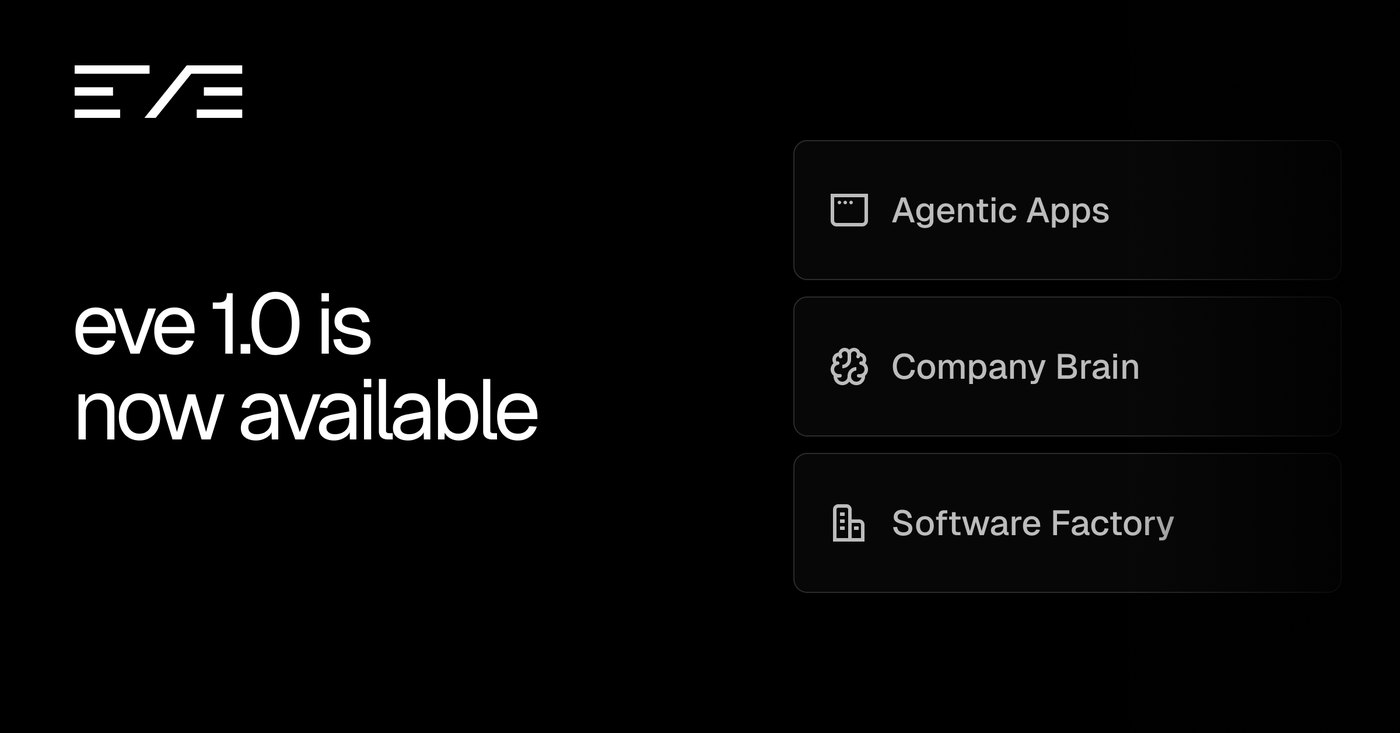
This report breaks down the architectural updates in eve 1.0, including multiplayer session handling, multi-tenant credential isolation, benchmark performance gains, and cloud deployment procedures. The release targets software engineering teams building internal company brains, automated coding factories, and user-facing agentic applications requiring resilient state recovery and granular approval policies across enterprise environments.
01Durable execution loops and enterprise adoption
Vercel's agent engine centers on an open-source execution harness that coordinates model calls, tool executions, and delegated subagent routines. Developers retain full ownership over model selection, tool definitions, system instructions, and human-in-the-loop approval thresholds. Durable execution is maintained through the open-source Workflow SDK, which records intermediate progress at each step so failing agents can automatically resume from their last completed state.
Organizations are applying this architecture to internal automation and customer applications. Accounting platform Rillet assembled an automated software factory on eve that processes incoming customer tickets into tested pull requests, tripling the company's deployment velocity across three months. Data agent monty, built by Clay to answer team inquiries inside Slack, reached active weekly adoption from forty percent of employees within two months.
Software factories built on the platform convert unstructured user requests into verified production code through an automated multi-step development pipeline. The system handles specification generation, testing, and pull request management without requiring continuous developer intervention during execution cycles. This structured delivery flow ensures that all automated code modifications pass quality benchmarks before human review.
- Request conversion Ingest incoming customer feature requests and transform requirements into detailed technical specifications.
- Automated testing Execute comprehensive test suites against agent-generated code modifications in isolated environments.
- Pull request handoff Publish verified code branches as pull requests ready for final human engineering review.
02Multiplayer collaboration and ambient channel routing
Multiplayer sessions enable multiple collaborators to interact with a single agent instance within shared workplace conversations. The framework attributes individual contributions, routes specific approval buttons to designated team members, and isolates memory per user or team. Within Slack threads, participants can provide follow-up instructions without repeating agent mentions, monitor real-time task progress cards, or terminate active turns directly from chat.
Ambient mode allows agents to monitor selected communication channels without direct mentions, deciding autonomously when to participate based on predefined channel goals. A lightweight screening model inspects every incoming message before triggering the primary agent, preventing unnecessary token consumption and model expense. Supported channels include Slack, Microsoft Teams, Discord, Telegram, GitHub, Linear, Twilio, Web Chat, and iMessage, alongside WhatsApp and Google Chat adapters.
03Framework integrations and persistent tenant memory
Advertisement
Tech Pulse Daily
Get tomorrow's pulse first
Join engineers who read Tech Pulse before stand-up. Free, weekday mornings.
The 1.0 release introduces native integrations for Next.js, Nuxt, SvelteKit, TanStack Start, and Vite, configuring routes and builds alongside host applications. Unified client libraries standardize tool interactions, approval dialogs, and interactive prompts across frontend frameworks. Teams deploying to Vercel can co-locate their web interface and agent backend within a single project or operate them as independent hosted services across separate infrastructure.
Multi-tenant architectures allow a single agent deployment to authenticate against customer ticketing services using customer-specific credentials and isolated policy configurations. Dynamic capability definitions evaluate active connections, models, tools, and subagents prior to each model call. Persistent memory bridges context between separate user sessions through built-in file memory, private Vercel Blob storage, or external providers like Supermemory, Upstash AgentKit, Hindsight, and Memanto.
04Latency benchmarks and workflow cost reductions
Vercel redesigned core execution mechanics in partnership with the Workflow team around spec 9, assigning single orchestrators to eliminate background step replay. Event and streaming updates now route across WebSockets, while redundant history reads have been eliminated from the Workflow SDK. In hosted stress tests running 100-turn workloads with mock models, median turn latency decreased from 3.036 seconds to 414 milliseconds.
Durable storage optimizations in Workflow SDK 5.5 record only modified turn data, reducing operational costs for 50-turn Evo Docs sessions from 5.4 cents to 1.3 cents. Checkpoints now store image references rather than re-copying binary image payloads across steps, while sandbox snapshots avoid repetitive environment preparation. OpenTelemetry tracing monitors tool approvals, model selections, and user prompts, while Agent Runs provides unified dashboard visibility.
Note: Private conversations running in production environments export only operational metadata by default, omitting raw user prompts and tool execution results. Organizations hosting their own agents can export telemetry to custom OpenTelemetry backends or filter sensitive span attributes before data leaves local infrastructure.
| Benchmark Metric | September 1 Beta | November 15 1.0.0 | Performance Delta |
|---|---|---|---|
| Median turn latency | 3.036s | 414ms | 7.3x faster |
| p95 turn latency | 3.692s | 633ms | 83% reduction |
| 50-turn Evo Docs cost | 5.4¢ | 1.3¢ | 76% lower |
05Framework scaffolding and deployment commands
Developers initialize and extend eve environments using the unified command-line tool across local development and cloud infrastructure. Local agent sessions launch with local trace capture enabled by default through the development command. Adding dedicated channels or OpenTelemetry instrumentation modules requires executing standard package generator scripts that scaffold integration boilerplate directly into the application codebase.
Deploying agents to managed cloud environments connects durable workflow execution and isolated code sandboxes without manual configuration. Running the deployment command creates the corresponding Vercel project, registers required environment connections, and configures trace sampling for Agent Runs monitoring. Production instances can prewarm sessions prior to incoming traffic, while idle sessions automatically transition between deployments across active turns.
npm install eve@latest
eve dev
eve add channel/web
eve add instrumentation/raindrop
eve deploy
Frequently asked questions
What is eve 1.0?
eve 1.0 is an open-source framework by Vercel for building production-ready autonomous agents with durable execution loops. It manages model calls, tool executions, and subagent delegation while allowing developers to retain ownership of the agent harness.
How much faster is turn latency in eve 1.0?
In hosted stress testing with a 100-turn mock-model workload, median turn latency decreased from 3.036 seconds in the beta to 414 milliseconds in 1.0, delivering a 7.3-fold speedup. p95 latency also dropped from 3.692 seconds to 633 milliseconds.
How does eve handle crashes during long-running agent tasks?
eve uses the open-source Workflow SDK to record progress after each completed step. If an agent crashes or encounters infrastructure failures, it automatically resumes from its last completed checkpoint rather than restarting the entire workflow.
What frontend frameworks does eve 1.0 support?
eve 1.0 provides native integrations for Next.js, Nuxt, SvelteKit, TanStack Start, and Vite, along with client UI bindings for React, Vue, and Svelte.
Sources

Author
Dillip Chowdary
Writes Tech Bytes coverage of AI, engineering, and the tools that actually ship. Editor of Tech Pulse Daily.
Related on Tech Bytes
Advertisement