iPhone Duo tested to destruction, including removing nanotexture layer
JerryRigEverything tested Apple's iPhone Duo to destruction, revealing level 2 display scratches, sand-clogged hinges, and a removable nanotexture layer.
By Dillip Chowdary • Oct 26, 2026 • Source: 9to5Mac
Apple launched the iPhone Duo featuring an internal folding display treated with a specialized matte nanotexture finish, but recent durability teardowns have revealed critical physical limits regarding the panel and hinge assembly. In a rigorous teardown published in 9to5Mac's report, hardware durability tester JerryRigEverything subjected Apple's dual-screen foldable hardware to extreme mechanical stress, exposing it to direct knife blades, medieval chainmail armor, heavy grit, reverse bending force, and full manual removal of the upper nanotexture coating.
This breakdown examines the exact structural vulnerabilities documented during testing, the mechanical behavior of the matte layer, and what prospective buyers and power users should understand about daily handling. Readers evaluating foldable hardware reliability will see how the inner panel reacts to common abrasive contact, why the display conceals physical damage only when illuminated, how environmental grit impacts the folding hinge, and the direct consequences of stripping away factory layers.
IPhone Duo tested to destruction: what actually changed
During initial scratch evaluation on the inner display, physical damage registered much earlier than on standard rigid smartphone glass. The interior panel started showing distinct marks at just level 2 hardness on a 10-point scale, with visible grooves forming under pressure as light as a fingernail. Everyday metal objects such as keys, coins, and chainmail armor left noticeable impressions along the panel, demonstrating that the structural surface behaves much like softer polymers rather than hardened exterior cover glass.
Physical removal of the outer nanotexture coating revealed how substantially the finish alters display output and protection. Peeling away the protective matte treatment transformed the viewing characteristics from a softer, diffused appearance into a reflective, high-contrast AMOLED image with noticeably punchier colors. Without that factory layer, the central folding crease became far more prominent, surface abrasions remained continuously exposed to ambient light, and the underlying display panel faced heightened risk of fatal tearing.
IPhone Duo tested to destruction: how it works
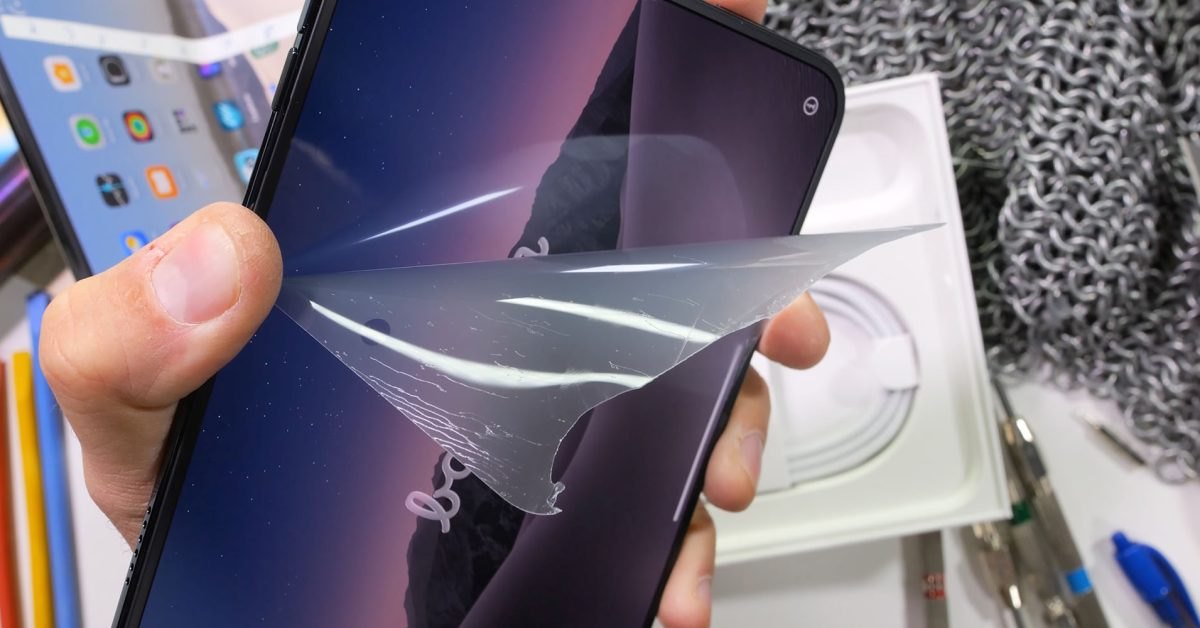
The visual behavior of the inner screen relies on the light-diffusing optical properties of the matte nanotexture coating. Much like satin or eggshell wall paint chosen in interior construction to disguise underlying plaster blemishes, the nanotexture finish diffuses ambient reflections across the screen. When the panel turns on, illuminated pixels mask the level 2 scratch grooves, fingernail indents, and the center crease, making surface abrasions appear to vanish completely until the display powers down and ambient light exposes the permanent grooves.
Underneath the active visual stack, the folding hinge mechanism facilitates two-way movement while maintaining structural alignment across both halves of the casing. Although the device holds an official IP68 rating certifying resistance against water immersion and dust ingress, intense environmental exposure revealed mechanical limitations in the moving joint. When covered in an excessive volume of beach grit, fine sand particles migrated into the internal hinge cavity, causing mechanical binding that prevented the dual halves from closing shut.
Advertisement
Tech Pulse Daily
Get tomorrow's pulse first
Join engineers who read Tech Pulse before stand-up. Free, weekday mornings.
IPhone Duo tested to destruction: why it matters now
The destruction testing underscores the engineering compromises manufacturers make when trying to balance foldable screen flexibility against long-term scratch resistance. Because flexible internal panels cannot use thick, rigid tempered glass without snapping along the bend radius, Apple applied a matte nanotexture layer to conceal inevitable indentations. The findings demonstrate that while the finish conceals cosmetic wear during screen illumination, the underlying panel remains exceptionally soft and vulnerable to fingernails, pocket items, and stray particulates.
Furthermore, the results highlight the severe physical risks associated with modifying or removing factory coatings on delicate hardware. Apple specifically warns owners against peeling or stripping the nanotexture layer, as the separation process places intense mechanical tension directly on the flexible display beneath it. While stripping the coating eliminates the diffused texture look, it reintroduces intense glare, emphasizes the center hinge crease, and exposes unmasked scratches across the entire viewing area.
IPhone Duo tested to destruction: who is affected
Owners who frequently carry the iPhone Duo in outdoor environments or store the device loosely alongside sharp objects are most directly affected by these hardware limits. Users visiting sandy environments such as beaches face hinge contamination risks, as large accumulations of particulate matter can work into the folding mechanism and obstruct proper closure. Similarly, individuals who keep coins, keys, or abrasive items in the same pocket or bag risk imprinting permanent indents into the soft inner panel.
The findings also directly concern users contemplating display modifications or trying to clean abrasive marks with unauthorized scraping techniques. Removing the nanotexture layer requires destructive force that can easily ruin the display substrate entirely. Even if peeled off intact, users face substantial reflective glare and a prominently exposed center crease, negating the factory optical tuning designed to keep the folding seam invisible during ordinary media consumption and mobile tasks.
IPhone Duo tested to destruction: what to watch
Moving forward, hardware observers should track whether structural cracking issues emerge on consumer devices subjected to everyday mechanical pressure. In the destruction trial, applying heavy backward force against the natural folding direction damaged the panel in a manner identical to the internal screen cracking reported on a small number of retail Duos. Monitoring how Apple handles warranty claims for hinge resistance issues or internal screen cracking will determine whether revised assembly tolerances are introduced.
Potential buyers should also observe whether aftermarket accessory makers produce custom-fitted inner screen protectors that avoid disrupting the folding action or lifting the factory finish. Until Apple or certified accessory partners introduce verified solutions for flexible panels, consumers must rely on gentle cleaning routines, keep abrasive debris out of the mechanical joint, and avoid applying reverse torque or sharp pressure against the internal screen surface.
Developer Action Items
- ☐ Verify the claim on the official Apple page (or 9to5Mac), not from this recap alone.
- ☐ Name the surface that moved — API, policy, model, hardware, or commercial terms — before you Slack the thread.
- ☐ Assign one owner a day to read the primary material and decide: this-sprint, this-quarter, or noise.
- ☐ Do not change production on day-one coverage. Watch the vendor changelog and one independent write-up first.
IPhone Duo tested to destruction FAQ
What hardness level scratches the iPhone Duo inner display?
The inner display begins showing surface scratches at level 2 on a 10-point hardness scale, with deeper visible grooves created by a fingernail.
Does the iPhone Duo survive being covered in sand?
While the casing features an IP68 rating, testing showed that pouring beach-level amounts of dust and sand into the hinge traps debris and stops the device from closing.
What happens if you remove the nanotexture layer from the iPhone Duo?
Peeling off the layer restores vibrant colors like standard AMOLED glass, but it increases glare, makes the center crease and scratches far more visible, and risks destroying the display.
Sources

Author
Dillip Chowdary
Writes Tech Bytes coverage of AI, engineering, and the tools that actually ship. Editor of Tech Pulse Daily.
Related on Tech Bytes
Advertisement