Judge allows NAACP lawsuit over xAI data center pollution to move forward
A federal judge denied xAI's motion to dismiss an NAACP lawsuit over 35 unpermitted gas combustion turbines operating at its Colossus data center near Memphis.
By Dillip Chowdary • Oct 31, 2026 • Source: TechCrunch
A federal court cleared the way for a Clean Air Act lawsuit against xAI, denying its motion to dismiss claims over power infrastructure at its Memphis facility. According to TechCrunch's report, District Judge Debra M. Brown ruled that community claims regarding unpermitted combustion turbines powering Colossus will advance.
This report details the judicial ruling, Clean Air Act requirements, and regulatory implications for high-density computing clusters. It is written for infrastructure engineers, corporate compliance leaders, and municipal planners evaluating how environmental oversight governs dedicated on-site power generation.
Judge allows NAACP lawsuit over xAI data: what actually changed
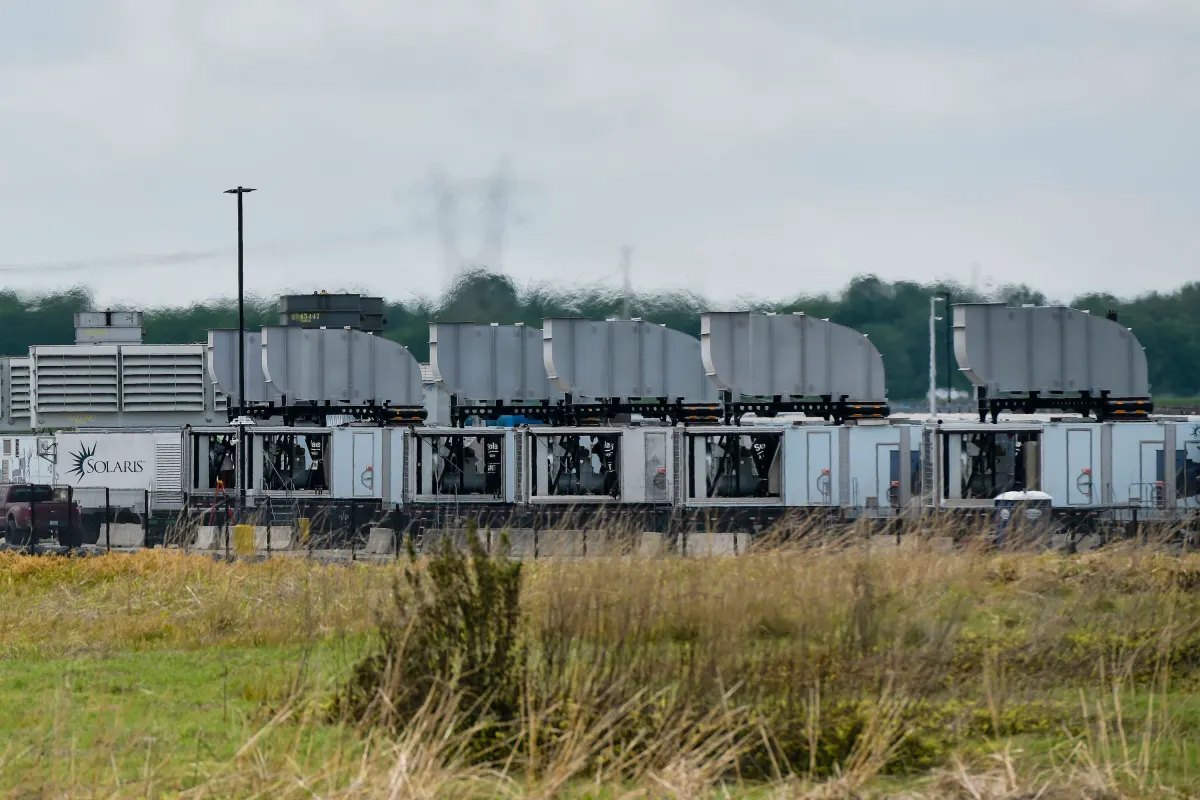
District Judge Debra M. Brown denied a motion by xAI to dismiss the civil lawsuit filed against it under the Clean Air Act. Brought by the Southern Environmental Law Center on behalf of the NAACP, the suit accuses the AI developer of installing and operating at least 35 combustion turbines and other air pollution sources at the Colossus site outside Memphis without obtaining necessary preconstruction or operating air permits. By denying the motion, the court ruled the claims can formally proceed.
The ruling rejected xAI's argument that the gas turbines were exempt from air permitting requirements because they were mobile. Judge Brown concluded that the combustion turbines are not mobile sources under Mississippi's State Implementation Plan. The court also affirmed that citizen plaintiffs hold valid statutory standing under the Clean Air Act. This decision marks the second dismissal attempt rejected by the court, following an earlier denial of a motion to dismiss submitted by the Department of Justice earlier this month.
Judge allows NAACP lawsuit over xAI data: how it works
The lawsuit relies on the citizen suit provision of the Clean Air Act, which enables individuals to sue alleged polluters directly. Seeking dismissal, xAI claimed citizen lawsuits are unconstitutional under Article II and violate the private nondelegation doctrine by transferring executive authority to private citizens. Judge Brown rejected this, writing that citizen suit plaintiffs sue on their own behalf, in their own name, and seek penalties that redress harm to themselves, meaning they are not exercising the federal government's executive power.
The operational controversy centers on how xAI powers the Colossus data center outside Memphis. To bypass local utility delays, the company installed and operated at least 35 combustion turbines on-site to generate dedicated electricity from natural gas. Under environmental regulations, stationary combustion turbines that emit air pollution require preconstruction and operating permits. While xAI maintained that its mobile equipment was exempt from standard air permitting frameworks, the court clarified that the generators do not meet mobile source definitions under the state plan.
Advertisement
Tech Pulse Daily
Get tomorrow's pulse first
Join engineers who read Tech Pulse before stand-up. Free, weekday mornings.
Judge allows NAACP lawsuit over xAI data: why it matters now
The decision arrives as public opinion turns sharply against data center expansion across the country. Surging power consumption has triggered pushback from communities concerned about local air quality and grid reliability. In response to these growing concerns, New York recently passed a moratorium on new data centers, while other state and local governments are actively considering similar measures. The Memphis lawsuit shows that local community groups can use federal courts to block technology companies from deploying unpermitted gas generators to accelerate project schedules.
The backlash against computing infrastructure has already forced policy shifts among major industry rivals. Facing public pressure, Amazon and Microsoft recently promised to stop using non-disclosure agreements in their official dealings with government agencies. At the same time, localized environmental debates over corporate data center energy consumption and industrial emissions could become a significant factor in the imminent United States midterm elections. As public scrutiny expands, technology operators are finding that rapid construction timelines cannot easily circumvent statutory environmental compliance and community transparency.
Judge allows NAACP lawsuit over xAI data: who is affected
The primary party affected is xAI, the SpaceX-owned AI company, which must defend its power installations against allegations of federal environmental violations. If the court finds the company violated the Clean Air Act, xAI could face operational limits or penalties. The case also directly impacts residents living near the Memphis facility. Abre Connor, the NAACP's director of environmental and climate justice, described the ruling as an important victory for accountability, affirming that xAI cannot operate gas turbines without the required permits.
The ruling also impacts the broader artificial intelligence sector and data center developers seeking rapid power alternatives. Hyperscalers hoping to deploy modular gas turbines without standard preconstruction reviews face clear legal precedent that regional implementation plans do not treat these setups as exempt mobile sources. Furthermore, advocacy groups represented by the Southern Environmental Law Center gain reinforced standing to bring citizen suits against industrial developers. This strengthens the position of local communities seeking regulatory oversight when technology infrastructure expands into residential regions.
Judge allows NAACP lawsuit over xAI data: what to watch
As the case moves forward, observers should monitor whether the NAACP and the Southern Environmental Law Center file for preliminary injunctions against the Colossus data center. Judicial orders could potentially restrict or halt the operation of the 35 combustion turbines while the litigation proceeds through federal court. With motions to dismiss from both xAI and the Department of Justice officially rejected, the focus turns to whether the company will attempt to obtain retroactive air permits or face statutory civil penalties.
Beyond the immediate courtroom, technology analysts should watch whether additional state and municipal governments adopt data center moratoriums mirroring New York's recent legislation. Meanwhile, public debate surrounding data center energy usage and corporate environmental accountability is poised to play an active role in the imminent United States midterm elections. Observers should also watch if decisions by Amazon and Microsoft to abandon non-disclosure agreements create industry-wide standards, forcing xAI and other technology firms to adopt greater public transparency when deploying power infrastructure for artificial intelligence workloads.
Developer Action Items
- ☐ Verify the claim on the official Judge allows NAACP lawsuit page (or TechCrunch), not from this recap alone.
- ☐ Name the surface that moved — API, policy, model, hardware, or commercial terms — before you Slack the thread.
- ☐ Assign one owner a day to read the primary material and decide: this-sprint, this-quarter, or noise.
- ☐ Do not change production on day-one coverage. Watch the vendor changelog and one independent write-up first.
Judge allows NAACP lawsuit over xAI data FAQ
Why did Judge Debra M. Brown reject xAI's motion to dismiss?
Judge Brown ruled plaintiffs have standing under the Clean Air Act, the 35 turbines are not exempt mobile sources, and citizen suits are constitutional.
What violations are alleged against xAI?
The NAACP alleges xAI installed and operated at least 35 combustion turbines at Colossus outside Memphis without necessary preconstruction or operating air permits.
How has the industry responded to data center pushback?
New York passed a moratorium on new data centers, while Amazon and Microsoft pledged to stop using non-disclosure agreements with government agencies.
Sources

Author
Dillip Chowdary
Writes Tech Bytes coverage of AI, engineering, and the tools that actually ship. Editor of Tech Pulse Daily.
Related on Tech Bytes
Advertisement