Laika has spent 20 years building up to Wildwood
On the previous feature Missing Link, character builders engineered an internal diaphragm mechanism controlled by a micro-screw positioned on the puppet's back.
By Dillip Chowdary • Oct 25, 2026 • Source: The Verge
Stop-motion animation house Laika has released Wildwood, marking the Oregon-based studio's largest and most technically complex theatrical release across its twenty-year history. Directed by Laika president and CEO Travis Knight and adapted from the novel by Decemberists frontman Colin Meloy, the production represents the culmination of a sixteen-year development path and five years of physical shooting. To capture the story of a girl named Prue rescuing her baby brother from a fantasy realm surrounding Portland, the studio deployed nearly fifty animators, more than two hundred custom puppets, and veteran live-action cinematographer Caleb Deschanel. The scale of the physical production is detailed in The Verge's report, highlighting how the Portland studio combined physical miniature crafts with modern organizational and materials engineering.
This report examines the production engineering, material science breakthroughs, and physical pipeline infrastructure required to mount Laika's sixth animated feature. For technical directors, animators, digital production leads, and practical-effects specialists, the release of Wildwood demonstrates how physical stop-motion animation scales up to handle massive crowds, complex garment physics, and large-scale kinetic sequences without sacrificing tactile performances. By taking a sixteen-year-old creative ambition through two decades of proprietary development, Laika offers a concrete blueprint for modernizing traditional filmmaking workflows.
Laika has spent 20 years building up: what actually changed
The most tangible shift in Laika's production ecosystem on Wildwood involves moving away from the fragile materials that defined stop-motion practical effects for decades. In place of foam latex, an industry standard dating back to the original King Kong, head of characters and practical effects Oliver Jones oversaw the transition to proprietary engineered silicone. Foam latex is prone to shrinking over production schedules, releases strong odors during handling, and crumbles within five years of creation, making it unsuitable for the multi-year wear demands of high-budget feature filming. Laika engineered a significantly lighter, more durable silicone blend that withstands thousands of physical frame manipulations without tearing or distorting the puppet surfaces.
In tandem with composite material advances, the studio overhauled its garment and asset engineering to handle the sheer volume of assets across two hundred puppets. Costume designer Deb Cook instituted more flexible fabrics engineered to drape naturally on miniature armatures during micro-adjustments. Because the film required characters moving between contemporary city settings in modern apparel and fantasy forest environments with ornate attire, the costume shop drew upon a centralized library of physical tailoring techniques refined across past productions. Managing these moving pieces across dozens of sound stages prompted Laika to deploy a sophisticated digital asset-tracking system to monitor puppet components, armatures, and costume pieces across every shooting day.
Laika has spent 20 years building up: how it works
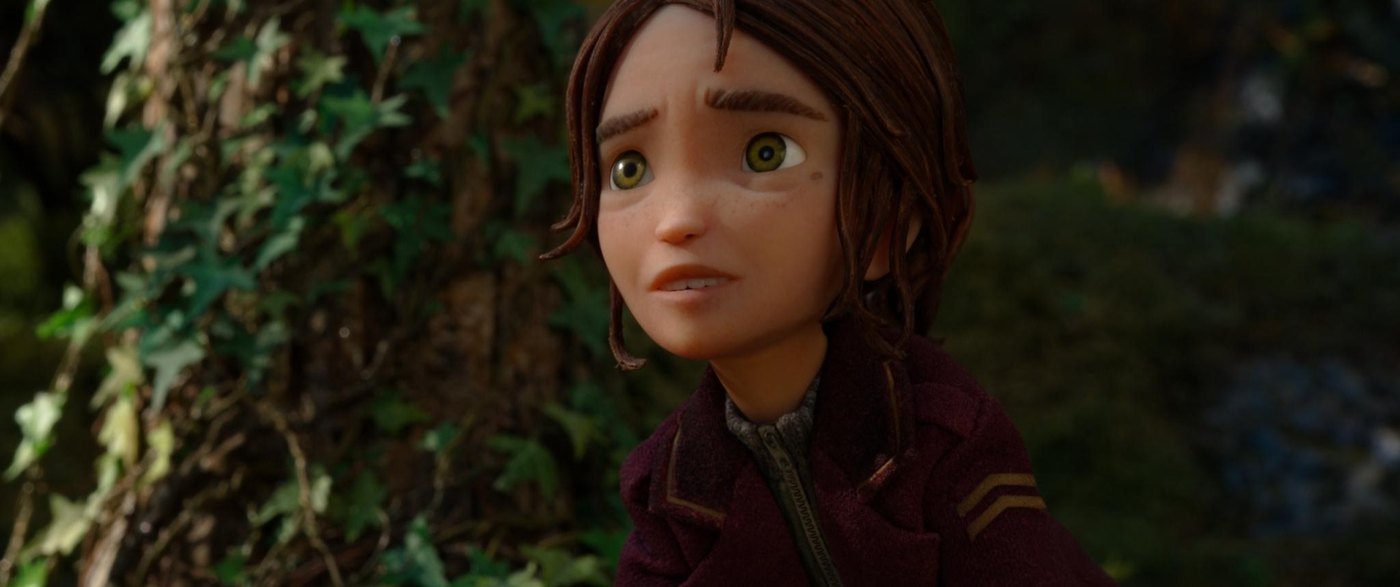
Under the guidance of head of animation Brad Schiff, Laika approaches production through an iterative loop where mechanical breakthroughs from one film become baseline standards on the next. On the previous feature Missing Link, character builders engineered an internal diaphragm mechanism controlled by a micro-screw positioned on the puppet's back. By turning this screw fractional amounts between exposures, animators expand and contract the torso to simulate natural breathing cycles. For Wildwood, that mechanical diaphragm design was standardized across all primary puppets, allowing animators to layer micro-rhythms of biological respiration under intense action scenes and quiet spoken dialogue alike.
Cinematographer Caleb Deschanel, known for live-action masterworks like The Patriot and The Passion of the Christ as well as work on Titanic and The Godfather, joined the studio to adapt traditional lighting and camera mechanics to miniature stages. Operating frame by frame presented an entirely different technical challenge than standard cinema capture, requiring precise coordination with animators who physically advance characters twenty-four times for every second of projected footage. Sequences such as a bustling Portland chase where crows abduct a child, alongside an elaborate twelve-minute military battle featuring dozens of distinct soldiers, required split-second lighting resets, multi-pass motion tracking, and micro-rig adjustments to coordinate complex physical assets simultaneously.
Advertisement
Tech Pulse Daily
Get tomorrow's pulse first
Join engineers who read Tech Pulse before stand-up. Free, weekday mornings.
Laika has spent 20 years building up: why it matters now
The completion of Wildwood establishes that physical, artisanal animation methods can match the staging scope of all-digital visual effects pipelines without turning into pure computer-generated imagery. Travis Knight originally optioned Meloy's book rights back in 2011, yet the studio intentionally delayed full-scale physical production until 2021 because the tooling, physical materials, and pipeline infrastructure were simply not mature enough to support the book's narrative demands. The final film validates that waiting period, proving that physical stop-motion can sustain grand battle choreography, complex wardrobe articulation, and dense environmental sets while keeping human animators directly in contact with the tactile medium.
Beyond mechanical complexity, this production architecture serves as a deliberate counterweight to fully automated digital filmmaking pipelines. Knight views the physical craft of stop-motion as essential to performance, pointing to understated sequences where characters express grief over secrets kept for fifteen years in near-total silence. Rather than generating simulations, the studio achieves emotional resonance through the tactile labor of animators manipulating steel, silicone, and fabric armatures by hand. By providing a scalable technical apparatus around this core physical discipline, Laika demonstrates that traditional cinematic crafts can maintain long-term commercial vitality in an increasingly automated entertainment industry.
Laika has spent 20 years building up: who is affected
The primary groups affected by these production milestones are the animators, technicians, and craftspeople working across Laika's specialized facilities. Wildwood brought together two generations of artists: established industry veterans alongside first-time feature animators who originally entered the animation profession after watching Laika's 2009 debut film, Coraline. The expansion of the crew to nearly fifty animators working across dozens of parallel physical stages created a major training ground for practical character fabrication, modern costume miniaturization, and micro-mechanical rigging that few other commercial film studios support.
The operational shifts also transform practical effects and shop workflows across independent animation hubs worldwide. The engineering shift away from volatile foam latex toward stable silicone mixtures gives prop makers, sculptors, and miniature fabricators a tested technical blueprint for building long-lasting assets. Simultaneously, the adoption of strict stage-management tools and digital asset logging addresses the long-standing physical logistics bottlenecks that have plagued stop-motion departments for decades. By proving that complex inventory management systems can streamline physical stages, Laika offers a practical methodology that reduces costly down-time and missing armature parts during heavy production schedules.
Laika has spent 20 years building up: what to watch
Following the theatrical launch of Wildwood in 2026, the key element to observe is how Laika integrates these mechanical and material discoveries into subsequent feature projects. Because the studio routinely adopts previous breakthroughs as foundational baselines, future productions will likely inherit Wildwood's lightweight silicone casting techniques, sophisticated stage asset-tracking software, and standardized internal breathing armatures. Observers should track whether Laika's technical directors expand mechanical control further inside puppet head armatures or refine composite fabrics to automate subtle environmental reactions during stop-motion capture.
Another critical indicator will be how the broader animation industry responds to the technical viability of massive practical sequences. The successful execution of a twelve-minute set-piece battle featuring dozens of physical stop-motion puppets challenges the standard industry assumption that large crowd battles must be deferred to digital simulation engines. If Wildwood performs strongly with audiences and awards bodies, it may encourage competing visual-effects houses and independent studios to invest in hybrid practical pipelines, modernizing physical miniature fabrication rather than relying entirely on synthetic digital tooling for ambitious period or fantasy narratives.
Developer Action Items
- ☐ Diff the official changelog for Laika spent years building before you bump — APIs, defaults, and removed flags only.
- ☐ Install through the vendor's documented channel in staging; keep a one-command rollback and time-box the canary.
- ☐ Grep your repo for old flag names, lockfile pins, and plugin versions that the notes mark as breaking.
- ☐ Prefer the first patch cut over the day-zero tag unless you have a reason to be on the leading edge.
- ☐ If The Verge did not name a region, plan, or SKU, screenshot the official availability line before you promise it to users.
Laika has spent 20 years building up FAQ
What is the release date of Wildwood?
Wildwood premiered in theaters in 2026 after five years of active shooting that commenced in 2021.
How many puppets and animators worked on Wildwood?
The production employed nearly fifty animators and utilized more than two hundred custom-built puppets across dozens of studio stages.
Why did Laika replace foam latex with silicone for its puppet fabrication?
Laika engineered a lighter, more durable silicone to replace foam latex because latex smells, shrinks over production schedules, and deteriorates after five years.
What mechanical feature was standardized on puppets for Wildwood?
Puppets feature an internal diaphragm system first created for Missing Link that expands and contracts via an adjustable back screw to simulate breathing.
Sources

Author
Dillip Chowdary
Writes Tech Bytes coverage of AI, engineering, and the tools that actually ship. Editor of Tech Pulse Daily.
Related on Tech Bytes
Advertisement