Lee Chang Dong ponders the ethics of the camera
Lee Chang Dong's feature Possible Love confronts 2009 Korean conglomerate layoffs of 2,600 staff, examining the ethical power held by documentary cameras.
By Dillip Chowdary • Oct 25, 2026 • Source: The Verge
South Korean director Lee Chang Dong has introduced his seventh feature film, titled Possible Love, marking the filmmaker's return to social inquiry following Burning. The production draws its premise from real events in 2009, when a major South Korean conglomerate fired 2,600 employees, representing one-third of its total workforce, triggering severe personal crises and subsequent suicides among dismissed personnel. Speaking during a visit to the New York Film Festival in The Verge's report, Lee detailed how the project frames labor fallout not through the immediate heat of factory strikes, but through the moral complications of documentation, the aftermath of industrial dismissals, and the inherent leverage possessed by anyone operating a camera.
This analysis examines the narrative mechanics of Possible Love, its technical representation of documentary practices, and the ethical lines drawn between recording subject trauma and exploiting it. The report is written for cultural analysts, cinema professionals, and readers tracking how contemporary directors interrogate modern labor displacement and the media instruments used to depict personal suffering. The work also explores Lee's collaborative history with screenwriter Oh Jung-mi and his discussions with contemporary peers such as Bong Joon Ho regarding the artistic right to film vulnerable populations.
Lee Chang Dong ponders the ethics: what actually changed
The primary narrative shift in Possible Love centers on moving away from dramatizing direct labor resistance toward examining the psychological wreckage left in its wake. Rather than staging factory floor clashes, the script opens with the biblical epigraph "Thou shall not covet" and follows two contrasting couples whose lives intersect at the funeral of a laid-off worker who died by suicide. Mi-ok, played by Jeon Do-Yeon, copes with the ongoing ruin of her dismissed husband Ho-seok, played by Sul Kyung-gu. At the service, they cross paths with documentary director Ye-ji, played by Cho Yeo-jeong, and her wealthy husband Sang-woo, portrayed by Zo In-sung, setting off an entanglement driven by envy of careers, designer attire, marriages, and social standing.
This pivot alters standard labor cinema by examining how artists record displaced workers rather than presenting a purely heroic or tragic industrial profile. Ye-ji enters the couple's orbit intending to document vanishing laborers and preserve the disappearing value of industrial manual work, drawing motivation from her background as the daughter of a dry cleaner. However, her presence introduces an unequal dynamic where Ho-seok's unresolved grief and hidden anger become the foundational narrative material for her project. The structure shifts from an external political struggle against corporate executives into an internal examination of whether recording someone else's destitution provides genuine personal catharsis or simply delivers source content for commercial media.
Lee Chang Dong ponders the ethics: how it works
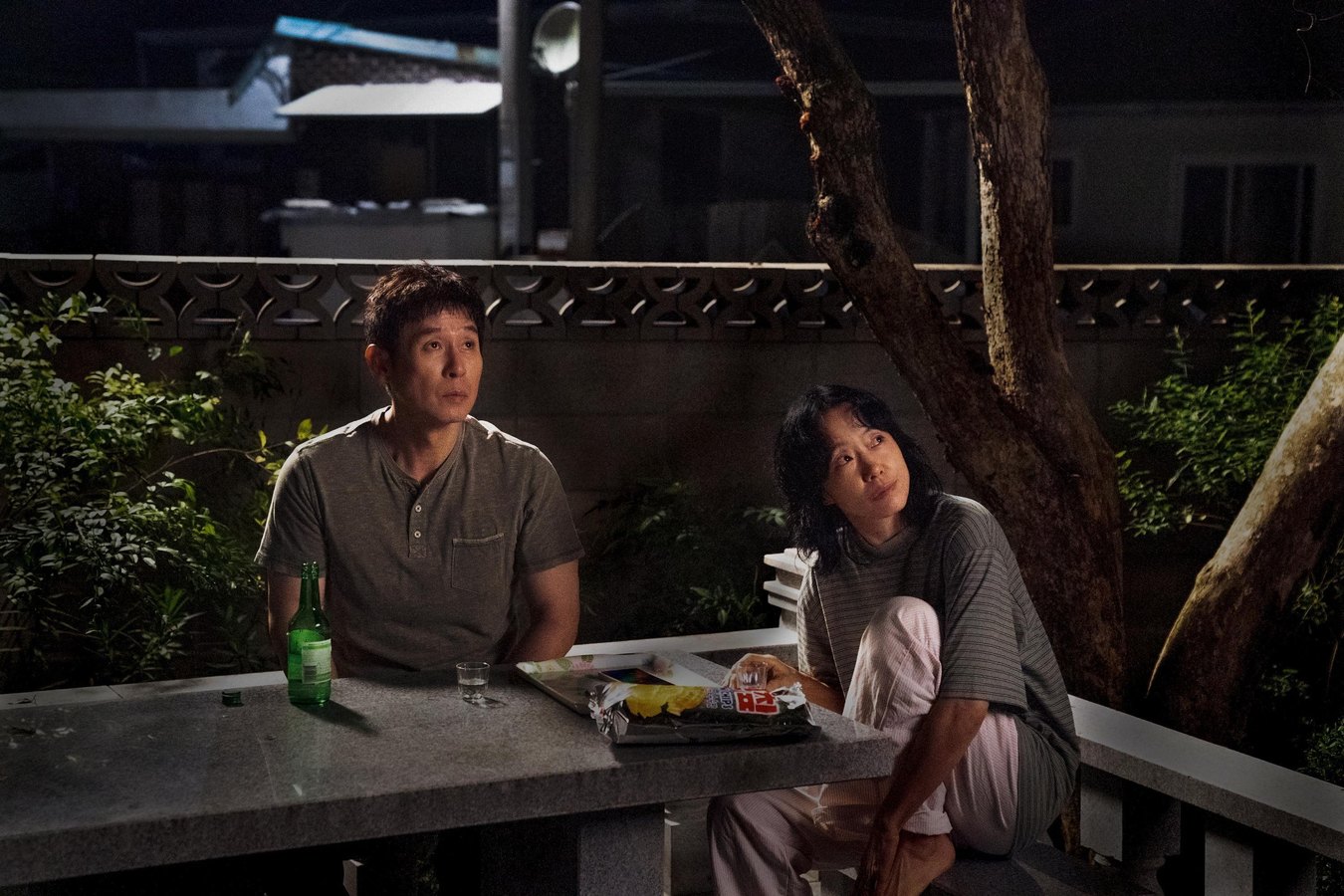
Mechanically, the storytelling operates across multiple distinct visual and narrative layers to expose how recording equipment exerts power over people. Lee structured the narrative so that Ye-ji's documentary footage exists alongside distant archival recordings and Ho-seok's subjective recollections. When portraying state crackdowns against dismissed staff, the film incorporates archival helicopter footage capturing police brutality from an elevated perspective, contrasting it with ground-level cinematic reconstructions of memory. The camera is framed not as an objective, harmless window, but as an active instrument that grants instant authority to whoever holds it, compelling subjects to perform, stage scenes, or reveal hidden anguish under the lens.
Behind the lens, the film's production methodology relies on an extensive writing partnership between Lee and screenwriter Oh Jung-mi, a former student he met at Korea National University of Arts. Lee credits Oh with supplying creative perspective and challenging his artistic routines, even as their collaborative process involved repeatedly abandoning and scrapping developing film scripts over several years. Within the finished work, technical choices such as an extended, uninterrupted group therapy sequence defy conventional narrative pacing. Lee deliberately maintained this long session, acknowledging that while narrative film audiences might find it slow or difficult to relate to, preserving the documentary-style testimony of laid-off laborers was necessary to sustain the reality of their condition.
Advertisement
Tech Pulse Daily
Get tomorrow's pulse first
Join engineers who read Tech Pulse before stand-up. Free, weekday mornings.
Lee Chang Dong ponders the ethics: why it matters now
The thematic urgency of Possible Love connects directly to long-standing questions among South Korean filmmakers confronting compressed industrialization and historical political transitions. Lee observed that his own political consciousness formed in Daegu, widely recognized as the conservative heartland of South Korea, where he attended school through his university graduation in the spring of 1980. Participating in street demonstrations against the military regime of Chun Doo-hwan in May 1980 exposed him to the hardline conservative views of local citizens, embedding a perpetual tension regarding how modern social forces and political dissent are perceived and represented.
These questions of representation mirror conversations throughout modern Korean cinema, including works like Bong Joon Ho's Parasite and Park Chan Wook's No Other Choice. Lee recalled an earlier private discussion with Bong prior to the release of Mother, where Bong wrestled with his moral authority to portray maternal anguish on screen before completing his script. Lee identified a direct line between Bong's early hesitation and the moral dilemma at the heart of Possible Love. Directors operating in commercial spaces occupy an uncomfortable middle territory, disconnected from the daily survival of the working class yet separated from corporate capital, raising ongoing doubts about whether dramatizing severe suffering ever avoids becoming exploitative.
Lee Chang Dong ponders the ethics: who is affected
The impact of the camera falls unevenly across the four central figures, each bringing competing desires to the filming process. For Ho-seok, having spent years bottling up despair and rage following his 2009 dismissal alongside 2,600 colleagues, speaking into Ye-ji's lens serves an unintended therapeutic role, forcing suppressed memories into the open. His wife Mi-ok recognizes the power wielded by the camera and attempts to use it as an emotional intervention for her husband, while simultaneously seeking to broadcast her family's private hardships to an audience rather than enduring poverty in isolation.
Conversely, the documentarians and cultural observers occupy a privileged position that shields them from the material consequences facing their subjects. While Ye-ji traces her family roots to working-class labor, her marriage to the affluent Sang-woo establishes an economic distance that fundamentally changes her relationship to working-class distress. Lee noted that filmmakers and journalists who originate from marginalized communities no longer share that daily reality once their social position elevates. When an unfolding crisis occurs, the documentarian must decide whether to capture the scene, intervene, or stage elements to produce dramatic resonance, creating an inherent imbalance where the subject risks vulnerability while the observer extracts career capital.
Lee Chang Dong ponders the ethics: what to watch
Audiences monitoring the release of Possible Love will observe how viewers engage with its demanding narrative structure, particularly its refusal to provide easy closure regarding corporate accountability or artistic virtue. Rather than offering straightforward political solutions, the production focuses on the persistent tension of how creative figures tell stories of others without claiming false neutrality. Lee described filmmakers as occupying a position that can border on cowardice, caught between subject empathy and market systems, yet maintained that persistent efforts to capture systemic displacement can still generate minor, incremental social adjustments.
Future critical reception will also focus on the reception of Lee's narrative choices, including the deliberate friction between documentary realism and fiction filmmaking. By contrasting clinical aerial records of state crackdowns with deeply personal confessions and raw group therapy sessions, the film challenges audiences to confront their own voyeurism when consuming cinematic portrayals of real-world labor tragedy. Observers will track whether Lee and co-writer Oh Jung-mi's structural inquiries prompt wider discussions across international film circuits regarding how contemporary cinema depicts historic layoffs, corporate restructuring, and the ethical limits of dramatic storytelling.
Developer Action Items
- ☐ Diff the official changelog for Lee Chang Dong ponders before you bump — APIs, defaults, and removed flags only.
- ☐ Install through the vendor's documented channel in staging; keep a one-command rollback and time-box the canary.
- ☐ Grep your repo for old flag names, lockfile pins, and plugin versions that the notes mark as breaking.
- ☐ Prefer the first patch cut over the day-zero tag unless you have a reason to be on the leading edge.
- ☐ If The Verge did not name a region, plan, or SKU, screenshot the official availability line before you promise it to users.
Lee Chang Dong ponders the ethics FAQ
What real-world event inspired Possible Love?
The film is inspired by true events from 2009, when a South Korean conglomerate laid off 2,600 workers, comprising one-third of its staff, after which many affected workers died by suicide.
Who wrote and directed the film?
Possible Love was directed by Lee Chang Dong and co-written with screenwriter Oh Jung-mi, a writer he met at Korea National University of Arts.
Which actors star as the two central couples in the film?
Jeon Do-Yeon stars as Mi-ok alongside Sul Kyung-gu as her laid-off husband Ho-seok, while Cho Yeo-jeong plays documentary filmmaker Ye-ji alongside Zo In-sung as her wealthy husband Sang-woo.
What central ethical question does the movie explore?
The film explores the ethics of the camera, questioning how artists portray the pain of others, what distance they must maintain, and whether documenting vulnerable subjects turns their suffering into commercial material.
Sources

Author
Dillip Chowdary
Writes Tech Bytes coverage of AI, engineering, and the tools that actually ship. Editor of Tech Pulse Daily.
Related on Tech Bytes
Advertisement