MacBook Pro with PROLED XDR looks awesome, but I’m not rushing to upgrade
Evaluating the balance between panel capabilities and performance metrics clarifies whether the machine warrants deployment in immediate professional pipelines.
By Dillip Chowdary • Oct 31, 2026 • Source: 9to5Mac
Apple introduced its redesigned MacBook Pro lineup featuring a new PROLED XDR display, marking the hardware family's first structural revision in five years since the M1 Pro and M1 Max generations debuted. Detailed in 9to5Mac's report, the revision cuts chassis weight and adds touch display hardware across both screen sizes while retaining the existing thermal design. The release arrives following earlier June price adjustments and introduces updated display panels without moving the underlying silicon architecture beyond the existing M5 generation.
This breakdown covers the physical chassis modifications, panel characteristics, price shifts across configurations, and software trade-offs present on the updated machines. The analysis is structured for software engineers, iOS creators, and digital media professionals assessing hardware upgrade cycles against existing M4 Pro or miniLED setups. Evaluating the balance between panel capabilities and performance metrics clarifies whether the machine warrants deployment in immediate professional pipelines.
What MacBook Pro with PROLED XDR looks awesome shipped
The primary enhancement on the updated hardware centers on the introduction of the PROLED XDR display panel paired with weight reductions across both screen sizes. Apple reduced the overall mass of the 14-inch model by 0.5 pounds, while the 16-inch configuration shed 0.7 pounds relative to earlier editions. Both sizes also feature slightly thinner profiles, easing transport for users who routinely pack larger workstations into travel bags. Additionally, the industrial design reintroduces a glowing Apple logo element integrated into the rear display lid.
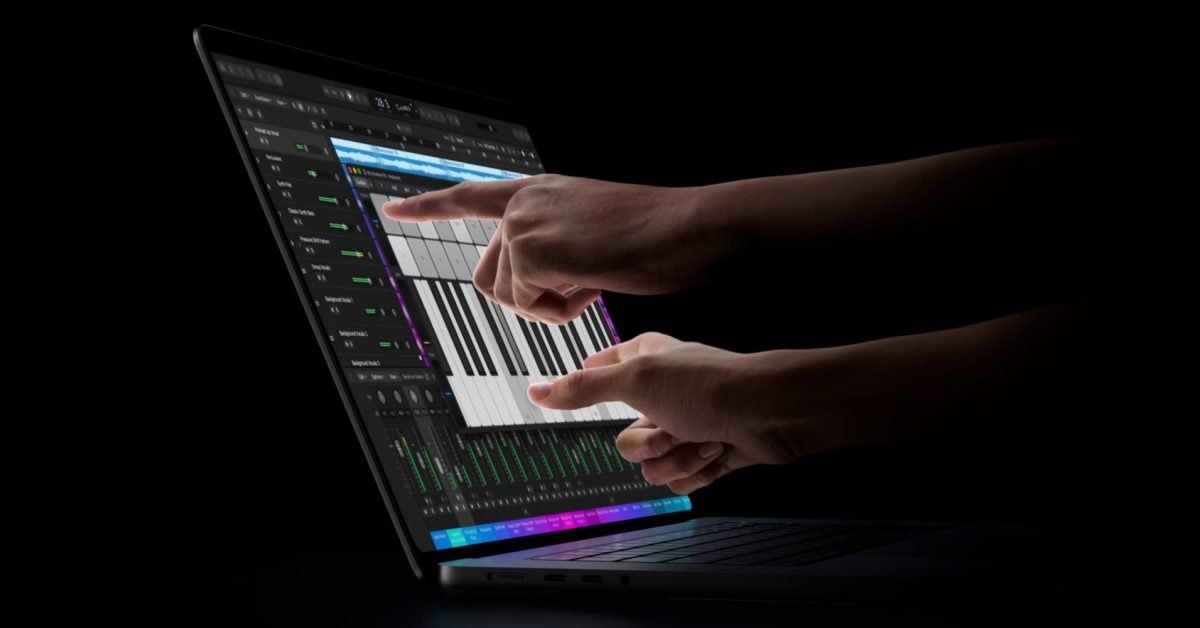
Touch input capability is integrated directly into the display glass across the PROLED XDR range, bringing hardware contact interactions to the laptop series. Despite the internal component reshuffle and display alteration, the chassis geometry maintains the top case layout from prior units. The physical keyboard enclosure, multi-touch trackpad, side speaker grilles, and external connection ports occupy identical physical locations to earlier revisions. Structural materials mirror existing production lines without altering exterior enclosure lines.
What changed for builders in MacBook Pro with PROLED XDR looks awesome
Software engineers targeting the Apple ecosystem gain the ability to manipulate the iOS simulator via direct touch input on the screen surface. This hardware feature allows builders to test gestures and interface elements natively without simulating tactile input through a trackpad or external mouse. However, broad desktop operating system modifications specifically tuned for direct touch interaction remain absent from the shipping software release, limiting touch utility during day-to-day compilation tasks.
| Specification | Prior miniLED Generation | New PROLED XDR Generation |
|---|---|---|
| Price Difference | Base Baseline | +$400 vs miniLED (+$700 vs pre-June) |
| 14-inch Weight | Standard Weight | -0.5 lbs reduction |
| 16-inch Weight | Standard Weight | -0.7 lbs reduction |
| Sustained Brightness | 1000 nits (M4 Pro baseline) | PROLED XDR standard |
| Interaction Layer | Trackpad / Keyboard only | Native Touch Screen Display |
Hardware procurement economics show noticeable price increases across the updated hardware lineup compared to previous production tiers. Base pricing sits $400 higher than corresponding miniLED units, which were already elevated by $300 during price hikes earlier in June. Apple also bypassed intermediate M6 Pro and M6 Max processors for this hardware cycle, leaving buyers on silicon performance steps established when the initial M5 family rolled out.
How to install or upgrade MacBook Pro with PROLED XDR looks awesome
Advertisement
Tech Pulse Daily
Get tomorrow's pulse first
Join engineers who read Tech Pulse before stand-up. Free, weekday mornings.
Development teams configuring new macOS environments on the PROLED XDR machines can pull platform command-line updates through standard terminal workflows. Developers managing environment runtimes and coding utilities can synchronize their packages directly using standard package commands:
xcode-select --installEngineers operating terminal coding assistants or containerized tools can switch system environments and execution profiles using command-line selections. Developers utilizing modern agent environments can lock specific versions by executing:
claude --model fableTo permanently standardize execution flags across shell environments, engineers can export preferred profile variables directly into their shell configuration files:
export AGENT_MODEL=claude-fable-5-1Gotchas and compatibility in MacBook Pro with PROLED XDR looks awesome
A central practical consideration is that existing M4 Pro systems already deliver 1000 nits of sustained brightness, narrowing the visual discrepancy when viewing content outside HDR mastering tasks. Because the display overhaul is not paired with an M6 Pro or M6 Max generational processor jump, execution runtimes for compiling large codebases remain comparable to existing M5-era systems. Teams operating on recent silicon cycles may find limited computational improvements during build passes.
Software integration for the touch digitizer remains minimal across developer utilities, as standard desktop windows lack customized tactile UI targets. Outside of localized testing inside mobile simulator views, daily engineering navigation relies strictly on traditional input accessories like external mice or built-in trackpads. Furthermore, standard port layouts remain unchanged from prior versions, meaning existing peripheral cabling and desk hub topologies carry forward without requiring specialized adapters.
What to watch after MacBook Pro with PROLED XDR looks awesome
Future software updates represent a major inflection point, as Apple has alluded to forthcoming macOS operating system optimizations designed to leverage touch hardware. If Apple rolls out deeper tactile controls across developer tools and window managers, the utility of the digitizer could expand significantly. Until those platform enhancements ship, touch functions remain an auxiliary hardware layer rather than a central interface mechanism.
The next silicon milestone will occur when Apple introduces the M7 Pro and M7 Max processors, anticipated to debut next year. That transition is expected to provide substantial compute gains, pairing mature PROLED XDR display yields with next-generation processing architecture. Teams evaluating hardware refreshes will be watching whether subsequent production revisions maintain the elevated price tiers while delivering necessary silicon speedups for intensive compilation workflows.
Developer Action Items
- ☐ Diff the official changelog for Apple / iOS 0.5 before you bump — APIs, defaults, and removed flags only.
- ☐ Install through the vendor's documented channel in staging; keep a one-command rollback and time-box the canary.
- ☐ Grep your repo for old flag names, lockfile pins, and plugin versions that the notes mark as breaking.
- ☐ Prefer the first patch cut over the day-zero tag unless you have a reason to be on the leading edge.
- ☐ If 9to5Mac did not name a region, plan, or SKU, screenshot the official availability line before you promise it to users.
MacBook Pro with PROLED XDR looks awesome FAQ
How much lighter is the MacBook Pro with PROLED XDR compared to previous models?
The 14-inch configuration weighs 0.5 pounds less, while the 16-inch variant decreases by 0.7 pounds relative to earlier versions.
How much more expensive is the MacBook Pro with PROLED XDR?
The machine is priced $400 higher than the miniLED models, which had already seen a $300 price increase earlier in June.
What processor family powers the PROLED XDR MacBook Pro?
The machine relies on current M5 family architecture, as Apple opted to skip intermediate M6 Pro and M6 Max processor releases ahead of M7 next year.
Does the MacBook Pro with PROLED XDR feature a new keyboard or case shape?
The chassis remains identical in shape besides being slightly thinner, preserving the same top case, trackpad, speaker layout, and port placements.
Sources

Author
Dillip Chowdary
Writes Tech Bytes coverage of AI, engineering, and the tools that actually ship. Editor of Tech Pulse Daily.
Related on Tech Bytes
Advertisement