Mazama Energy has a solution for geothermal’s biggest drilling problem
Mazama Energy developed Carbon Chill, using liquid carbon dioxide to boost geothermal drilling rates by 20% and tap super-hot rock reaching over 700 degrees C.
By Dillip Chowdary • Nov 16, 2026 • Source: TechCrunch
At a glance
- Product
- Carbon Chill
- Penetration rate
- 20% increase
- Drill cost share
- 25% to 30% of plant cost
- Recent well heat
- Over 700 degrees Celsius
- Funding raised
- $135 million in September 2026
- Target well capacity
- Up to 15 megawatts
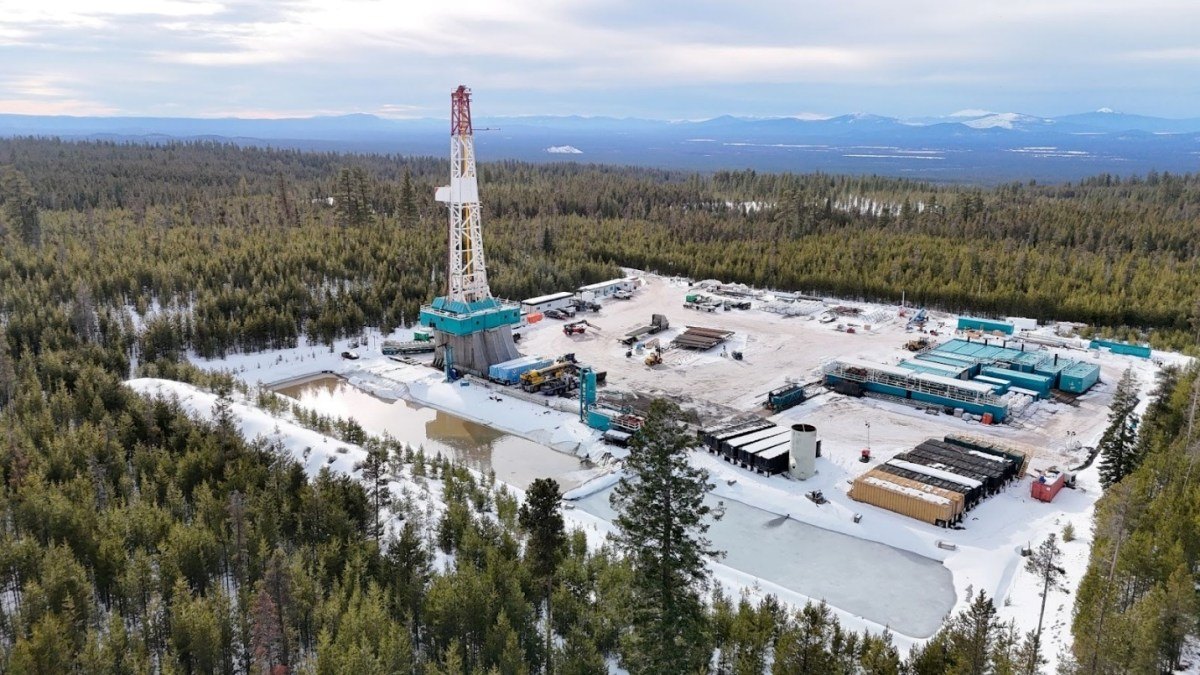
Mazama Energy has developed a drill bit supercooling system called Carbon Chill, designed to withstand extreme underground heat while drilling deeper and faster for geothermal power generation. As detailed in TechCrunch's report, the technology substitutes liquid carbon dioxide for conventional drilling fluids to preserve bit electronics at high subterranean temperatures. Sriram Vasantharajan, co-founder and chief executive officer of Mazama Energy, confirmed that the approach increased penetration rates by twenty percent over the company's prior drilling benchmarks.
This briefing details the mechanical design of Carbon Chill, its thermal performance thresholds in deep test wells, and its economic implications for utility-scale baseload power generation. Energy developers, utility procurement planners, and infrastructure engineers can evaluate how carbon dioxide cooling removes thermal barriers that have historically prevented drilling in rock hotter than four hundred degrees Celsius.
01Carbon Chill and faster penetration rates
Drilling speed and depth govern the commercial viability of geothermal power projects, but aggressive drilling accelerates equipment heat stress. The mechanical friction required to cut through dense rock produces severe thermal wear that degrades downhole tools long before reaching target depths. Because drilling operations represent twenty-five to thirty percent of the total capital cost of building a geothermal plant, faster penetration directly reduces total facility expenditures.
Carbon Chill attacks this thermal bottleneck by circulating carbon dioxide through the drill string to cool the cutter faces and transport rock cuttings upward to the surface. Faster penetration rates keep projects on schedule and reduce the rig days required to complete a borehole. Sriram Vasantharajan noted that his team observed an immediate twenty percent jump in penetration rate during subsurface testing.
02Oregon well logs and venture capital backing
Mazama Energy has verified its high-temperature drilling approach through successive field trials in deep formations. In October 2025, the startup completed an exploratory well in Oregon that reached a stabilized downhole temperature of 629 degrees Fahrenheit, or 331 degrees Celsius. Subsequent drilling campaigns pushed thermal endurance even further, with a more recent borehole surpassing 700 degrees Celsius downhole.
To scale these deep-drilling operations, Mazama Energy secured $135 million in a September financing round led by Centaurus Capital and Doerr Capital, alongside prior backing from Khosla Ventures. The capital supports expanded rig deployments and engineering hires required to validate commercial viability in super-hot rock formations. Reaching rocks hotter than 700 degrees Celsius provides the empirical data needed to finalize tool designs before customer deployments begin.
03Supercritical rock energy and federal capacity forecasts
Deep rock formations above 752 degrees Fahrenheit, or 400 degrees Celsius, transform ambient subterranean water into a supercritical state that behaves like a dense, gaseous fluid. Supercritical water carries five to ten times more kinetic and thermal energy than fluid produced by conventional geothermal fields. Because each supercritical well produces significantly higher energy yields, plant operators can build fewer surface interconnects and drill fewer total boreholes to achieve commercial power output.
Advertisement
Tech Pulse Daily
Get tomorrow's pulse first
Join engineers who read Tech Pulse before stand-up. Free, weekday mornings.
The domestic energy volume residing in these deep thermal horizons is massive. An assessment published by the National Laboratory of the Rockies estimated that geothermal formations could produce between 26.5 and 57 terawatts of electric capacity across the United States. Harnessing just ten percent of the conservative 26.5-terawatt estimate would more than double total peak generation capacity across the entire American power grid.
04Drilling mud limits and rocket nozzle expansion
Traditional drilling methods rely on drilling mud, an aqueous mixture of water and chemical additives, to cool the bit and lift cuttings. As boreholes descend toward super-hot formations, drilling mud loses its ability to absorb incoming thermal loads, exposing sensitive steering electronics to destructive heat. While specialized electronics rated for extreme heat exist on the market, Sriram Vasantharajan noted that their prohibitive procurement costs make commercial scaling unviable.
| Coolant System | Thermal Limit | Electronics Survival | Relative Energy Yield |
|---|---|---|---|
| Drilling Mud | Subcritical rock | Electronics fail at high heat | 1x baseline |
| Carbon Chill | Exceeds 700° C | Protected by expansion cooling | 5x to 10x supercritical |
Mazama Energy replaces mud with an active phase-change thermodynamic cycle:
- Surface injection Liquid carbon dioxide enters the center of the drill string under continuous surface pressure.
- Downhole transition Surrounding rock warms the descending fluid until the carbon dioxide itself reaches a supercritical state.
- Nozzle expansion The supercritical fluid enters a cone-shaped expansion valve shaped like a rocket nozzle located directly above the bit.
- Rapid cooling Expanding gas drops sharply in temperature, drawing heat away from steering electronics and the cutting face.
05Hyperscaler power planning and fifteen megawatt targets
Surging baseload power consumption from hyperscale data centers has prompted operators including Google and Meta to pursue deep geothermal generation. Data center facilities slated to begin commercial operation in the 2030s require round-the-clock clean electricity that intermittent renewable sources cannot supply without storage. Mazama Energy plans to position its high-temperature boreholes as reliable power suppliers for these upcoming computing facilities.
Note: Commercial availability remains tied to full-scale power demonstration targets scheduled across the next operating year.
Sriram Vasantharajan stated that Mazama Energy aims to complete a single demonstration well capable of generating up to 15 megawatts of electricity by next year. Achieving 15 megawatts from an individual borehole validates the economic model for supercritical geothermal energy. Transitioning super-hot rock drilling from exploratory field trials into repeatable power assets provides a clear engineering path toward utility-scale adoption.
Frequently asked questions
What is Mazama Energy Carbon Chill?
Carbon Chill is a geothermal drilling technology that injects liquid carbon dioxide down the drill string to cool the bit and downhole electronics before carrying rock cuttings back to the surface.
How hot was the deepest well drilled by Mazama Energy?
Mazama Energy drilled an Oregon well to 629 degrees Fahrenheit (331 degrees Celsius) in October 2025, and a subsequent well surpassed 700 degrees Celsius.
Why is super-hot rock valuable for geothermal energy?
Water in rock exceeding 752 degrees Fahrenheit (400 degrees Celsius) turns supercritical, carrying five to ten times more energy than water from traditional geothermal wells and allowing fewer wells to generate the same electric output.
Who funded Mazama Energy's $135 million round?
The $135 million funding round was led by Centaurus Capital and Doerr Capital, with additional backing from Khosla Ventures.
Sources

Author
Dillip Chowdary
Writes Tech Bytes coverage of AI, engineering, and the tools that actually ship. Editor of Tech Pulse Daily.
Related on Tech Bytes
Advertisement