Medium is launching a new note-taking app called TK
Medium is responding by shifting its development roadmap toward private spaces, transitioning writing away from public web scrapers and search indexing.
By Dillip Chowdary • Nov 09, 2026 • Source: The Verge
Medium launched a standalone note-taking and journaling application called TK, marking the company’s first major product introduction since shifting to a subscription model in 2017. As detailed in The Verge's report, the software merges personal note-taking, daily journaling, and group collaboration into an environment designed without public web pages, advertising metrics, or search-engine discovery mechanisms. Instead of publishing open web posts aimed at mass distribution, users create private notes and longer pieces of prose that remain contained within restricted circles.
This release reflects Medium’s operational pivot toward closed publishing models as AI crawling and algorithmic search modifications depress traditional referral traffic across the open web. The application is built specifically for existing writers, journaling enthusiasts, and collaborative writing teams who prioritize direct feedback, draft editing, and shared topical archives over broadcast-style visibility. By pairing localized language model assistance with invite-only spaces, the product seeks to establish writing workflows insulated from the attention metrics of the public internet.
01Medium is: the announcement
Medium introduced TK as an ultra-minimalist note-taking application designed to handle short daily logs alongside long-form writing drafts. The platform operates without traditional pageview counters, algorithmic distribution, or public indexes, establishing a dedicated writing space insulated from public web distribution.
Medium chief executive officer Tony Stubblebine positioned the release as the company’s most consequential rollout since 2017, when founder Ev Williams abandoned digital ad revenue in favor of reader subscriptions. The launch represents a structural shift away from public-facing blogging toward private, group-focused personal writing.
The launch strategy directly addresses declining search traffic across digital media, a phenomenon Stubblebine described as an existential threat driven by search engines and AI chatbots that retain users rather than routing them outward. Medium is responding by shifting its development roadmap toward private spaces, transitioning writing away from public web scrapers and search indexing. TK functions independently of inbound Google search referrals, stripping away social media distribution mechanics in favor of private creation tools and closed audience interactions.
02What actually changed
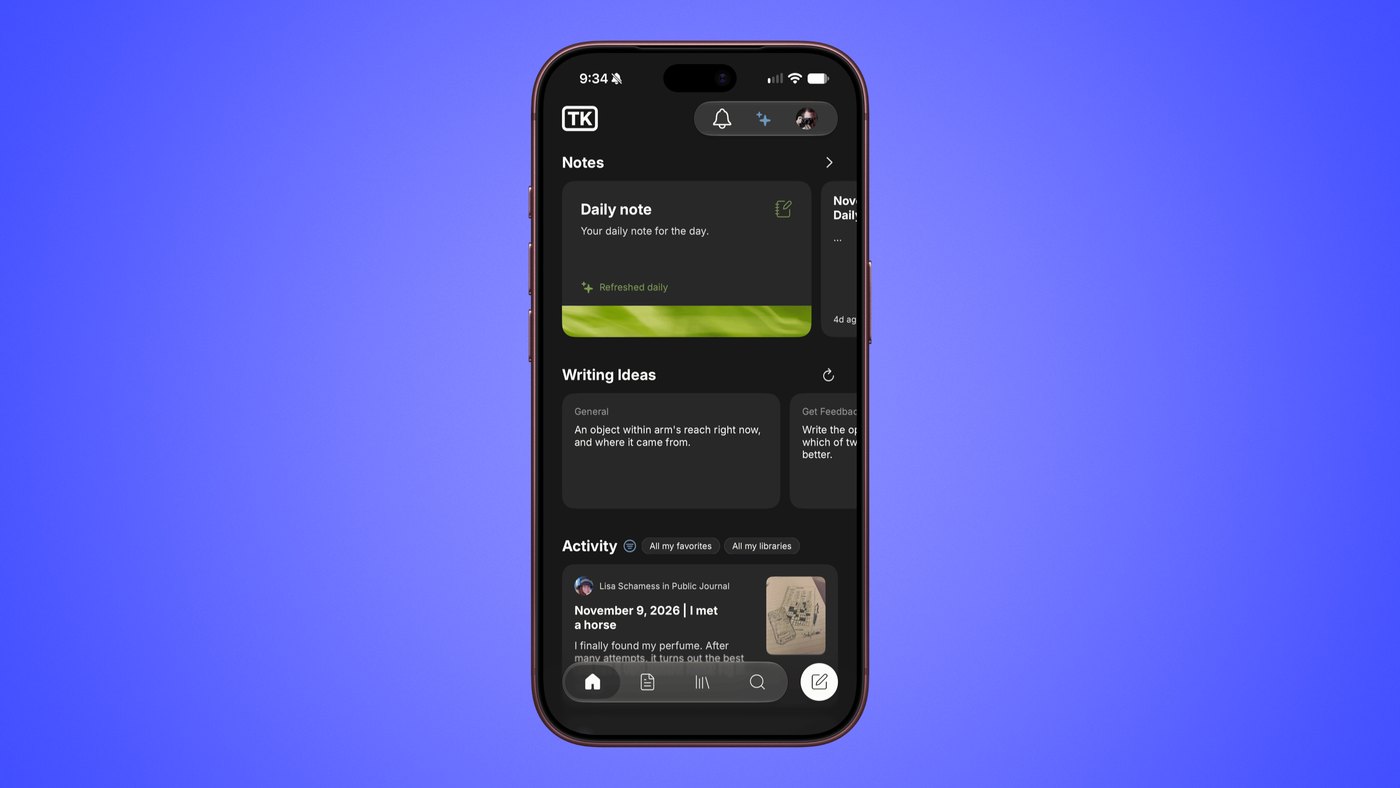
TK introduces integrated artificial intelligence features directly into its text editor, allowing writers to organize archives, search through past entries, and request editorial feedback. The application takes its name from the traditional publishing abbreviation for to come, turning the two-letter combination into an active in-editor command.
Typing the letters TK invokes an AI model to retrieve information or draft placeholder content directly into the document. Stubblebine compared this automated pipeline to Unix pipes, using language models to handle structural organization and administrative tasks across a user's collected notes.
Beyond solo editing, TK introduces collaborative collections called Libraries, which serve as private blogs for small groups or communities ranging from several contributors to several hundred participants. Documents can be distributed via email or direct links similar to Google Docs, allowing invited members to read, write, leave comments, and add emoji reactions. Libraries completely lack public-facing URLs or open web interfaces, operating as private shared archives where members circulate poetry drafts, book chapters, and personal recipe collections strictly among approved participants.
Advertisement
Tech Pulse Daily
Get tomorrow's pulse first
Join engineers who read Tech Pulse before stand-up. Free, weekday mornings.
03Who should care
Writers who prefer low-pressure drafting environments stand to benefit most from TK, which eliminates the public performance demands associated with Medium’s main publishing platform. Because the application omits traffic counters, public follower counts, and ranking feeds, authors can share early drafts with small groups without competing for algorithmic reach. Early testing groups inside the platform include writing workshops reviewing ongoing manuscripts, specialty hobbyists trading recipes, and poets seeking peer critiques away from public comment sections.
Collaborative teams and specialized writing groups can use Libraries as an alternative to both group chat software and conventional document suites. By combining persistent document storage with group commentary and reaction tools, TK replaces fragmented chat threads with focused topic repositories. Stubblebine noted that these closed-network engagement mechanisms, which focus entirely on direct editorial support rather than viral reach, are slated to expand into Medium's broader publishing infrastructure over time.
04How to try it
TK is available immediately for existing Medium members across web browsers, Android, and iOS devices. Access requires an active Medium membership, integrating the new writing environment directly into the company’s paid subscriber tier rather than offering a standalone free service. Medium confirmed that a dedicated native desktop client is currently under development to supplement the mobile applications and web interface.
Users who install the application can begin drafting local notes immediately or set up invitation-only Libraries around specific projects or topics. Existing members can invite collaborators to individual documents through shared links and direct email invitations, allowing recipients to comment and edit in real time. Because the service does not rely on ad tracking or open registration funnels, account onboarding remains tied directly to Medium’s central membership ecosystem.
05What to watch next
Medium is evaluating monetization strategies for TK that extend beyond standard membership dues, including options to package and sell access to curated Library archives. Stubblebine outlined potential commercial models where high-value collections, such as specialized recipe archives, could be paywalled for human subscribers or licensed directly to AI agents seeking verified human writing. Stubblebine argued that future artificial intelligence development requires training inputs grounded in authentic human intelligence rather than low-quality generic web text generated for search placement.
The rollout serves as a practical test case for whether subscription platforms can survive by retreating from open web indexing into closed digital spaces. Observers will be monitoring whether Medium members embrace private group journaling or demand public distribution channels for their work. The planned arrival of a native desktop application and the migration of TK-style community feedback features into the core Medium platform will signal how aggressively the company shifts its core business underground.
Medium is FAQ
What platforms support the new TK app?
TK is currently available on the web, iOS, and Android for Medium members, with a native desktop application in development.
How do Libraries work inside TK?
Libraries function as private topic blogs where groups ranging from a few people to several hundred share drafts, leave comments, and add emoji reactions without any public web presence.
How does the AI integration work in TK?
Users can direct language models to search through notes or provide writing feedback, and typing the letters TK acts as a shortcut to summon AI assistance for filling in information.
Is TK free to use?
TK is currently available exclusively to existing paid Medium members.
Sources

Author
Dillip Chowdary
Writes Tech Bytes coverage of AI, engineering, and the tools that actually ship. Editor of Tech Pulse Daily.
Related on Tech Bytes
Advertisement