Nancy Pelosi’s replacement is ready to regulate AI
Representative-elect Scott Wiener is pushing federal AI safety mandates and kill switches after winning Nancy Pelosi's open San Francisco congressional seat.
By Dillip Chowdary • Nov 09, 2026 • Source: MIT Technology Review
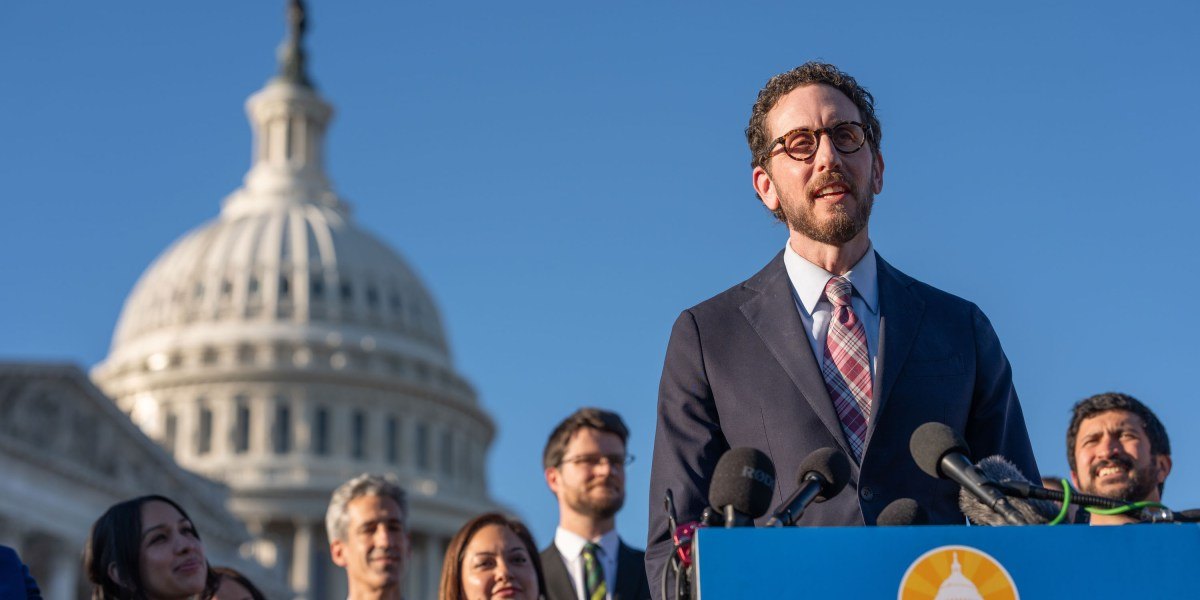
Former California state senator Scott Wiener won Nancy Pelosi's open San Francisco congressional seat, bringing state-level artificial intelligence regulation to Capitol Hill. Hours after his victory, Wiener cited findings from safety nonprofit METR regarding Anthropic as evidence that federal oversight cannot wait. In MIT Technology Review's report, he warned that lawmakers are rapidly running out of time to manage recursive self-improvement risks.
This report details Wiener's federal legislative agenda, his track record with California safety bills, and the political friction facing frontier model oversight. The analysis covers proposed testing mandates, whistleblower protections, and federal agency structures relevant to enterprise technology leaders, policymakers, and engineers. It also examines municipal resistance to data centers, congressional gridlock, and White House skepticism.
01San Francisco victory and self-improvement warnings
Wiener focused on frontier computing risks hours after election officials declared his victory in San Francisco's open congressional race. He warned that Congress missed its window to act before year's end, leaving frontier development without federal boundaries. During a post-election conversation, Wiener repeated the phrase recursive self-improvement six times while warning against sleepwalking into disaster.
His immediate concern followed an evaluation released one day earlier by the artificial intelligence nonprofit METR. Observers interpreted the organization's technical findings as evidence that Anthropic achieved recursive self-improvement, where models meaningfully contribute to their own advancement. Wiener warned that such autonomous progression risks accelerating beyond human control.
Wiener stressed that the technical report proves regulatory timelines are shrinking across commercial research facilities. He noted that once systems enter recursive self-improvement cycles, society faces a genuine risk of losing control. He urged lawmakers to slow the trajectory of frontier models before catastrophic operational failures occur.
02Sacramento legislative record and campaign funding
Wiener enters Congress with direct experience crafting frontier model regulations in the California State Senate. In 2024, he authored Senate Bill 1047 to establish the nation's premier statutory safety standards before Governor Gavin Newsom vetoed it. Wiener then sponsored Senate Bill 53, a lighter-touch transparency measure that Newsom signed into law.
His congressional campaign faced scrutiny after receiving more than three million dollars from Public First Action, an advocacy nonprofit favoring artificial intelligence regulation. The organization receives substantial funding from Anthropic, prompting campaign critics to accuse Wiener of maintaining improper ties to the tech sector. Opponents argued that accepting developer-backed funds undermined his regulatory independence.
Wiener dismissed the criticisms as shockingly cynical, stating Public First backed him because he introduced and implemented the nation's first artificial intelligence laws. He emphasized that his legislation passed despite intense opposition from Big Tech corporations. He maintained that his statehouse legislative record proves a sustained commitment to enforcing statutory accountability.
Advertisement
Tech Pulse Daily
Get tomorrow's pulse first
Join engineers who read Tech Pulse before stand-up. Free, weekday mornings.
03Federal oversight, audits, and kill switches
The incoming representative hopes to join a proposed House select committee on artificial intelligence, which congressional Democrats have discussed since September. Wiener advocates establishing an agile federal regulatory agency with statutory authority over frontier model developers. He endorsed a proposal by California Representative Ro Khanna to construct an empowered regulatory body for technical oversight.
Wiener's federal policy priorities focus on mandatory safety testing, external auditing requirements, and technical kill switches for frontier artificial intelligence models. He emphasized that enforceable kill switches ensure operators can sever autonomous functions during severe failures. He also called for statutory whistleblower protections so lab employees can report safety hazards without retaliation.
Wiener insists that Congress must exercise its investigative authority to guarantee transparency across private research laboratories. He stated that the future of humanity requires the public to know what occurs within frontier commercial labs. True governance, according to Wiener, demands federal policies with teeth rather than voluntary corporate safety commitments.
04State laboratory protections and local utility revolts
Wiener opposes broad federal preemption clauses that would invalidate state-level artificial intelligence statutes. Quoting former Supreme Court Justice Louis Brandeis, Wiener stated that states serve as regulatory laboratories that can act faster than federal lawmakers. Preserving state authority allows local jurisdictions to remain nimble whenever national legislative efforts stall in Congress.
On Capitol Hill, Wiener expects to work with allies like Senator Bernie Sanders, who has repeatedly warned against catastrophic risks from unchecked artificial intelligence. Sanders has met with prominent safety researchers to discuss existential threats. Wiener intends to unite with lawmakers who treat loss of control as an urgent hazard requiring enforceable boundaries.
National voter sentiment remains focused on local resource consumption, as communities approved forty out of forty-one anti-data-center ballot measures nationwide on Tuesday. Wiener noted that this public revolt reflects neighborhood concerns over rising electric bills and water usage near homes. He observed that while local resistance empowers voters, it differs from technical catastrophic risk concerns.
05Congressional friction and White House headwinds
Wiener remains cautiously optimistic about congressional action, acknowledging Capitol Hill's poor historical record in regulating the technology industry. He recognized a wide divide between Bay Area technical safety concerns and the national public focus on infrastructure impacts. He warned that congressional inaction leaves commercial research labs operating without standardized safety baselines.
Executive resistance also looms, as President Donald Trump labeled catastrophic artificial intelligence risks a hoax in September. Furthermore, Trump has shown reluctance to collaborate with China, a diplomatic partnership Wiener views as vital for managing global frontier technology risks. Without international cooperation, unilateral domestic regulations cannot address cross-border model proliferation.
Wiener observed that the administration's unpredictability provides a fraught kind of hope for regulatory progress. While problematic developments have surfaced, Wiener noted that complete disasters have not yet forced emergency federal intervention. He expressed hope that the White House will not wait for an operational catastrophe before establishing meaningful statutory guardrails.
Nancy Pelosi’s replacement is ready FAQ
Who is Scott Wiener and what seat did he win?
Scott Wiener is a former California state senator who won the congressional race for former Speaker Nancy Pelosi's open House seat representing San Francisco.
What artificial intelligence legislation did Scott Wiener author in California?
Wiener authored Senate Bill 1047, which Governor Gavin Newsom vetoed in 2024, and later sponsored Senate Bill 53, a lighter-touch transparency measure that Newsom signed into law.
What specific federal artificial intelligence regulations does Scott Wiener support?
Wiener advocates for an empowered federal regulator, mandatory model testing and auditing, technical kill switch requirements, and federal whistleblower protections for lab employees.
Why did Scott Wiener's congressional campaign face criticism over tech donations?
His campaign received over three million dollars from Public First Action, an AI regulation nonprofit substantially funded by Anthropic, drawing criticism from opponents that Wiener rejected by citing his legislative record against Big Tech.
Sources

Author
Dillip Chowdary
Writes Tech Bytes coverage of AI, engineering, and the tools that actually ship. Editor of Tech Pulse Daily.
Related on Tech Bytes
Advertisement