New iPad mini vs previous model: Here’s everything new
Apple launched its redesigned iPad mini featuring an 8.5-inch OLED screen, 2nm A20 Pro chip, and IP67 protection, starting at $699 with deliveries November 6.
By Dillip Chowdary • Oct 26, 2026 • Source: 9to5Mac
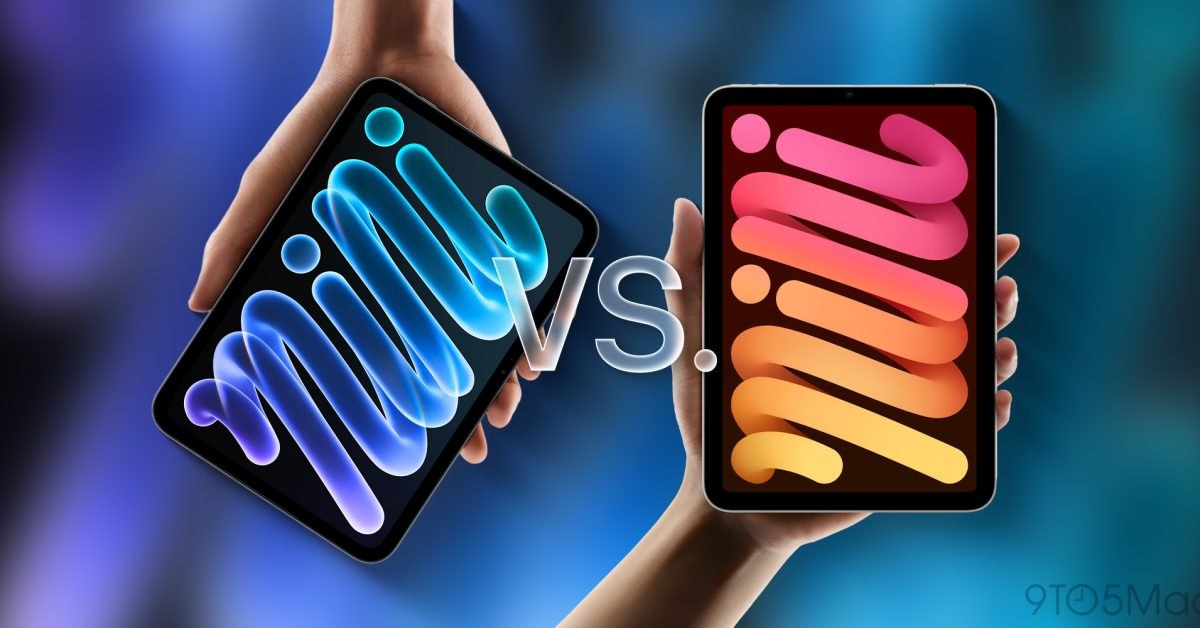
Apple launched its redesigned iPad mini featuring an 8.5-inch OLED display, an A20 Pro processor, and IP67 ingress protection, as detailed in 9to5Mac's report. The update transitions the compact tablet to modern silicon and hardware while raising the base price to $699.
This comparison evaluates every technical change between the new iPad mini and the previous A17 Pro model for prospective buyers. Across processing benchmarks, panel technology, chassis dimensions, wireless transceivers, and external monitor support, the details below map out what changed and what remains limited across storage tiers.
The test: New iPad mini vs previous model
Evaluating the physical shift between generations begins with the chassis footprint and primary display enclosure. Apple reduced depth from 6.3 millimeters to 5.4 millimeters, narrowed width from 134.8 millimeters to 132.6 millimeters, and cut Wi-Fi weight from 293 grams down to 255 grams. Screen bezels decreased by 24 percent, enabling an expansion from 8.3 inches to an 8.5-inch active area. Additionally, the Center Stage front camera moved to the landscape bezel, replacing the earlier portrait orientation to improve framing during video meetings.
Under the hood, testing the generational leap involves comparing Apple's 2-nanometer A20 Pro chip against the older A17 Pro silicon. The A20 Pro incorporates M-series packaging with doubled unified memory bandwidth alongside a 7-core graphics unit with dynamic caching, mesh shading, and ray tracing. Connectivity tests also reveal new proprietary hardware, as Apple replaced Qualcomm cellular chips with its in-house C2 modem, paired with an N1 wireless chip that introduces Wi-Fi 7 and Bluetooth 6 support to replace Wi-Fi 6E and Bluetooth 5.3.
How New iPad mini and previous model each did
In panel tests, the new iPad mini posts measurable visual advantages over the liquid crystal display on the previous model. The switch to OLED provides pixel-level lighting control for much deeper blacks and P3 wide color gamut reproduction without backlight bleed. Peak brightness reaches 1200 nits, doubling the 600-nit ceiling of the previous generation, while typical SDR and HDR brightness reaches 600 nits versus 500 nits previously. For dim environments, the panel drops to a 1-nit minimum, and 256GB or higher models offer an optional nano-texture finish.
Compute metrics show clear performance gains, though maximum throughput depends directly on the storage tier selected. Apple claims the 512GB model's A20 Pro delivers up to 4.5 times faster artificial intelligence processing via a Dual 16-core Neural Engine and per-core GPU accelerators, with 2.7 times faster graphics and 60 percent faster multithreaded CPU tasks. However, lower tiers use a binned chip limited to five CPU cores and a standard 16-core Neural Engine, contrasting with the prior A17 Pro line where core counts remained identical across tiers.
Advertisement
Tech Pulse Daily
Get tomorrow's pulse first
Join engineers who read Tech Pulse before stand-up. Free, weekday mornings.
New iPad mini vs previous model, side by side
A direct side-by-side assessment shows substantial physical and architectural changes across multimedia hardware, chassis durability, and external workflow options. The previous tablet used traditional stereo speakers on the outer edges, whereas the new model adopts an Acoustic Display system using panel-driven woofers and hidden tweeters for sound. That sealed enclosure provides official IP67 water and dust resistance, which the unrated prior generation completely lacked. Furthermore, connecting to external monitors via USB-C now enables full extended display desktop multitasking with windowed apps instead of mirror-only output.
| Feature | New iPad mini | Previous iPad mini |
|---|---|---|
| Price | Starts at $699 | Starts at $599 |
| Chip | Apple A20 Pro (2nm) | Apple A17 Pro |
| Display | 8.5-inch OLED | 8.3-inch LCD |
| Brightness | 1200 nits peak / 1 nit min | 600 nits peak |
| Dimensions | 5.4mm depth, 132.6mm width | 6.3mm depth, 134.8mm width |
| Weight | 255g (Wi-Fi) | 293g (Wi-Fi) |
| Camera | Landscape Center Stage | Portrait Center Stage |
| Protection | IP67 water/dust resistant | None rated |
| Wireless | Wi-Fi 7, Bluetooth 6 | Wi-Fi 6E, Bluetooth 5.3 |
| Cellular | Apple C2 modem | Qualcomm modem |
| Charging | 50% in 30 min (35W+) | Unspecified rate |
| External Monitor | Extended display mode | Mirroring only |
Power delivery and exterior aesthetics also show key differences when comparing both generations side by side. Apple equipped the new hardware with fast charging that reaches up to 50 percent capacity in 30 minutes when using a 35W or higher adapter, contrasting with the unspecified charging rates of the prior model. Exterior color options have also narrowed, replacing Space Gray and Starlight choices with a catalog limited strictly to Midnight and Starlight finishes, showing Apple streamlined exterior options while expanding functional internals.
See the New iPad mini vs previous model output
Acoustic output from the new display system delivers punchier bass notes and clearer high frequencies through woofers directed through the screen glass and tweeters tucked between the aluminum frame. In gaming sessions and spatial media playback, sound projects directly from on-screen actions rather than dispersing sideways through chassis grilles. Visual output is similarly enhanced, as the 1200-nit peak brightness renders highlights cleanly in HDR footage, while OLED black levels maintain high text legibility in sunlight or at 1 nit in pitch-black rooms.
Data throughput and processing output also reveal the combined impact of updated silicon and modern wireless modules. The N1 and C2 communication chips provide lower latency and higher transfer capacity over Wi-Fi 7 and cellular channels. Meanwhile, the 512GB model executes local language models and generative creative tools up to 4.5 times faster than the A17 Pro. Desktop workspace output similarly expands, as users can arrange distinct windowed applications across an external display while keeping tablet tasks active on the native 8.5-inch screen.
The verdict on New iPad mini vs previous model
Determining which tablet delivers superior value across different use cases depends on how users weigh display performance, environmental durability, and processing requirements. The new iPad mini provides tangible hardware upgrades with its 8.5-inch OLED screen, 1200 nits peak brightness, landscape Center Stage camera, IP67 ingress protection, and extended monitor support. Users working outdoors in wet conditions, creative artists requiring true P3 contrast, and mobile developers running on-device machine learning workflows receive substantial architectural improvements that modernize the compact tablet experience.
Conversely, the previous A17 Pro model remains a compelling option for cost-conscious users and routine media consumers seeking value. The $100 price increase elevates the entry threshold of the new generation to $699, while silicon binning restricts peak CPU and Neural Engine gains strictly to the expensive 512GB tier. Users who value the Space Gray colorway or only require basic reading, web browsing, and simple digital note-taking will find the previous generation delivers ample performance without the added financial commitment or necessity of higher-tier storage pricing.
Developer Action Items
- ☐ Diff the official changelog for Apple / Pixel 8.5 before you bump — APIs, defaults, and removed flags only.
- ☐ Install through the vendor's documented channel in staging; keep a one-command rollback and time-box the canary.
- ☐ Grep your repo for old flag names, lockfile pins, and plugin versions that the notes mark as breaking.
- ☐ Prefer the first patch cut over the day-zero tag unless you have a reason to be on the leading edge.
- ☐ If 9to5Mac did not name a region, plan, or SKU, screenshot the official availability line before you promise it to users.
New iPad mini vs previous model FAQ
How much does the new iPad mini cost compared to the previous model?
The new iPad mini starts at $699, which represents a $100 price increase over the $599 starting price of the previous generation.
What are the main screen differences between the two iPad mini models?
The new model features an 8.5-inch OLED screen reaching 1200 nits peak brightness and optional nano-texture, while the previous version had an 8.3-inch LCD panel capped at 600 nits.
Which processor is in the new iPad mini?
The new tablet runs on Apple's 2-nanometer A20 Pro chip, replacing the A17 Pro processor from the earlier generation.
When does the new iPad mini go on sale?
Pre-orders open Wednesday, October 28 at 10:10 a.m. PT, with customer deliveries starting on Friday, November 6.
Sources

Author
Dillip Chowdary
Writes Tech Bytes coverage of AI, engineering, and the tools that actually ship. Editor of Tech Pulse Daily.
Related on Tech Bytes
Advertisement