New leaks detail next year’s iPhone Pro redesign and iPhone Duo 2
New leaks reveal Apple's iPhone 20 Pro prototypes feature a titanium frame and quad-curved display alongside an iPhone Duo 2 with matching 7.6-inch screens.
By Dillip Chowdary • Nov 19, 2026 • Source: 9to5Mac
At a glance
- Upcoming lineup
- iPhone 20 Pro and iPhone Duo 2
- Release timing
- Next year's fall launch window
- Pro chassis
- Titanium frame with quad-curved bezel-free display
- Duo displays
- 7.6-inch inner and 5.4-inch outer screens
- Biometric hardware
- Side button Touch ID on Duo 2
- Biometric limit
- Face ID on Duo 2 remains questionable
Apple is preparing a significant overhaul for its upcoming fall smartphone portfolio, centering on a twentieth-anniversary redesign of its flagship tier alongside a second-generation foldable handset. New supply chain leaks from Weibo tipsters Fixed Focus Digital and Digital Chat Station, detailed in 9to5Mac's report, reveal that engineering teams are actively evaluating multiple prototype configurations for the premium tier. The hardware roadmap points to substantial structural shifts for the celebratory release, reviving previously retired premium materials while adjusting the overall scale of the chassis.
This breakdown examines the technical specifications emerging for the iPhone 20 Pro lineup and the companion iPhone Duo 2 folding device. It serves enterprise buyers, mobile software developers, and hardware enthusiasts evaluating upcoming upgrade timelines across consumer and commercial deployments. Readers will find details covering chassis construction, quad-curved display panels, foldable screen dimensions, and the biometric configurations expected for the anniversary cycle.
01Curved edges and prototype testing
Fixed Focus Digital disclosed that early testing of the upcoming iPhone 20 Pro incorporates a curved aesthetic reminiscent of the iPhone Air form factor. The casing departs from the severe flat borders of preceding generations, introducing softened contours around the perimeter of the phone. Multiple test builds are currently circulating in engineering validation stages to benchmark ergonomic handling and structural integrity.
Apple is evaluating several distinct shell configurations to celebrate the twentieth anniversary of the iPhone product family. Engineers are prioritizing refined grip geometry and tapered perimeter corners that echo design elements pioneered by the lightweight Air chassis. Testing multiple designs in parallel allows the company to balance industrial styling against thermal dissipation and internal component packaging requirements.
02Titanium frame return across iPhone generations
Early engineering units of the iPhone 20 Pro indicate that Apple may bring titanium back to the flagship Pro series. The manufacturer originally adopted titanium for the iPhone 15 Pro and iPhone 16 Pro before moving away from the material for the subsequent 17 Pro and 18 Pro generations. Because the iPhone Air retained titanium, design cues borrowed from that platform could justify reintroducing the lightweight metal.
Shifting material choices between generations highlights the tension between manufacturing yields, structural stiffness, and device mass. Adopting titanium on the twentieth-anniversary edition would align the flagship directly with the premium build profile of the Air. Prototype evaluations currently track whether the alloy can support the curved borders without adding excessive manufacturing complexity.
| Generation | Frame material | Production status |
|---|---|---|
| iPhone 15 Pro and 16 Pro | Titanium | Shipped hardware |
| iPhone 17 Pro and 18 Pro | Non-titanium | Material abandoned |
| iPhone Air | Titanium | Current production |
| iPhone 20 Pro | Titanium | Prototype testing |
The hardware matrix illustrates how structural metals have shifted across recent releases. While the previous two flagship generations moved away from titanium alloys, the specialized Air line maintained the metal for its strength-to-weight profile. Bringing the material back to the Pro tier would unite the anniversary flagship with the broader industrial design language established across current hardware.
Advertisement
Tech Pulse Daily
Get tomorrow's pulse first
Join engineers who read Tech Pulse before stand-up. Free, weekday mornings.
03Quad-curved bezel-free larger display
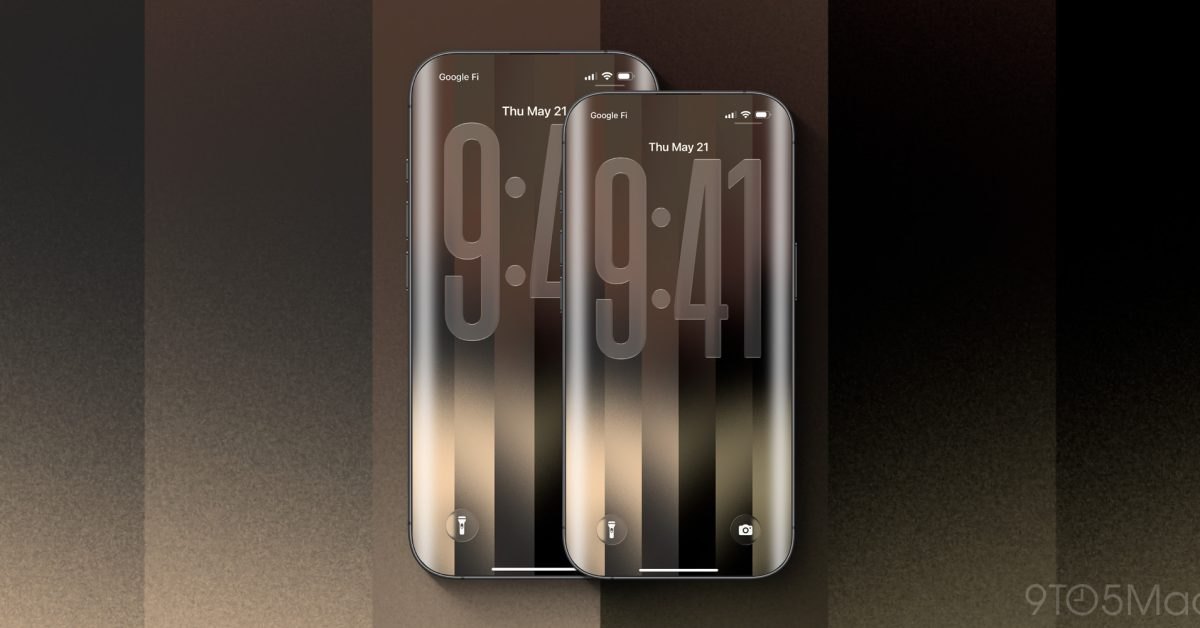
According to details shared by Digital Chat Station, the iPhone 20 Pro series will introduce a larger overall physical footprint. The expanded chassis accommodates a bezel-free, quad-curved display panel that arcs across every edge of the front assembly. This continuous screen curvature eliminates traditional perimeter framing to provide an edge-to-edge viewing surface across the primary interface.
Developing a four-sided curved panel represents a major fabrication milestone for the anniversary flagship display assembly. Eliminating visible borders requires precise glass shaping and specialized encapsulation techniques along the display margins. The resulting display architecture increases usable visual real estate while preserving ergonomic contact points along the rounded exterior frame.
04Foldable screen sizes and side Touch ID
Leaker disclosures regarding the second-generation iPhone Duo 2 indicate that Apple will retain the screen dimensions of the original foldable. The upcoming revision continues using a 7.6-inch folding internal display alongside a 5.4-inch external cover screen. Maintaining identical display measurements ensures mechanical consistency across display sourcing contracts and app interface scaling profiles.
The physical controls and biometric authentication architecture on the iPhone Duo 2 will also carry over directly from the prior hardware. Apple is keeping the side button with an integrated Touch ID fingerprint sensor rather than redesigning the power switch. Reusing this component layout simplifies internal packaging within the dual-chassis folding frame and maintains established user authentication habits.
05Internal component constraints and Face ID questions
Digital Chat Station characterized the potential inclusion of Face ID on the iPhone Duo 2 as questionable. Integrating optical projectors and depth sensors into a folding chassis presents severe packaging challenges within the thin dual halves. The leaker noted that internal component arrangements might demand too many architectural adjustments to make facial recognition viable on the revision.
Note: Hardware integration for advanced facial biometrics on the folding model remains uncertain because cramped interior compartments restrict sensor placement. While tipsters point out that restructuring internal modules could prove too disruptive for this product cycle, Apple has not issued official design documentation confirming final production specifications.
Apple faces distinct engineering trade-offs when balancing device thickness against sensor capabilities on foldable hardware. Because the Duo platform prioritizes a compact folded profile, reserving space for multi-element camera arrays and TrueDepth modules remains difficult. Consequently, reliance on the proven side-mounted capacitive scanner remains the most pragmatic path for the second-generation release.
Frequently asked questions
What display changes are planned for the iPhone 20 Pro?
The iPhone 20 Pro series will feature a larger physical footprint paired with a quad-curved, bezel-free display that curves across all four outer edges.
Will Apple use titanium on the iPhone 20 Pro?
Early prototypes feature a titanium frame, marking a potential return to the metal after Apple moved away from it on the iPhone 17 Pro and 18 Pro.
What are the screen dimensions of the iPhone Duo 2?
The second-generation foldable keeps the same display profile as the first model, utilizing a 7.6-inch folding interior panel and a 5.4-inch exterior cover screen.
Does the iPhone Duo 2 include Face ID?
Face ID support is questionable because internal hardware packaging constraints may prevent the necessary optical components from fitting inside the folding chassis.
Sources

Author
Dillip Chowdary
Writes Tech Bytes coverage of AI, engineering, and the tools that actually ship. Editor of Tech Pulse Daily.
Related on Tech Bytes
Advertisement