New mRNA Vaccine Reduces Risk of Melanoma Recurrence by Over 40 Percent
Merck and Moderna revealed Phase 3 trial data showing that a personalized mRNA cancer vaccine combined with immunotherapy cut melanoma recurrence risk by 42%.
By Dillip Chowdary • Oct 25, 2026 • Source: Wired
Merck and Moderna released Phase 3 clinical trial results evaluating an experimental personalized mRNA cancer vaccine called Intismeran Autogene. Administered with the immunotherapy drug Pembrolizumab, the combination treatment reduced melanoma recurrence or death by 42 percent compared to Pembrolizumab alone. According to Wired's report, the INTerpath-001 trial monitored 1,137 post-surgical patients over an average of 24.6 months. The data demonstrated a 38 percent drop in the risk of cancer spreading to distant organs.
This report details the clinical metrics, patient manufacturing process, and safety data documented in the Phase 3 trial. It is written for healthcare professionals, biotechnology researchers, and patients evaluating advanced post-surgical melanoma therapies. Readers will learn how individualized sequencing isolates tumor mutations, how combination regimens alter patient survival odds, and what logistical obstacles stand between laboratory validation and widespread clinical availability.
New mRNA Vaccine Reduces Risk of Melanoma: what actually changed
The INTerpath-001 study evaluated 1,137 participants with high-risk melanoma who underwent surgery to remove their tumors completely. Researchers divided the cohort into two groups. The first group received only Pembrolizumab, an immunotherapy drug helping the immune system detect and attack cancer cells. The second group received Pembrolizumab combined with the experimental mRNA vaccine Intismeran Autogene. Following patients for an average of 24.6 months revealed that adding the vaccine reduced the risk of recurrence or death by 42 percent compared to immunotherapy alone.
At the end of the follow-up period, 82.2 percent of patients receiving the dual treatment remained recurrence-free, compared to 70 percent of individuals who received Pembrolizumab alone. The clinical trial also demonstrated that the experimental vaccine reduced the risk of cancer spreading to distant parts of the body by 38 percent. Participants reported mild side effects such as fever, fatigue, and pain at the injection site. These reactions matched earlier trial results, confirming consistent safety when combining the vaccine with Pembrolizumab.
New mRNA Vaccine Reduces Risk of Melanoma: how it works
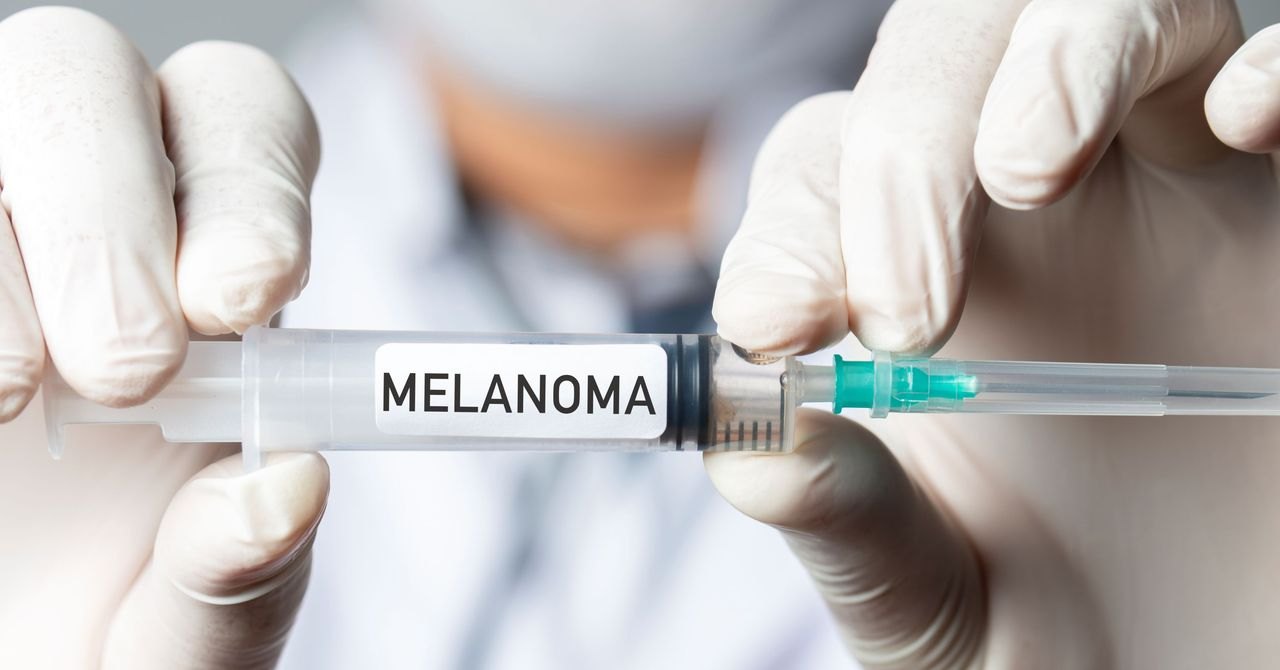
Laboratories create the experimental vaccine using a physical tumor sample extracted from each individual patient after surgical resection. Scientists examine the specimen to identify specific genetic mutations that produce distinct proteins recognizable to the immune system. From this mutational mapping, the team selects up to three distinct molecular signatures per patient to design the custom mRNA sequence. Once administered, the individualized vaccine instructs the patient's cells to present these target proteins, training the immune system to recognize and attack malignant cells throughout the body.
The therapeutic vaccine works in tandem with Pembrolizumab, which aids the immune system in identifying and targeting malignant cells. Eva Muñoz Couselo, who leads a melanoma research group at the Vall d’Hebron Institute of Oncology in Barcelona and was not involved in the study, told SMC Spain that for the first time, a Phase III trial has demonstrated that an individualized therapeutic vaccine, designed on the basis of the molecular characteristics of each patient’s tumor, can significantly improve conventional immunotherapy outcomes.
Advertisement
Tech Pulse Daily
Get tomorrow's pulse first
Join engineers who read Tech Pulse before stand-up. Free, weekday mornings.
New mRNA Vaccine Reduces Risk of Melanoma: why it matters now
Melanoma ranks among the most aggressive skin cancers, killing over 50,000 people globally each year despite high survival rates when detected early. Demonstrating that personalized vaccines reduce recurrence risk in high-risk patients marks a critical clinical milestone. Georgina Long, medical director of the Australian Melanoma Institute and principal investigator of the study, stated that these results are transformative and have the potential to make a foundational shift in how we treat patients with earlier-stage melanoma. Moderna CEO Stéphane Bancel stated that these results reinforce conviction that mRNA can fundamentally change cancer treatment.
The Phase 3 validation supports expanding personalized mRNA technology beyond skin cancer into other solid malignancies. Earlier this year, another clinical trial demonstrated that individualized mRNA vaccines can greatly improve survival among patients with pancreatic cancer, one of the deadliest forms of tumor. Marisol Soengas, a leading melanoma researcher at Spain’s National Cancer Research Center who was not involved in the trial, told SMC Spain that this breakthrough conceptually makes it possible to treat not only melanoma but also other tumors in which the immune system can be reactivated.
New mRNA Vaccine Reduces Risk of Melanoma: who is affected
The clinical trial concentrated exclusively on high-risk melanoma patients who had undergone complete surgical tumor resection. Merck and Moderna emphasized that the vaccine is not designed to prevent melanoma from developing initially, but rather to reduce the risk of cancer recurrence and patient death following prior medical treatment. For these post-surgical patients, standard care previously relied on single-agent immunotherapy, which left 30 percent facing disease recurrence within roughly two years. Adding the mRNA candidate lowers recurrence risk substantially, preserving cancer-free status for 82.2 percent of treated individuals.
The findings directly impact oncology practitioners, surgical teams, and hospital administrators managing advanced post-operative melanoma therapy. Because each vaccine formulation requires taking a tumor sample to sequence individual genetic mutations, treatment requires custom laboratory production rather than off-the-shelf dispensing. The pharmaceutical companies noted that the therapy remains under active clinical investigation to validate efficacy and obtain approval from health authorities before widespread clinical use. Consequently, access remains limited to registered trial participants while regulatory reviews and commercial supply chains are established across health networks.
New mRNA Vaccine Reduces Risk of Melanoma: what to watch
Merck and Moderna must secure formal clearances from global health authorities before Intismeran Autogene enters routine clinical use. Regulators will review clinical data from INTerpath-001 to verify whether the 42 percent recurrence risk reduction and 38 percent reduction in distant cancer spread endure over longer periods. Safety profiles from the Phase 3 study showed that participants experienced mild side effects consisting of fever, fatigue, and pain at the injection site. Health authorities will weigh these manageable adverse reactions against the clinical survival benefits to establish therapeutic labeling.
Production logistics and economic sustainability represent the most critical hurdles for widespread implementation. Marisol Soengas stated that the central challenge is ensuring this personalization can scale up to treat high patient volumes while remaining affordable for healthcare systems, describing the treatment as logistically complex and literally a bespoke vaccine. Researchers and healthcare systems will also observe whether upcoming clinical trials can successfully adapt personalized mRNA technology to other aggressive tumors, including pancreatic cancer, confirming whether individualized mRNA vaccines can transform standard oncology protocols globally.
Developer Action Items
- ☐ Diff the official changelog for mRNA Vaccine Reduces Risk 24.6 before you bump — APIs, defaults, and removed flags only.
- ☐ Install through the vendor's documented channel in staging; keep a one-command rollback and time-box the canary.
- ☐ Grep your repo for old flag names, lockfile pins, and plugin versions that the notes mark as breaking.
- ☐ Prefer the first patch cut over the day-zero tag unless you have a reason to be on the leading edge.
- ☐ If Wired did not name a region, plan, or SKU, screenshot the official availability line before you promise it to users.
New mRNA Vaccine Reduces Risk of Melanoma FAQ
What were the primary findings of the INTerpath-001 trial?
Combining the personalized mRNA vaccine Intismeran Autogene with Pembrolizumab reduced melanoma recurrence or death by 42 percent compared to Pembrolizumab alone. The regimen also reduced the risk of the cancer spreading to other parts of the body by 38 percent.
How is the personalized vaccine created for each patient?
Scientists analyze a tumor sample removed during surgery to isolate mutations that create distinct proteins recognizable to immune defenses. Up to three of these molecular signatures are chosen per patient to manufacture an individualized mRNA sequence.
Is this mRNA vaccine intended to prevent melanoma?
No, the vaccine is not designed to prevent initial melanoma development in healthy individuals. It is an investigational therapeutic treatment intended to stop recurrence and death in high-risk patients who have already undergone surgical tumor removal.
What side effects were reported during the trial?
Participants experienced mild side effects consistent with earlier clinical phases, including fever, fatigue, and pain at the injection site.
Sources

Author
Dillip Chowdary
Writes Tech Bytes coverage of AI, engineering, and the tools that actually ship. Editor of Tech Pulse Daily.
Related on Tech Bytes
Advertisement