Next week’s MacBook Pro could be huge upgrade, but with one problem
Apple will unveil a redesigned OLED touchscreen MacBook Pro on October 28, but the laptop will retain existing M5 Pro chips with no performance boost.
By Dillip Chowdary • Oct 24, 2026 • Source: 9to5Mac

Apple is preparing to unveil a redesigned MacBook Pro at its Pro and tell event on October 28, pairing major physical enhancements with an unexpected pause in processing power. According to 9to5Mac's report on the upcoming launch, the new laptop introduces an overhaul of the external chassis while retaining the exact same M5 Pro and M5 Max chips that debuted nearly eight months ago. The machine adds an OLED touchscreen, but breaks traditional upgrade cycles by delivering no computational performance boost.
This analysis details the mechanical redesign, display upgrades, silicon roadmap shifts, and pricing implications surrounding the October 28 announcement. It is designed for creative professionals, software engineers, and hardware buyers who need to evaluate whether an exterior transformation justifies an upgrade without corresponding processing gains. By examining the transition away from the display notch, the arrival of Dynamic Island, and reports that Apple is skipping M6 chips to fast-track M7 development for 2027, this guide outlines practical trade-offs awaiting Mac users.
Next week’s MacBook Pro could be huge upgrade: the announcement
Apple scheduled its special Pro and tell keynote for October 28, positioning the presentation around significant updates to its pro-grade computing lineup. The central reveal of the event is a thoroughly redesigned MacBook Pro enclosure that alters the physical proportions and visual identity of the premier portable workstation. Rumors point toward a package that trims thickness and shaves meaningful weight off the existing unibody frame. The impending reveal represents Apple's most consequential structural re-engineering of the notebook since the current architecture was introduced.
Beneath the exterior changes lies a notable silicon compromise documented by Bloomberg reporter Mark Gurman. Rather than introducing upgraded silicon, Apple plans to outfit the revised notebook with the existing M5 Pro and M5 Max processors that arrived earlier this year. Because these chips have circulated for nearly eight months, purchasers will receive identical benchmark figures and core counts to models currently on sale. Releasing a premium refresh without raw processor gains marks an unusual deviation for a machine traditionally sold on computational velocity.
What actually changed with Next week’s MacBook Pro could be huge upgrade
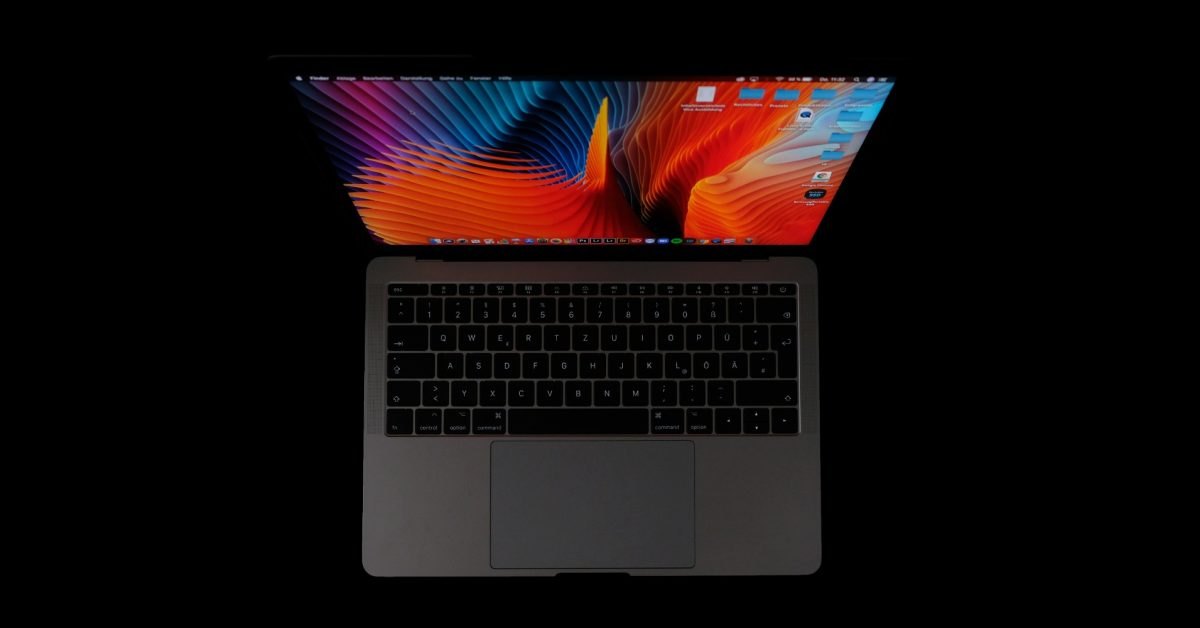
The physical modifications centered around the display and outer case represent the core of the upgrade. Apple is implementing an OLED screen that provides deeper black levels, superior contrast, and improved power efficiency compared to earlier mini-LED panels. Alongside the OLED panel, the screen gains touch capability, bringing direct finger interaction to macOS displays for the first time. The screen housing also discards the static camera notch, replacing it with the Dynamic Island interface seen on modern iPhones within a thinner, significantly lighter chassis.
In addition to the visual overhaul, supply chain expectations include a wildcard wireless enhancement in the form of Apple's proprietary C2 cellular modem. If integrated, the C2 modem would allow the notebook to maintain untethered broadband connections away from local Wi-Fi networks. However, internal computational hardware remains stagnant. The system relies entirely on the M5 Pro and M5 Max silicon launched nearly eight months prior. With no architectural upgrades to CPU or GPU pipelines, the redesign focuses on interaction modes rather than rendering speeds.
Advertisement
Tech Pulse Daily
Get tomorrow's pulse first
Join engineers who read Tech Pulse before stand-up. Free, weekday mornings.
Who should care about Next week’s MacBook Pro could be huge upgrade
Mobile professionals who prioritize weight reduction and display quality over pure calculation speed will find the new design appealing. Traveling executives, field researchers, and digital artists who carry their devices benefit from a lighter chassis, touch-sensitive glass, and the rich contrast of OLED panels. Removing the notch in favor of Dynamic Island provides a cleaner viewing area for creative software. For users working across mixed environments, the potential inclusion of the C2 cellular modem provides on-the-go data access without relying on personal hotspot tethering.
Conversely, power users who skipped the rollout of the M5 Pro and M5 Max earlier this year face an awkward purchasing dilemma. Developers running massive local builds, 3D animators, and data scientists seeking generational performance boosts will receive no computational advantage by adopting this revised chassis. Because the internal chips mirror hardware available since early 2026, buyers who require more throughput are unlikely to justify upgrading solely for touch controls or reduced casing thickness, especially given the anticipated price increases accompanying the hardware redesign.
How to try Next week’s MacBook Pro could be huge upgrade
Consumers interested in the refreshed design can tune into the live broadcast of Apple's Pro and tell keynote on October 28. Following the stream, demonstrations of the touchscreen functionality and the OLED display will become available through official retail outlets and authorized demonstration units. Experiencing the new interface in person will be critical for prospective buyers, as touch interactions and Dynamic Island represent fundamental shifts in how operators navigate macOS. Testing the lighter weight directly will help users determine if ergonomic gains compensate for unchanged processing.
Prospective customers must also prepare for potential shifts in commercial structure. Given substantial component costs associated with OLED screens and industrial tooling, industry projections indicate the redesigned laptop could carry an elevated starting price near $2,999. While Apple could theoretically retire existing M5 Pro and M5 Max models to position the new design at current retail tiers, prevailing memory-crisis market pressures make direct price replacement less probable. Buyers will need to examine retail configurations carefully to assess whether physical enhancements align with the premium financial outlay.
What to watch after Next week’s MacBook Pro could be huge upgrade
The critical factor to monitor following the launch is Apple's reorganized silicon roadmap. Reports indicate the company is bypassing M6 Pro and M6 Max generations completely, choosing instead to focus engineering resources on fast-tracking M7 Pro and M7 Max processors for a 2027 release. This unusual hiatus leaves the professional laptop portfolio without an architectural processing upgrade for an extended window. Observing whether Apple explains this strategic gap during the keynote will offer clues regarding semiconductor fabrication schedules and thermal constraints within the thinner chassis.
Market reception over subsequent quarters will determine whether visual and tactile enhancements can drive sales without benchmark advancements. Observers will watch how Apple frames its marketing message to professional creators who expect percentage gains in processing throughput. Analysts will track whether the optional C2 cellular modem establishes a permanent place in the Mac line or remains an isolated experiment. If customer reception remains lukewarm ahead of the M7 generation in 2027, Apple may re-evaluate how it decouples chassis redesigns from foundational silicon upgrades.
Developer Action Items
- ☐ Diff the official changelog for Apple / macOS before you bump — APIs, defaults, and removed flags only.
- ☐ Install through the vendor's documented channel in staging; keep a one-command rollback and time-box the canary.
- ☐ Grep your repo for old flag names, lockfile pins, and plugin versions that the notes mark as breaking.
- ☐ Prefer the first patch cut over the day-zero tag unless you have a reason to be on the leading edge.
- ☐ If 9to5Mac did not name a region, plan, or SKU, screenshot the official availability line before you promise it to users.
Next week’s MacBook Pro could be huge upgrade FAQ
When will Apple announce the redesigned MacBook Pro?
Apple is expected to unveil the new MacBook Pro on October 28 at its scheduled Pro and tell event.
Which processors will power the new MacBook Pro?
The laptop will reportedly use the existing M5 Pro and M5 Max chips that debuted nearly eight months ago, offering no performance boost.
What are the main hardware changes rumored for the new MacBook Pro?
The redesign features a thinner and lighter chassis, an OLED touchscreen, Dynamic Island, no notch, and potentially Apple's C2 cellular modem.
Why is Apple not upgrading the processor in this MacBook Pro?
Apple is reportedly skipping the M6 Pro and M6 Max generations entirely to fast-track the M7 Pro and M7 Max processors for release in 2027.
How much will the redesigned MacBook Pro cost?
Industry projections indicate the new model could carry an estimated starting price of approximately $2,999.
Sources

Author
Dillip Chowdary
Writes Tech Bytes coverage of AI, engineering, and the tools that actually ship. Editor of Tech Pulse Daily.
Related on Tech Bytes
Advertisement