No Pilots. Few Air Traffic Controllers. What Could Go Wrong?
Joby Aviation completed a 3,200-mile autonomous Cessna flight while the FAA expanded automated traffic tools and delivery drone corridors nationwide.
By Dillip Chowdary • Nov 15, 2026 • Source: Wired
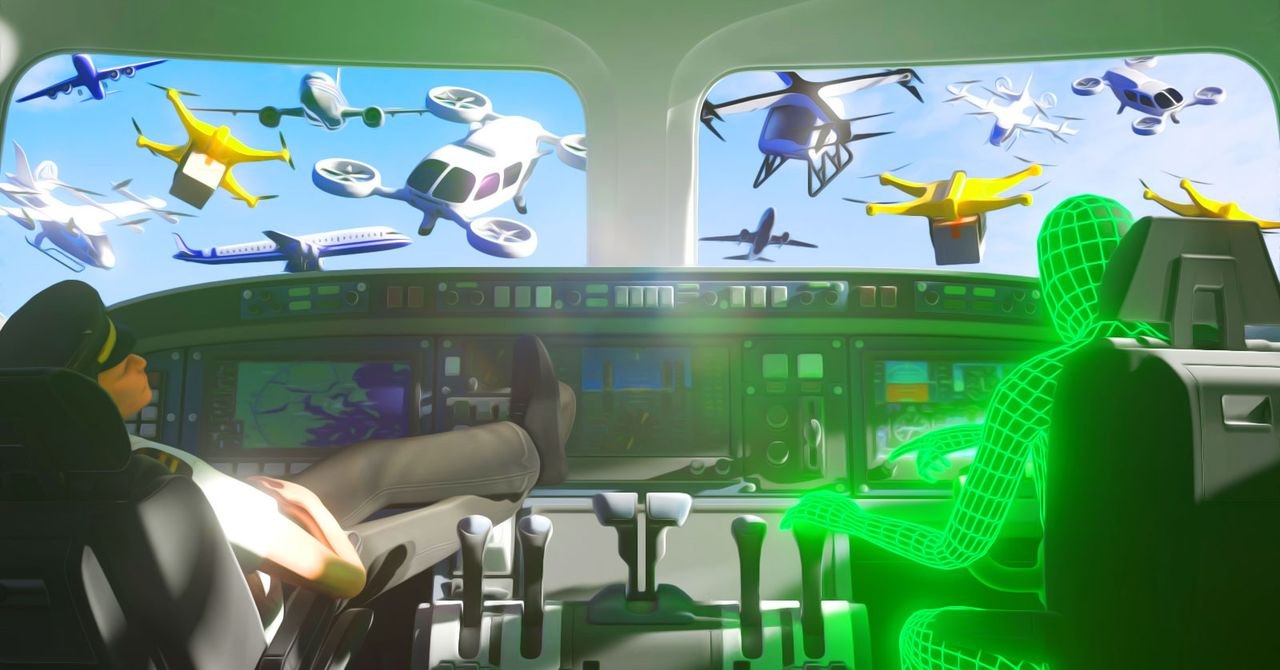
The United States Department of Transportation deployed a new automated air traffic management system named SMART to cut flight delays, according to Wired's report. Federal agencies and private aerospace companies are simultaneously accelerating the deployment of autonomous navigation platforms, delivery drones, and pilotless passenger aircraft across domestic airspace.
This report details autonomous flight milestones, federal tracking mandates, cockpit automation disputes, and commercial drone expansions transforming civil aviation. It covers infrastructure developments, safety certifications, and unit economics across the modern aerospace sector. The analysis is written for aerospace engineers, logistics managers, and flight operations specialists tracking autonomous aviation systems.
01Federal automated traffic control and groundstop
Transportation secretary Sean Duffy announced the SMART air traffic management system on social media to reduce flight delays. Almost three weeks later, an unexpected FAA groundstop on Friday the 13th disrupted airline schedules worldwide due to a communications failure. Federal officials found no evidence of a cyberattack or direct software failure linked to SMART.
Homeland Security secretary Markwayne Mullin stated on Friday night that investigators could not definitively rule out automated system failure during the disruption. A recently retired FAA employee warned that rushing complex automation into air traffic control creates serious hazards. Critics contend that untested software platforms risk destabilizing delicate airspace coordination across major domestic flight corridors.
The widespread groundstop placed intense scrutiny on federal flight modernization initiatives designed to manage growing airspace congestion. Aviation agencies face persistent pressure to balance digital adoption against the rigorous safety verification that has historically protected civilian air travel. Regulators must determine whether computerized traffic management tools can reliably coordinate dense commercial flight operations without recurring failures.
02Autonomous Cessna caravan cross country flight
Joby Aviation completed a milestone coast-to-coast autonomous journey using a single-engine turboprop Cessna Caravan without manual steering. The aircraft departed Buchanan Field Airport in Concord, California, and flew south to Phoenix on a calm September morning. It then turned east to Fort Worth, stopped at Shaw Air Force Base, and landed at Dare County Regional Airport.
The 3,200-mile zigzag flight navigated crowded airspace corridors and steered around stormy weather entirely on automated flight controls. A safety pilot remained aboard the turboprop throughout the transcontinental crossing but never touched the controls. Joby confirmed that the autonomous navigation system handled every maneuver and route adjustment without requiring human intervention.
The transcontinental demonstration showed that automated software can guide conventional aircraft safely through changing weather and complex flight paths. The aviation industry has long favored time-tested equipment over unpredictable cutting-edge technology because human lives are at stake. Joby's long-distance flight provided operational validation for operating future cargo and passenger routes without direct human piloting.
Advertisement
Tech Pulse Daily
Get tomorrow's pulse first
Join engineers who read Tech Pulse before stand-up. Free, weekday mornings.
03NextGen tracking rules and project wing
The push toward automated aviation began in the early 2000s, when advances in batteries and microelectronics made drones cheaper and more capable. Federal officials recognized that unmanned systems would eventually share domestic skies with human pilots, requiring new coordinating infrastructure. At that time, virtually all aircraft were human-piloted, and drones lacked the capability to avoid other aircraft.
In 2007, the federal government launched the NextGen program, mandating sweeping infrastructure modernization across civil aviation. NextGen required all aircraft in the United States to carry ADS-B transmitters by 2020. The ADS-B system continuously broadcasts radio signals detailing exact aircraft positions and headings, enabling automated craft and piloted airliners to monitor each other safely.
Technology firms quickly capitalized on these tracking standards to develop autonomous delivery operations. Google introduced Project Wing in 2014, delivering food, coffee, and medication to 164 homes near Canberra, Australia, by 2018. Google expanded the trial to Christiansburg, Virginia, in 2019, accepting high initial operating costs to build operational experience for commercial autonomous delivery networks.
04Electric air taxis and cockpit automation
Startups entered the urban aviation market with electric vertical takeoff and landing aircraft, producing 600 distinct eVTOL designs across the industry by 2022. Joby unveiled its production S4 model in 2020, engineered to carry a pilot and four passengers 100 miles at 200 mph. The S4 completed its maiden flight last year as commercialization deadlines approached.
Engineering autonomous aircraft proved easier than solving airspace integration, supervisory training, and commercial operating models. Greg Bowles, Chief Policy Officer at Joby Aviation, called the regulatory integration process a very important and careful dance. Aviation lawyer and former Department of Transportation inspector general Mary Schiavo noted that aviation regulation demands demonstrated proof and safety through incremental rather than radical change.
Automation also encountered firm opposition from European airline pilot unions. In 2017, Airbus and Dassault asked the European Union Aviation Safety Agency to consider single-pilot operations supported by automated cockpit systems. The European Cockpit Association strongly protested removing safety pilots from the flight deck, prompting the European regulator to shelve the single-pilot proposal last year.
05Commercial drone corridors and urban demonstrations
Federal regulators advanced commercial drone deployment in 2023 by granting waivers for flights beyond the visual line of sight of remote operators. The FAA could finalize permanent rules for beyond-visual-range drone flights by the end of this year. Major corporations are scaling operations, with Amazon targeting 500 delivery locations this year and Walmart planning delivery from 270 stores by 2027.
DroneUp chief operating officer Anthony Vittone predicted that drone deliveries will become ubiquitous within five to ten years as regional networks scale nationwide. Industry projections suggest hundreds of thousands of autonomous drones will eventually serve most of the American population. These high-density corridors will handle everyday package distribution, pharmaceutical drop-offs, and commercial logistics across urban and suburban neighborhoods.
Passenger eVTOL manufacturers are advancing alongside cargo drones under the federal eVTOL Integration Pilot Program launched by the Trump administration this past March. Joby completed the first point-to-point flight within New York City this April, flying between John F.
Kennedy Airport and three Manhattan heliports. Joby plans passenger demonstrations under increasing regulatory oversight, ultimately requiring pilotless flight to achieve sustainable operating economics.
No Pilots. Few Air Traffic Controllers. What FAQ
What is the FAA SMART air traffic management system?
SMART is an automated air traffic management platform introduced by US transportation secretary Sean Duffy on September 27 to reduce flight delays and optimize domestic air traffic corridors. Although an FAA groundstop occurred three weeks later due to a communications failure, officials reported no evidence of a cyberattack or software failure linked to SMART.
How did Joby Aviation complete its autonomous cross-country flight?
Joby flew a single-engine turboprop Cessna Caravan 3,200 miles across the country from Concord, California, to North Carolina without a human touching the controls. An onboard safety pilot monitored the automated flight system across stops in Phoenix, Fort Worth, and South Carolina without needing to intervene.
What are the flight specifications of Joby's S4 electric air taxi?
The Joby S4 is an electric vertical takeoff and landing aircraft designed to carry one pilot and four passengers over distances of 100 miles or more at speeds up to 200 mph. The aircraft completed its maiden flight last year and conducted demonstration flights between John F. Kennedy Airport and Manhattan heliports in April.
What are the commercial rollout targets for Amazon and Walmart delivery drones?
Amazon planned to expand its autonomous drone delivery service to 500 locations nationwide by the end of this year following FAA waivers for beyond-visual-line-of-sight operations. Walmart plans to establish commercial drone delivery services from 270 store locations across the United States by the end of 2027.
Sources

Author
Dillip Chowdary
Writes Tech Bytes coverage of AI, engineering, and the tools that actually ship. Editor of Tech Pulse Daily.
Related on Tech Bytes
Advertisement