Oil Spills Wreak Havoc on the Bottom of the Ocean, Even a Decade Later
Crews worked on wet decks deploying specialized nets designed to open and close mechanically at discrete target depths to isolate resident creatures.
By Dillip Chowdary • Oct 25, 2026 • Source: Wired
A study published in the Proceedings of the National Academy of Sciences revealed that animal populations across the deepwater northern Gulf of Mexico collapsed following the Deepwater Horizon industrial disaster, as detailed in Wired's report. Researchers evaluated marine life spanning hundreds of miles and determined that creatures dwelling in the deep-pelagic zone suffered catastrophic drops ranging from 60 to 85 percent in the three and a half years after the blowout. The findings document the fastest and most severe faunal decline ever recorded for Earth's largest ecosystem type, showing that deep-sea habitats miles down lack the natural buffering previously assumed to shield them from offshore industrial accidents.
This analysis breaks down the multi-year marine sampling data, the biological consequences rippling through ocean food webs, and the critical implications for proposed deep-sea industrial activities. It is written for environmental researchers, regulatory policy analysts, and marine industry observers tracking deep-ocean baselines, industrial oversight, and environmental restoration programs. The investigation demonstrates how suspended hydrocarbons and millions of gallons of chemical dispersants permanently disrupted deepwater fauna without meaningful signs of ecological recovery over more than a decade of active monitoring.
Oil Spills Wreak Havoc on the Bottom: what actually changed
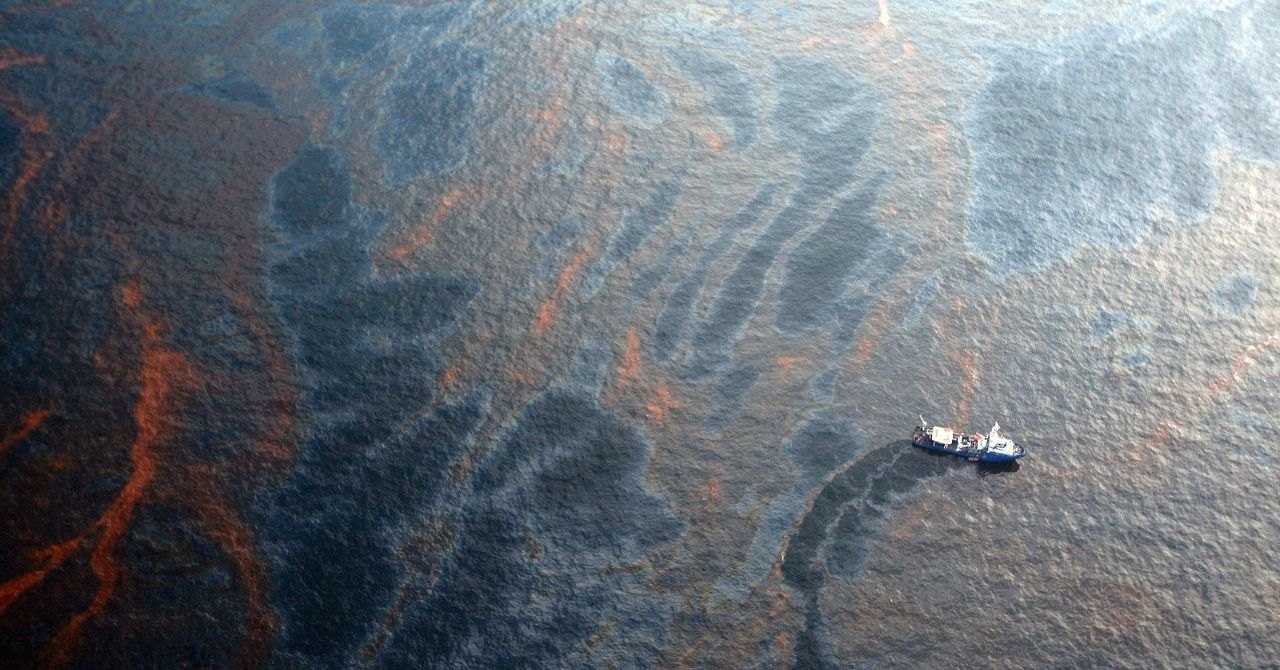
The transoceanic drilling rig operating for BP exploded on April 20, 2010, roughly 50 miles southeast of the Mississippi Delta, killing 11 people and initiating the largest accidental marine oil spill in human history. The broken well head discharged 4.9 million barrels of crude oil at a rate of roughly 400 tanker trucks per day over 87 days, an amount capable of filling 1.2 million vehicles. Alongside the liquid oil, the blowout spewed 7.7 billion cubic feet of fossil gas into the deep ocean at a pace of 88 million cubic feet per day, enough fuel to power approximately 820,000 residential homes in the United States.
Response operations sanctioned by federal bodies, including the Environmental Protection Agency, introduced 1.84 million gallons of chemical dispersants to break up the discharge. While portions of the hydrocarbons coated coastal barrier islands and wetland shellfish areas, enormous quantities of oil and dispersant compounds remained suspended throughout deep marine layers or settled onto the seafloor sediment. Repeated scientific surveys conducted from 2015 through 2023 demonstrated that key foundational organisms—including krill, lanternfish, octopus, shrimp, and squid—saw their numbers diminish by 60 to 85 percent, with ongoing population bottlenecks blocking standard natural reproduction cycles across the Gulf.
Oil Spills Wreak Havoc on the Bottom: how it works
To monitor the ecological collapse, a research team led by Tracey Sutton of Nova Southeastern University in Florida established baseline measurements across nine months of initial sampling in 2011 before executing nine comprehensive survey campaigns between 2015 and 2023. Field crews sampled a systematic grid from 650 feet below the ocean surface down to approximately one mile deep, covering deep-pelagic layers that account for roughly 90 percent of the total volume of the Gulf of Mexico. Crews worked on wet decks deploying specialized nets designed to open and close mechanically at discrete target depths to isolate resident creatures.
Field biological identifications were cross-checked using around-the-clock sampling windows scheduled at noon and midnight to factor in organisms engaging in daily vertical migration cycles. Researchers confirmed net captures by deploying ship-mounted scientific echosounders that registered acoustic reflection profiles from marine life swimming through the water column. The researchers evaluated alternative explanations, systematically assessing water temperature variances and dissolved oxygen measurements across the region. Logical elimination confirmed that the lingering chemical pollution from the blowout provided the only scientifically valid explanation matching the geographic grid and biological die-off rates.
Advertisement
Tech Pulse Daily
Get tomorrow's pulse first
Join engineers who read Tech Pulse before stand-up. Free, weekday mornings.
Oil Spills Wreak Havoc on the Bottom: why it matters now
The collapse carries profound consequences for broader global systems because deepwater marine life directly facilitates the transport of atmospheric carbon dioxide downward into deep ocean storage reservoirs. When massive aggregations of midwater and bottom-dwelling biomass vanish, the biological pump that regulates global carbon movement suffers measurable efficiency losses. Furthermore, the extreme reduction in surviving animal populations has triggered genetic bottlenecks that restrict genetic diversity, leaving residual colonies with limited natural resilience to overcome persistent chemical toxins or restore pre-spill population numbers.
The findings also provide critical baseline evidence as commercial interests prepare to launch deep-sea industrial mining operations. Researchers and independent marine scientists, including Bruce Robison of the Monterey Bay Aquarium Research Institute, warned that industrial deep-sea mining risks unleashing toxic discharges containing heavy metals and machine lubricants into midwater layers before scientists even catalogue baseline biodiversity. The Deepwater Horizon disaster proves that contaminants introduced miles down do not dissipate harmlessly into open water, but instead linger long enough to dismantle fragile communities that require decades to show even basic signs of recovery.
Oil Spills Wreak Havoc on the Bottom: who is affected
The biological destruction extends from microscopic and foundational forage organisms up through apex ocean predators across the northern Gulf basin. Krill and lanternfish populations collapsed, directly depriving larger predatory marine animals of the dense feeding aggregations essential to their caloric survival. A 2024 study recorded an 80 percent decline among deep-diving toothed whales across the region. Sutton noted that a sizable resident community of sperm whales that once populated waters off the Mississippi River disappeared entirely, with researchers failing to document a single sperm whale sighting in the area over the last ten years.
Surviving cephalopods, crustaceans, and fishes in the deep zone also face sensory impairment caused by residual hydrocarbon and dispersant traces. The paper indicates that trace chemical pollutants lingering in dark deep-pelagic zones compromise the highly specialized olfactory senses that marine animals depend on to locate mates and track prey in total darkness. In shallower habitats, coastal dolphins and whales continue to suffer chronic developmental defects, reproductive failures, and elevated mortality rates stemming from the persistent toxic footprint left by the disaster.
Oil Spills Wreak Havoc on the Bottom: what to watch
Restoration programs and natural resource damage assessments managed across federal, state, and tribal trustee panels continue to monitor the Gulf using dedicated recovery funding. In 2016, BP finalized a $20.8 billion legal settlement, which earmarked up to $8.8 billion specifically for natural resource and environmental restoration initiatives across the impacted states. Observers and marine scientists will watch how trustee organizations allocate remaining funding toward unmanaged, non-commercial deep-pelagic species that do not support commercial harvesting yet underpin the broader marine food chain.
Scientific teams will also monitor whether the three independent lines of evidence—net trawls, acoustic echosounder data, and genetic sequencing—detect any upward recovery trend in upcoming deepwater trawling runs. Watch for international regulatory bodies debating deep-sea mining guidelines to cite these multi-year net samples when setting restrictions on industrial wastewater discharge and machinery lubricants. With over 15 years elapsed since the well head blowout, researchers will continue tracking whether deep pelagic populations can ever overcome ongoing genetic bottlenecks without active intervention.
Developer Action Items
- ☐ Verify the claim on the official Windows page (or Wired), not from this recap alone.
- ☐ Name the surface that moved — API, policy, model, hardware, or commercial terms — before you Slack the thread.
- ☐ Assign one owner a day to read the primary material and decide: this-sprint, this-quarter, or noise.
- ☐ Do not change production on day-one coverage. Watch the vendor changelog and one independent write-up first.
Oil Spills Wreak Havoc on the Bottom FAQ
How much oil and gas escaped into the Gulf of Mexico during the Deepwater Horizon blowout?
The broken well discharged 4.9 million barrels of oil and approximately 7.7 billion cubic feet of fossil gas over 87 days following the April 20, 2010 explosion.
How steep was the population decline among deep-sea animals after the spill?
Surveys conducted between 2015 and 2023 showed that populations of deep-pelagic animals like krill, lanternfish, squid, shrimp, and octopus fell by 60 to 85 percent within three and a half years.
How did scientists verify the fish counts across the deep-pelagic zone?
Research teams deployed opening-and-closing net hauls at depths ranging from 650 feet to a mile down at noon and midnight, cross-referencing their catches with acoustic data from ship-mounted scientific echosounders and genetic sampling.
Did BP pay for environmental damages caused by the spill?
BP agreed to a $20.8 billion settlement in 2016, which included up to $8.8 billion dedicated specifically to environmental and natural resource restoration efforts.
Sources

Author
Dillip Chowdary
Writes Tech Bytes coverage of AI, engineering, and the tools that actually ship. Editor of Tech Pulse Daily.
Related on Tech Bytes
Advertisement