OpenAI, Anthropic face new oversight as New York’s AI safety law takes
New York opened an AI safety portal requiring firms like OpenAI and Anthropic to register by January 1, 2027 or risk civil fines reaching $3 million.
By Dillip Chowdary • Nov 11, 2026 • Source: TechCrunch
New York opened an official compliance portal to enforce the state's upcoming artificial intelligence safety statute, requiring frontier developers like OpenAI and Anthropic to register before the January 1, 2027 deadline. According to TechCrunch's report, the rollout operationalizes the RAISE Act to establish binding governance over frontier artificial intelligence labs operating in the state.
This guide details the mandatory registration timelines, public transparency disclosures, administrative oversight bodies, and penalty structures enacted by New York lawmakers. It is intended for software engineers, compliance officers, and technology leaders tracking state-level artificial intelligence regulation across the United States.
01Mandatory registration and incident reporting rules
The RAISE Act establishes formal disclosure and operating standards for major artificial intelligence developers across New York. The statutory threshold captures frontier model creators reporting more than $500 million in annual gross revenue. Qualified firms must formally register through the state portal ahead of the January 1, 2027 effective date or face immediate administrative enforcement actions.
Covered companies must publish detailed safety frameworks directly on their public websites and issue comprehensive model transparency reports. In addition to technical documentation, the statute requires developers to submit critical safety incident notices to state officials within 72 hours of discovery. These disclosures ensure regulators receive rapid warnings regarding catastrophic malfunctions or severe operational vulnerabilities.
State officials designed the transparency rules to force frontier developers into continuous public accountability rather than voluntary self-policing. Regulators can bring formal enforcement proceedings against any organization that refuses to complete portal filings by the statutory deadline. Although state representatives declined to disclose specific initial targets, the rules apply directly to industry leaders including OpenAI and Anthropic.
02Agency oversight and multi-million civil penalties
Enforcement authority under the RAISE Act rests with the newly created Office of Digital Innovation, Governance, Integrity, and Trust. Known as DIGIT, the specialized administrative agency is charged with evaluating developer disclosures and overseeing commercial AI operations statewide. Agency officials hold broad investigative powers to monitor frontier compliance and examine corporate safety filings.
The legislation arms the regulatory office with substantial financial penalties to deter corporate non-compliance. First-time violations carry civil fines of up to $1 million, while subsequent infractions escalate to statutory penalties as high as $3 million. These tiered sanctions provide regulators with significant leverage against well-funded technology developers that fail to meet filing deadlines.
Regulators also retain independent authority to initiate enforcement actions against companies that neglect portal registration requirements. State representatives confirmed that administrative penalties can be assessed alongside existing consumer protection remedies. The structured fines establish New York as one of the most aggressively enforced jurisdictions for advanced artificial intelligence oversight in the nation.
Advertisement
Tech Pulse Daily
Get tomorrow's pulse first
Join engineers who read Tech Pulse before stand-up. Free, weekday mornings.
03Research center launch and independent evaluation
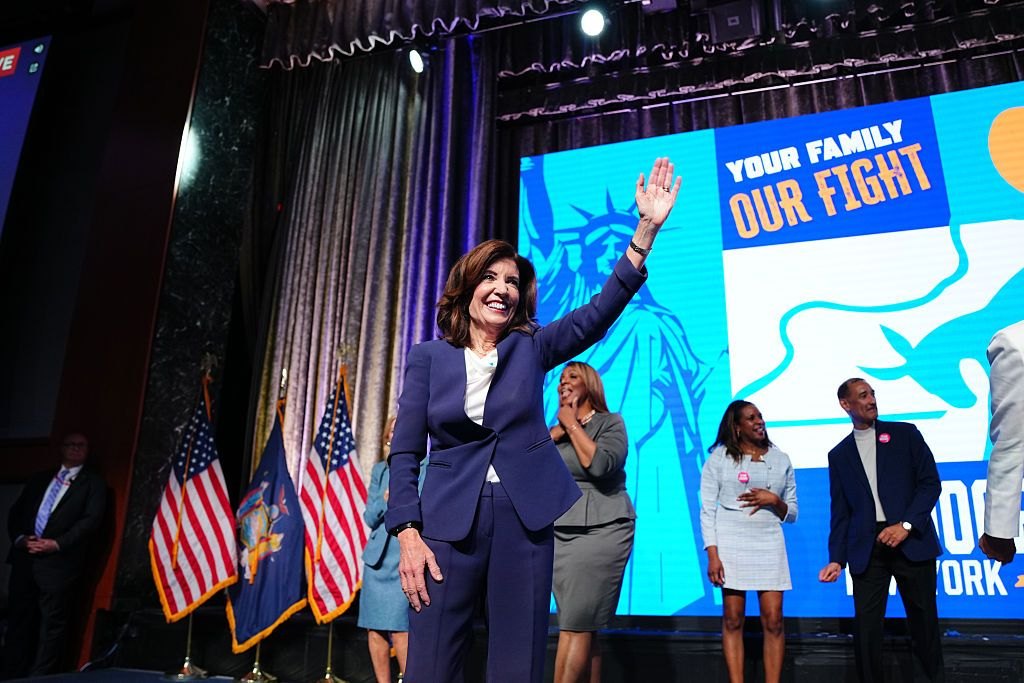
To support technical enforcement, Governor Kathy Hochul launched the New York Center for AI Responsibility and Research at the State University of New York's Binghamton University. The academic institution was first unveiled in January backed by $55 million in combined capital and donations. The research center provides the technical expertise required to evaluate cutting-edge frontier software.
The Binghamton facility operates as an independent technical auditor evaluating the safety, security, and baseline operation of advanced artificial intelligence systems. Researchers will collaborate directly with DIGIT staff to review commercial safety frameworks submitted by registered vendors. This partnership ensures that state regulatory reviews are grounded in independent engineering evaluations rather than proprietary vendor claims.
During a Tuesday press briefing, Hochul sharply criticized unchecked industry expansion and defended state intervention. The governor remarked that tech leaders claim their vision is inevitable and tell the public to get on board or get left behind. She stated that New York is building a national model for smart, sensible regulation that puts communities above corporations.
04Companion disclosure and minor chatbot restrictions
The RAISE Act expands an existing suite of specialized consumer safety laws enacted across New York over recent legislative cycles. Last year, the state initiated enforcement of rules governing automated conversational companions. That statute requires operators to provide recurring disclosures informing consumers they are conversing with software rather than human interlocutors.
The companion software regulations also mandate that operators establish reasonable internal mechanisms to detect indicators of user suicidal ideation and self-harm. These protocols compel commercial automated systems to intervene when users express severe psychological distress. The requirements established an initial baseline for monitoring emotional vulnerability in conversational consumer applications.
In October, Hochul signed another targeted statute establishing mandatory safety protections for minors interacting with automated chatbots. Taking effect June 1, 2027, the law prohibits deceptive human-like behavior, sycophantic responses, and emotional manipulation. It also explicitly bans systems from encouraging self-harm, suicide, or disordered eating behaviors among underage account holders.
05Frontier safety bills across state lines
New York is not acting alone in constructing statutory guardrails around large-scale commercial artificial intelligence models. Several other state legislatures have passed comparable transparency measures to address regulatory gaps left by federal inaction. These coordinated state efforts establish overlapping compliance obligations for artificial intelligence developers marketing products across North America.
California began enforcing Senate Bill 53 in January, requiring commercial frontier laboratories to publish internal safety frameworks and implement statutory whistleblower protections. California's framework gives developers up to 15 days to notify regulators of critical safety incidents. In contrast, New York's RAISE Act establishes a significantly tighter 72-hour reporting window for equivalent operational anomalies.
Illinois enacted Senate Bill 315, which takes effect at the start of 2027 alongside New York's requirements. The Illinois statute mirrors disclosure provisions while adding mandatory independent safety compliance audits for covered model builders. Together, these state frameworks are forcing companies like Anthropic and OpenAI to navigate increasingly rigorous regional governance regimes.
OpenAI FAQ
Which companies must register under New York's RAISE Act?
Frontier AI developers with more than $500 million in annual revenue, including OpenAI and Anthropic, must register with the state portal by January 1, 2027.
What are the financial penalties for violating the RAISE Act?
The state can levy civil penalties of up to $1 million for a first violation and up to $3 million for subsequent violations.
How quickly must AI companies report critical safety incidents in New York?
Covered developers must report critical safety incidents to state regulators within 72 hours, compared to California's 15-day reporting window.
What is the role of the New York Center for AI Responsibility and Research?
Based at SUNY Binghamton with $55 million in funding, the center independently evaluates advanced AI systems and assists DIGIT in reviewing safety frameworks.
Sources

Author
Dillip Chowdary
Writes Tech Bytes coverage of AI, engineering, and the tools that actually ship. Editor of Tech Pulse Daily.
Related on Tech Bytes
Advertisement