PyTorch Conference 2026: Google and Meta Open-Source TorchTPU for Native
Google and Meta open-sourced TorchTPU at PyTorch Conference 2026, enabling native PyTorch on TPUs and scaling a Qwen3 235B model across 8,192 TPU v7x chips.
By Dillip Chowdary • Oct 25, 2026 • Source: InfoQ

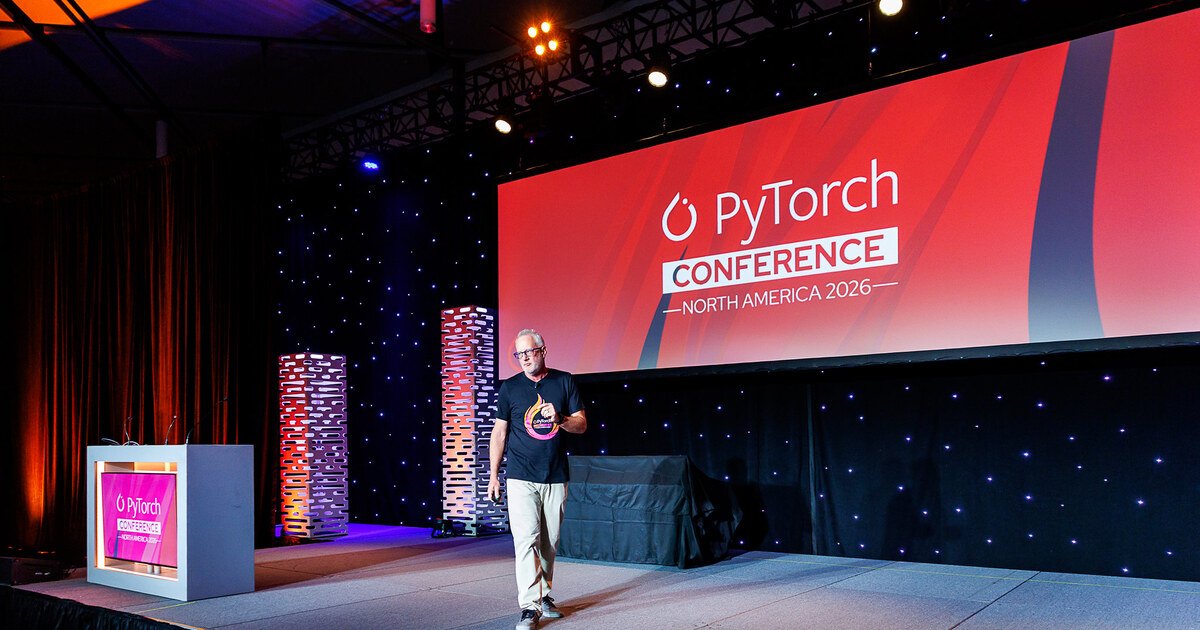
Google and Meta open-sourced TorchTPU at PyTorch Conference North America 2026 in San Jose, introducing a native PyTorch backend for Google Cloud Tensor Processing Units. The release replaces PyTorch/XLA, a 2020 lazy-tensor bridge that required intrusive source-code modifications to run on Google hardware. According to InfoQ's report, Meta plans to migrate larger large language model workloads directly onto TPUs using the software. By integrating with PyTorch's native low-level dispatcher, TorchTPU positions TPUs alongside CPUs and GPUs as first-class hardware targets for distributed artificial intelligence systems.
This breakdown covers the technical architecture behind TorchTPU, supporting inference and training frameworks, parallel accelerator developments from Amazon Web Services, and enterprise migration realities. It is designed for machine learning engineers, infrastructure architects, and technical leads seeking hardware diversity beyond Nvidia graphics processing units. The report examines verified multi-node throughput metrics, device conversion syntax, developer caveats regarding shape handling, and practical cloud supply constraints that teams must evaluate before shifting production pipelines away from existing graphics processing unit clusters.
What PyTorch Conference 2026 shipped
Google Cloud and Meta open-sourced four repositories to support machine learning workflows on Google silicon. Beside the primary TorchTPU backend, the teams released vLLM-TorchTPU and SGLang-TorchTPU for serving, alongside TorchTitan for distributed training across dense models, mixture-of-experts architectures, and diffusion models. Meta engineer Zongwei Zhou explained in the October 21 keynote that the teams co-developed the software to establish TPUs as a native target meeting production standards for performance, reliability, and maintainability. Meta engineering director Jana van Greunen affirmed that advancing frontier models requires deep hardware diversity.
Distributed scaling frameworks accompanied the runtime backend to facilitate orchestration across multi-host environments. The release integrates with Ray and llm-d to coordinate workloads across Kubernetes clusters. Google Cloud vice president Bill Jia showcased cluster performance demonstrating near-linear scaling beyond 8,000 chips. Google's benchmark highlighted a Qwen3 235B mixture-of-experts model running on 8,192 TPU v7x processors with constant per-chip throughput and 28 percent model floating-point operations utilization. Google also launched a preview of the TPU agent suite on GitHub to automate onboarding, diagnostics, and tuning.
What changed for builders in PyTorch Conference 2026
Direct integration with PyTorch's low-level dispatcher allows Hugging Face models to run out of the box without code rewrites. This shift addresses surging demand as inference overtakes training in data centers, a trend PyTorch Foundation director Mark Collier framed as an urgent hunger for tokens. Collier noted DeepSeek's Flash model became 60 percent cheaper in 37 days, while Kimi K3 ran 68 percent faster on identical hardware in 33 days. Agentic AI Foundation director Mazin Gilbert noted agent token consumption passed human volume on February 6, 2026, subsequently multiplying 14-fold.
| Workload or Metric | Baseline State | Published Result | Hardware or Platform |
|---|---|---|---|
| DeepSeek Flash Token Cost | Baseline pricing | 60% cheaper in 37 days | Cloud inference |
| Kimi K3 Inference Speed | Baseline throughput | 68% faster in 33 days | Unchanged hardware |
| Agent Token Consumption | Parity on Feb 6, 2026 | 14-fold surge vs 2.8-fold human | OpenRouter platform |
| Qwen3 235B Mixture-of-Experts | Single-host run | 28% model FLOPs utilization | 8,192 TPU v7x chips |
| Miles RL Log-Probability Kernel | Dual unfused operations | Over 10x faster execution | RadixArk Miles |
| Weight Synchronization Payload | 62 GB per weight sync | Under 1 GB via delta updates | RadixArk distributed cluster |
| Liquid AI Held-Out Task Score | 42% accuracy score | 54% accuracy via four agents | TRL and OpenEnv |
Hardware diversity broadened across alternative cloud platforms using PyTorch's standardized PrivateUse1 extension point. Amazon Web Services introduced TorchNeuron into public beta on October 20, adding native execution for Trainium accelerators. Training optimization sessions also presented substantial efficiency improvements, including Yueming Yuan of RadixArk demonstrating the Miles reinforcement learning framework. Yuan showed that fusing two log-probability calculations into one execution kernel accelerated that phase by over tenfold, while delta weight updates reduced synchronization data from 62 gigabytes to under 1 gigabyte during large distributed cluster runs.
Advertisement
Tech Pulse Daily
Get tomorrow's pulse first
Join engineers who read Tech Pulse before stand-up. Free, weekday mornings.
How to install or upgrade PyTorch Conference 2026
Deploying the new backend replaces custom compiler bridges with standard PyTorch device dispatch calls. Instead of configuring complex lazy-tensor graphs, developers redirect execution by modifying the device string directly within existing code. This unified interface allows machine learning teams to switch between graphics processing units, Google silicon, and Amazon processors while maintaining identical pipeline definitions. The open-source repositories for TorchTPU, vLLM-TorchTPU, SGLang-TorchTPU, and TorchTitan are hosted on GitHub, where Google's preview TPU agent suite can also be deployed to assist engineers with cluster configuration and automated hardware performance profiling.
```python
# Target Google Cloud TPUs natively with TorchTPU
model.to("tpu")
Standard CUDA target for comparison
Switching runtime execution requires updating the target parameter passed into model device assignment functions. In codebases targeting Nvidia accelerators, builders substitute cuda assignments with tpu designations for Google hardware, or neuron designations when operating on Amazon Trainium processors. Because TorchTPU and TorchNeuron hook into the PrivateUse1 device registry, standard model layers and optimizer steps run without auxiliary compiler transformations. Distributed serving pipelines can integrate vLLM-TorchTPU or SGLang-TorchTPU directly into serving infrastructure, while training workflows can initialize TorchTitan to configure mixture-of-experts or diffusion pipelines across networked clusters.
Gotchas and compatibility in PyTorch Conference 2026
Although changing device strings allows models to run immediately, Google acknowledged that one-line modifications do not achieve peak hardware performance. Tensor shapes, operator implementations, and cluster sharding strategies often reflect optimizations tailored specifically for graphics processing units, necessitating dedicated tuning for TPU architectures. Engineering teams must still invest time into manual sharding and kernel adjustments across TPU pods. Furthermore, physical accelerator availability presents a practical hurdle, as community feedback cited tight commercial TPU supplies and enterprise teams noted delaying cloud migrations to remain on Nvidia infrastructure for another hardware generation.
Compatibility gaps also affected alternative cloud accelerator backends shown at the event. AWS TorchNeuron entered public beta without support for dynamic input shapes and bypassed approximately 22,000 standard PyTorch test suite validations according to reporting from The Next Web. In an analysis for Forkast, Blair Hayes noted that while PyTorch extension points offer a common language, optimization tooling and physical supply chains remain firmly under proprietary cloud vendor control. As a result, hardware fungibility remains limited by compiler maturity and cloud quotas, requiring teams to audit test coverage before transitioning production traffic.
What to watch after PyTorch Conference 2026
Edge robotics emerged as a key focus for unified PyTorch workflows operating outside cloud data centers. Meta engineers Anthony Shoumikhin and Jacob Szwejbka demonstrated robot policy execution using ExecuTorch, illustrating how models remain entirely within PyTorch from training to device deployment without conversion stacks. The framework preserves quantization and operator graphs across hardware targets, functioning interchangeably on Nvidia Jetson devices with TensorRT and Intel systems running OpenVINO. This consistency enables robotics teams to train control networks in cloud environments and deploy identical graph artifacts onto physical systems without maintaining separate runtime translation layers.
Reinforcement learning toolchains for training autonomous coding agents are standardizing around open community specifications. Anyscale highlighted SkyRL, which separates training, inference, and environment execution under Ray orchestration. Hugging Face announced that OpenEnv joined the Agentic AI Foundation on October 22, establishing a shared environment interface. Sergio Paniego Blanco of Hugging Face applied TRL and OpenEnv to train a Liquid AI model across four coding agents, raising held-out task scores from 42 percent to 54 percent. Engineering teams planning implementations can track session recordings appearing on the PyTorch Foundation YouTube channel within two weeks.
Developer Action Items
- ☐ Diff the official changelog for Google / Meta / Amazon 2.8 before you bump — APIs, defaults, and removed flags only.
- ☐ Install through the vendor's documented channel in staging; keep a one-command rollback and time-box the canary.
- ☐ Grep your repo for old flag names, lockfile pins, and plugin versions that the notes mark as breaking.
- ☐ Prefer the first patch cut over the day-zero tag unless you have a reason to be on the leading edge.
- ☐ If InfoQ did not name a region, plan, or SKU, screenshot the official availability line before you promise it to users.
PyTorch Conference 2026 FAQ
What is TorchTPU and what did it replace?
TorchTPU is an open-source native PyTorch backend for Google Cloud Tensor Processing Units co-developed by Google and Meta. It replaces PyTorch/XLA, a lazy-tensor bridge from 2020 that required intrusive source-code modifications.
How does code migration work when moving models to TorchTPU?
Developers can move workloads to TPUs by changing the PyTorch device call from model.to("cuda") to model.to("tpu"). While models run out of the box, reaching peak performance requires additional tuning for tensor shapes, operations, and cluster sharding.
What performance benchmarks were published for TorchTPU clusters?
Google Cloud demonstrated near-linear scaling beyond 8,000 chips, highlighted by a Qwen3 235B mixture-of-experts run across 8,192 TPU v7x processors. The cluster held per-chip throughput roughly constant and achieved a 28 percent model FLOPs utilization rate.
What are the current limitations of AWS TorchNeuron?
TorchNeuron entered public beta for AWS Trainium chips using the PrivateUse1 extension point, but it currently lacks support for dynamic input shapes. The initial release also skips roughly 22,000 standard PyTorch test suite checks.
Sources

Author
Dillip Chowdary
Writes Tech Bytes coverage of AI, engineering, and the tools that actually ship. Editor of Tech Pulse Daily.
Related on Tech Bytes
Advertisement