Reservoir raises $8 million to make water heaters that people —
Reservoir secured $8 million in seed financing led by Asymmetric Capital Partners, with additional participation from Founder Collective and MCJ.
By Dillip Chowdary • Oct 10, 2026 • Source: TechCrunch
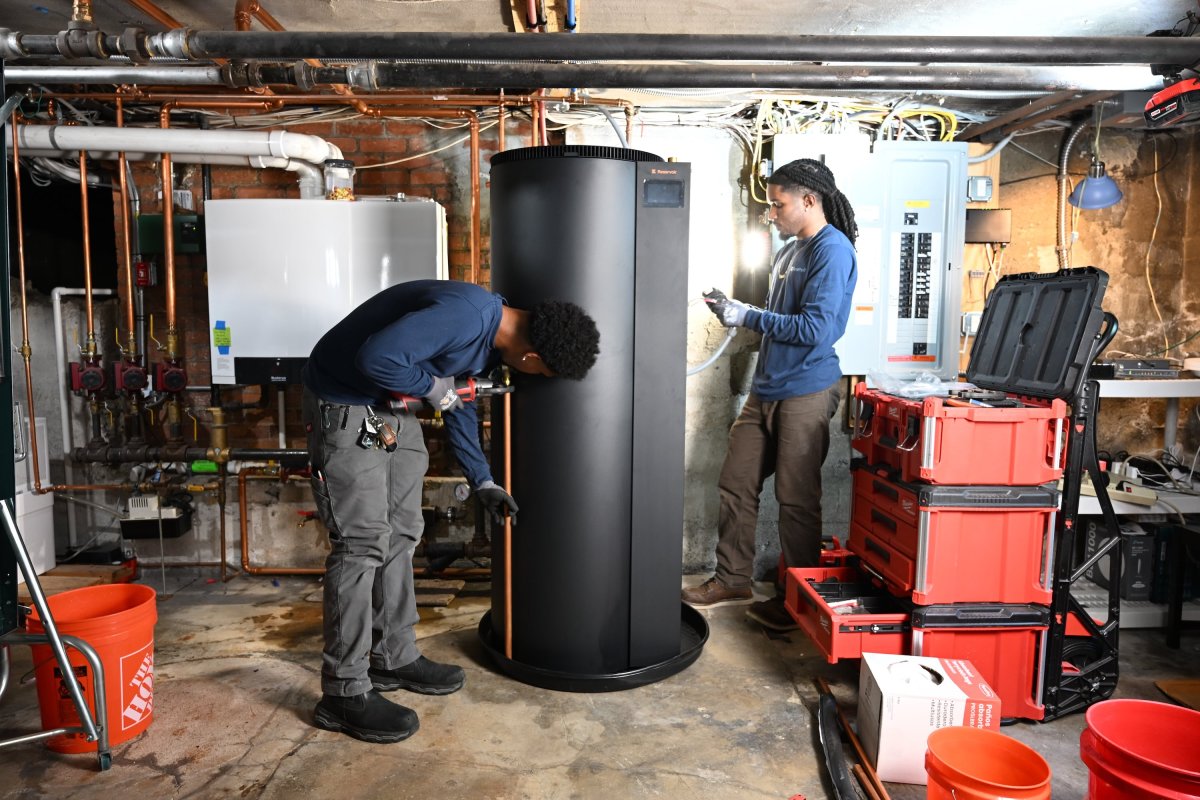
Hardware startup Reservoir has raised $8 million in seed funding to launch a smart water heater designed to lower residential energy bills, detect plumbing leaks, and help stabilize the electrical grid, according to TechCrunch's report. Co-founded by former Formlabs chief business officer Luke Winston-Almanzar alongside Gabriel Parisi-Amon and Jake Felser, the Boston-based startup aims to modernize an appliance that accounts for roughly 18% of a household's total energy budget and serves as a major source of residential water damage. To accelerate deployment and streamline installation, Reservoir has established its own plumbing service to sell directly to homeowners.
This article details Reservoir's technology, product pricing, grid integration strategy, and market positioning. It examines how the startup's predictive heating algorithms, built-in leak detection sensors, and direct-to-consumer installation model compare to traditional electric, gas, and heat pump water heaters.
The deal behind Reservoir $8 million to make water heaters
Reservoir secured $8 million in seed financing led by Asymmetric Capital Partners, with additional participation from Founder Collective and MCJ. The company plans to use the capital expansion funds to scale its residential installations across its initial market in the Boston area. Reservoir has installed approximately 100 devices to date and aims to reach roughly 1,000 active installations by the end of next year, achieving megawatt-scale cumulative storage capacity across its fleet.
To avoid distributor friction and simplify the purchasing process, Reservoir operates its own plumbing company to handle sales and direct installations. The company offers two hardware models with installation included in the total price: the base Core version for $5,000 and the higher-end Max version for $6,500. Local incentives, such as a $1,050 rebate available to Massachusetts residents, bring the net cost of the Core model down to $3,950. Reservoir backs its hardware with a 10-year warranty.
Why Reservoir $8 million to make water heaters raised now
Traditional water heaters operate as simple mechanical devices that react only when tank temperatures drop, consuming substantial energy during peak grid hours. Water heating represents approximately 18% of average household energy expenditure, yet legacy heat pump water heaters have struggled to gain significant market share. Reservoir raised capital to commercialize an intelligent alternative that combines ultra-efficient heat pump hardware with predictive machine learning software.
The startup's heat pump design operates nearly four times more efficiently than standard electric water heaters and five times more efficiently than natural gas models. By spending its first month in a home learning daily household water usage patterns, Reservoir trains an onboard predictive model to run heating cycles during off-peak hours when electricity prices are lowest. According to Winston-Almanzar, typical Boston homeowners can save up to $1,000 annually on energy costs.
Advertisement
Tech Pulse Daily
Get tomorrow's pulse first
Join engineers who read Tech Pulse before stand-up. Free, weekday mornings.
What the Reservoir $8 million to make water heaters money
The funding supports the production and distribution of Reservoir's Core and Max water heater models, both packed with hardware features absent from legacy appliances. Every Reservoir unit incorporates an ultrasonic flow sensor capable of monitoring plumbing lines throughout the entire home to detect leaks and send real-time alerts via a smartphone app. The base hardware delivers steady efficiency while recording telemetry to optimize local heating routines.
The premium Max version adds a recirculation valve for instant hot water delivery and a mixing valve engineered to prevent pipe freezes during cold weather snaps. In the Max configuration, the 50-gallon tank features a party mode accessible via an onboard touchscreen or app control that enables the unit to deliver up to 150 gallons of hot water. The capital will also fund fleet aggregation software to bundle installed units into utility demand response programs.
Competitive context for Reservoir $8 million to make water heaters
At $3,950 post-rebate, Reservoir's Core model competes directly on price with standard heat pump water heaters. For comparison, a conventional 80-gallon AO Smith heat pump unit costs around $3,500 for hardware plus an estimated $1,000 for installation, totaling $4,500. Standard electric water heaters carry lower upfront hardware costs at roughly $1,700 for an 80-gallon tank, but lack energy-saving intelligence and ongoing operational efficiency.
By building its own installation arm, Reservoir bypasses traditional plumbing distributors who often resist adopting unfamiliar technologies. Most consumers replace water heaters reactively during emergencies, accepting whatever unit a plumber carries on their truck. Reservoir seeks to overcome this adoption barrier by offering superior features like leak detection, smart scheduling, and direct installation so sustainable heat pump technology becomes the obvious choice.
Open questions on Reservoir $8 million to make water heaters
A primary question facing Reservoir is whether it can scale its installation capacity from 100 units to its 1,000-device goal by the end of next year. Managing an in-house plumbing workforce introduces operational complexity that differs significantly from traditional hardware manufacturing. Scaling beyond the Boston region will require expanding this direct installation model into new geographic markets with differing utility rebate structures.
Another key variable is how quickly Reservoir can aggregate its fleet to participate in utility demand response programs. While aggregating stored thermal energy across hundreds of units offers grid-stabilizing megawatt capacity, monetizing these programs depends on regional utility cooperation. Reservoir hopes to use utility demand response payouts to further lower device pricing for consumers over time.
Developer Action Items
- ☐ Map where Reservoir raises million make sits in your stack (SDK, API key, billing, data-processing addendum).
- ☐ Hold the $8 million figure to the primary report; do not brief a number that is not on the record.
- ☐ Hold non-urgent migrations until the integration or use-of-proceeds roadmap is public — day-one coverage is not a ship signal.
- ☐ If you are mid-contract or mid-POC, ask the vendor what changes for existing customers this quarter.
- ☐ Write the single decision this forces: stay, dual-source, or exit.
Reservoir $8 million to make water heaters FAQ
How much do Reservoir water heaters cost?
The base Core version costs $5,000 and the Max version costs $6,500, both including installation. Massachusetts residents qualify for a $1,050 rebate, reducing the net price of the Core model to $3,950.
How does Reservoir's predictive heating feature work?
The device spends its first month gathering household water usage data to train a predictive model, then runs its heat pump at the most efficient, cost-effective times to save energy while maintaining hot water supply.
What additional features are included in the Reservoir Max model?
The Max model includes an ultrasonic leak detection sensor, a recirculation valve for instant hot water, a freeze-prevention mixing valve, and a party mode that enables a 50-gallon tank to supply up to 150 gallons of hot water.
How efficient is Reservoir compared to traditional water heaters?
Reservoir's heat pump system is nearly four times more efficient than standard electric water heaters and five times more efficient than natural gas models, saving typical Boston homeowners up to $1,000 per year.
Sources

Author
Dillip Chowdary
Writes Tech Bytes coverage of AI, engineering, and the tools that actually ship. Editor of Tech Pulse Daily.
Related on Tech Bytes
Fairphone is launching its latest repairable phone in the US too
Read →
Detroit startup Grounded raises $5M to customize electric and gas-powered vans
Read →
BGP Role model: tracking the adoption of RFC 9234
Read →
We still don’t know how people are really using AI
Read →
Today's Tech Pulse briefing
Full briefing →
Advertisement