Serve Robotics wants to democratize sidewalk delivery robots
Serve Robotics opened its AV Delivery Developer Portal on November 11, giving developers and small businesses API access to its sidewalk robot fleet.
By Dillip Chowdary • Nov 11, 2026 • Source: The Verge
Serve Robotics launched a new AV Delivery Developer Portal on November 11, 2026, opening its autonomous sidewalk robot fleet to third-party software engineers, independent small businesses, and even AI agents — no partnership with a major food-delivery app required. The Verge's report covers the announcement by CEO Ali Kashani, who framed the move as the company's next step toward breaking the stranglehold that delivery platforms like DoorDash and Uber Eats hold over last-mile logistics.
This piece is for developers who want to dispatch sidewalk robots via API, small merchants looking to add delivery to their own checkout flows, and anyone following the economics of autonomous last-mile logistics. It covers what the portal does, how pricing works, what use cases Serve is targeting beyond food, what guardrails remain, and what the company is walking away from to get here.
01A 2,000-robot fleet open to any developer
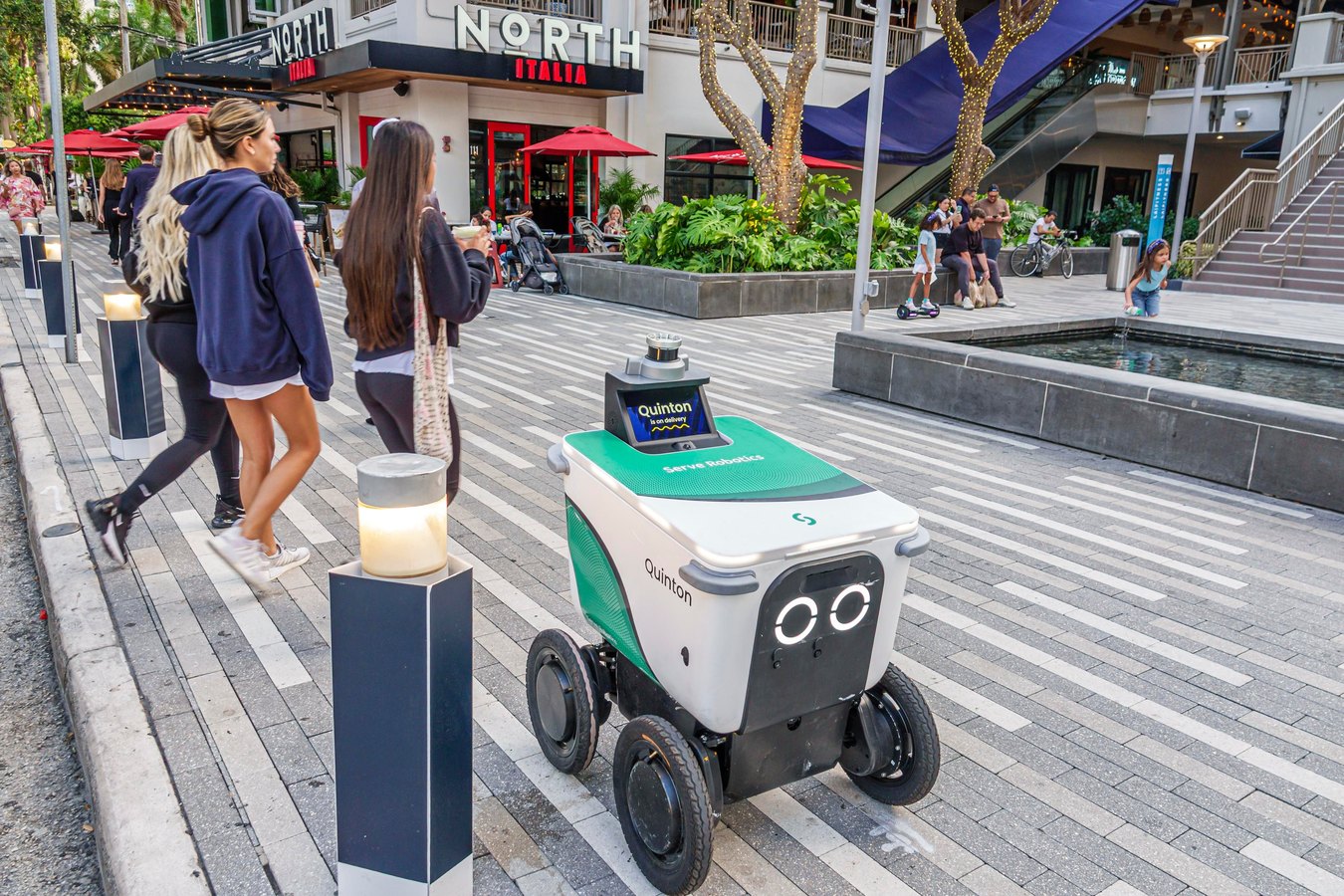
Serve Robotics, which was spun out of Postmates in 2021, operates a fleet of 2,000 autonomous sidewalk robots across Los Angeles, Miami, Dallas, and dozens of other cities. Those robots — described as resembling autonomous shopping carts — travel at a top speed of around 6 mph and operate mainly on sidewalks, which Serve says makes them a safer alternative to cars and helps reduce traffic congestion.
Until now, the fleet was largely dedicated to Uber Eats deliveries. The new AV Delivery Developer Portal changes that by letting any developer or business dispatch a robot using an API, treating those API requests the same as enterprise orders.
"There's no preferential treatment at the end of the day," CEO Ali Kashani said. "Until the robot is on a delivery, it doesn't have a commitment to anybody."
Access is currently limited to the 150 neighborhoods where Serve already operates. Developers supply pickup and dropoff coordinates; Serve's back end handles obstacle avoidance, routing, and remote teleoperation supervision.
02Cutting out the 15–30 percent delivery app cut
The core economic argument behind the portal is straightforward: food-delivery platforms like DoorDash and Uber Eats take 15 to 30 percent of every order because paying human drivers is expensive. By connecting directly to Serve's robot fleet through software, local shops — bakeries, florists, pharmacies — can add robot delivery to their own websites and checkout registers without those middleman fees.
Kashani framed the problem bluntly: "Why does getting something delivered from China cost $1, but from Chinatown cost $10?" For small merchants, Serve is offering pay-per-delivery or hourly reservation options that Kashani says will come in at "a fraction" of the cost of human-powered delivery services.
It is better economics for Serve as well. Kashani argues that expanding demand beyond peak restaurant hours drives overall operating and hardware costs down across the fleet.
Advertisement
Tech Pulse Daily
Get tomorrow's pulse first
Join engineers who read Tech Pulse before stand-up. Free, weekday mornings.
03Off-peak hours, office shuttles, peer-to-peer runs
Food delivery has a timing problem Kashani is explicit about: "Food is generally very picky. So you have lunch, you have dinner.
But then there are times in between. So again, having that diversification helps." Opening the platform keeps Serve's robots busy during those off-peak gaps rather than sitting idle between rushes.
The pitch extends well beyond restaurant orders. Serve is targeting intra-office item shuttles, repair shops ferrying parts between locations, and peer-to-peer exchanges like Facebook Marketplace. Instead of sending junior staff across town or hiring couriers, businesses could program Serve's robots to handle the run.
Turning the fleet into what Kashani calls an open marketplace means the same robot that completes a dinner delivery can pivot immediately to a pharmacy pickup or an office parts run, maximizing utilization across the day.
04Manual approval gates every new deployment
Despite the open-API framing, Serve is not running an entirely hands-off marketplace. Access to the robot fleet will be gated by manual approval from Serve's own employees before any new deployment goes live, specifically to prevent hazardous uses and block illicit cargo.
Liability for stolen or broken goods will depend on how individual partnerships are priced and insured, Kashani noted. The robots themselves cap out at around 50 pounds of carrying capacity and are not going to scale into street-based vehicles. Kashani was direct: Serve will not morph into a street-based delivery service anytime soon, regardless of how developers use the API.
That manual gate adds friction, but it also gives Serve control over what moves through its fleet and under what terms — a safeguard that matters as the platform expands beyond a single enterprise partner.
05Walking away from the Uber Eats partnership
The developer portal launch follows Serve's separate announcement that it does not plan to renew its partnership with Uber Eats — a deliberate move to build an independent platform rather than remaining a subordinate vendor to one large delivery app. That decision echoes similar shifts across the transportation industry as operators seek to own their own demand channels.
Kashani connected the two moves directly: relying on a single large platform creates concentration risk, and opening the fleet to any developer diversifies that exposure. The new portal is the affirmative version of that strategy — Serve building its own distribution layer rather than just canceling a contract.
For developers and small businesses in one of Serve's 150 operating neighborhoods, the AV Delivery Developer Portal is now the path in. If they want to automate the sidewalk, Kashani said, Serve will sell them the wheels.
Serve Robotics wants to democratize sidewalk FAQ
What is the Serve Robotics AV Delivery Developer Portal?
It is a new platform launched November 11, 2026, that lets third-party developers, small businesses, and AI agents dispatch Serve's sidewalk robots via API without going through a major food-delivery app.
Where do Serve Robotics sidewalk robots currently operate?
Serve operates in 150 neighborhoods across Los Angeles, Miami, Dallas, and dozens of other cities, using a fleet of 2,000 robots.
How fast do Serve's sidewalk robots travel?
Serve's robots have a top speed of around 6 mph and operate mainly on sidewalks, which the company says poses little to no risk to pedestrians.
How much do food delivery platforms charge, and how does Serve undercut that?
Platforms like DoorDash and Uber Eats take 15 to 30 percent per order. Serve's pay-per-delivery or hourly reservation options are described by CEO Ali Kashani as "a fraction" of human-powered delivery costs.
Is access to the developer portal automatic?
No. Every new deployment requires manual approval from Serve employees to prevent hazardous uses, and liability for lost or damaged goods varies by partnership agreement.
Sources

Author
Dillip Chowdary
Writes Tech Bytes coverage of AI, engineering, and the tools that actually ship. Editor of Tech Pulse Daily.
Related on Tech Bytes
Advertisement