SNL gathers all the tech tycoons for a lesson in dating and spycraft
Saturday Night Live satirized Silicon Valley executives in a CIA counterespionage sketch following Jensen Huang's ouster from Nvidia after an affair scandal.
By Dillip Chowdary • Nov 15, 2026 • Source: TechCrunch
At a glance
- Program name
- Saturday Night Live
- Featured host
- John Mulaney
- Original reporting
- TechCrunch
- Referenced outage
- Microsoft Outlook email disruption
- Aviation disruption
- Nationwide Friday flight halt
- Executive development
- Jensen Huang Nvidia departure
Saturday Night Live broadcast an ensemble comedy sketch parodying Silicon Valley chief executives receiving counterintelligence instruction, as highlighted in TechCrunch's report. Guest host John Mulaney joined the recurring cast to satirize executive behavior, romantic vulnerabilities, and corporate espionage risks across major computing firms.
This report examines the television portrayal, the corporate leaders depicted, and the real-world operational disruptions referenced throughout the broadcast. It is prepared for enterprise technology professionals, corporate security personnel, and software founders tracking executive security and corporate governance developments.
01Cast lineup for prominent technology executives
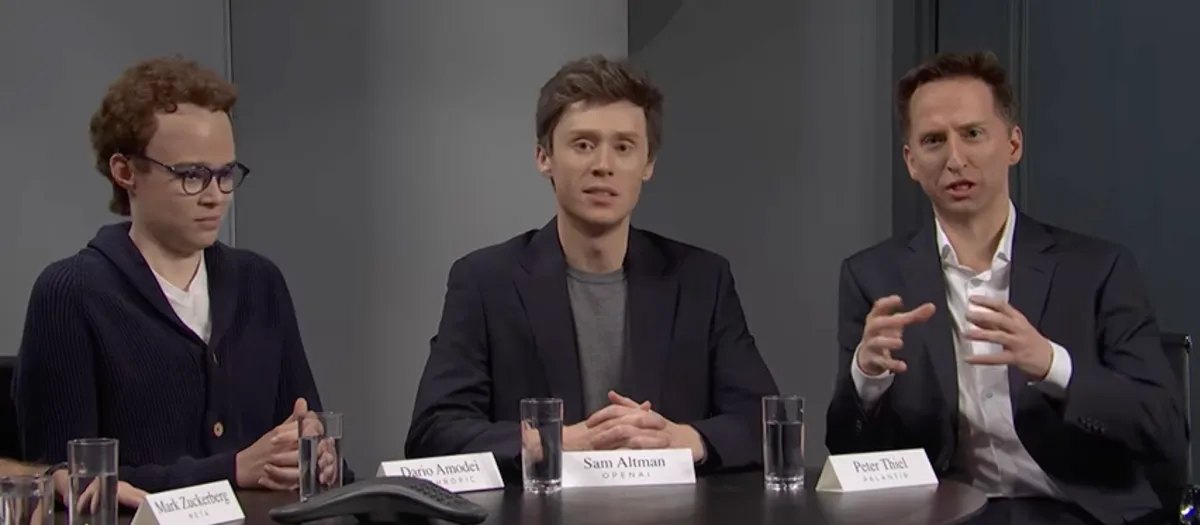
The production brought together caricatures of multiple technology founders in a single interrogation setting. James Austin Johnson played Peter Thiel, Ben Marshall took on OpenAI leader Sam Altman, and Jane Wickline acted as Anthropic chief executive Dario Amodei. Jeremy Culhane portrayed Elon Musk, while Andrew Dismukes appeared as Meta chief executive Mark Zuckerberg.
The sketch also reintroduced recently departed cast member Bowen Yang to depict former Nvidia leader Jensen Huang. Yang appeared following real corporate upheaval surrounding Huang, who was ousted from Nvidia after admitting to an affair with an alleged Chinese intelligence operative. The broadcast framed these founders as awkward personalities who suddenly command unprecedented global capital.
Each impression highlighted specific eccentricities associated with high-profile platform and artificial intelligence leadership. The staging allowed the ensemble to dramatize competing commercial rivals sitting together during a coordinated government counterintelligence debriefing. The broadcast treated these executives as a unified class facing identical institutional scrutiny and personal vulnerabilities.
02Counterintelligence briefings on romantic espionage schemes
John Mulaney led the scene portraying a CIA officer assigned to provide dating guidance and counterespionage warnings. The agent struggled with basic industry pronunciation, hesitating over corporate names like Palantir and Nvidia. His character attempted to explain why corporate executives should exercise suspicion when attractive suitors abruptly show romantic interest.
The fictional briefing specifically addressed romantic gullibility among wealthy technology executives targeted by hostile foreign intelligence operatives. Mulaney directed specific instructions to Altman and Thiel regarding interpersonal security hazards. The agent noted that sexual orientation provides no defense against espionage traps, warning that gay executives can still be deceived by foreign assets.
The dialogue examined how sudden romantic attention from attractive strangers presents significant operational security risks for corporate executives. The agent stressed that hostile operatives exploit personal vanity to access critical corporate assets and algorithmic supply chains. The segment satirized how executive self-perception often obscures basic security precautions during casual social encounters.
03System failures and national infrastructure disruptions
Advertisement
Tech Pulse Daily
Get tomorrow's pulse first
Join engineers who read Tech Pulse before stand-up. Free, weekday mornings.
The comedic confrontation escalated when Johnson's Thiel pushed back against government warnings and demanded greater deference for corporate leaders. The character challenged the investigator to identify historical moments when commercial software had failed society. Mulaney answered immediately by citing nationwide air travel disruptions that halted domestic flights across the United States on Friday night.
When the fictional executive asked for another example, Mulaney cited a widespread enterprise outage affecting Microsoft Outlook on Thursday. The sketch referenced real commercial system failures that disrupted enterprise workflows across the preceding business week. When pressed for a third instance, Mulaney ended the debate by declining to list further technical failures.
The dialogue contrasted Silicon Valley promises of technological infallibility with recent commercial software crashes and transit delays. By linking real infrastructure failures to executive pride, the exchange voiced public frustration over enterprise software dependencies. The interrogation illustrated how quickly essential digital communications can falter despite substantial private capital investments.
04Wealth accumulation and cultural disorientation debates
The exchange culminated in a direct monologue from Mulaney summarizing the rapid cultural elevation of computer engineers. The agent acknowledged how disorienting it must be for awkward outsiders to transform rapidly into revered public authorities. He remarked that modern society has granted unprecedented fortunes and planetary authority to eccentric research figures.
The character commented on the biological and cultural novelty of this sudden concentration of corporate influence. Specialized software developers who once operated on the cultural periphery now oversee critical international infrastructure. That commentary reflected broader cultural debates surrounding concentrated corporate authority across commercial computing and artificial intelligence firms.
The scripted critique addressed public skepticism toward private monopolies guided by unconventional personalities. By contrasting personal eccentricities with immense corporate wealth, the show satirized the societal leverage held by platform founders. The scene illustrated ongoing friction between corporate self-regard and public scrutiny regarding software reliability.
05Hardware leadership fallout and executive departures
The broadcast aired alongside continued industry fallout at Nvidia following Huang's sudden departure amid security inquiries. Independent reporting probed security practices within semiconductor organizations, questioning how internal teams oversee executive behavior. Market discussions also tracked corporate succession stability after Huang left the world's primary artificial intelligence chip manufacturer.
Broader industry disruptions surrounded the broadcast, including global cloud outages originating from Microsoft mail infrastructure failures. Meanwhile, commercial artificial intelligence development continued as Anthropic introduced Claude Meetings to convert workplace conversations into structured plans and tasks. In the automotive market, Tesla defended ending Cybertruck manufacturing while refunding select customer purchase deposits.
These concurrent events placed the television satire against authentic executive turnover and platform disruptions across the technology sector. Corporate governance, personal security, and infrastructure reliability remain under close regulatory and consumer examination. The televised parody reflected genuine industry anxieties regarding executive vulnerabilities, enterprise reliability, and geopolitical competition in advanced computing.
Frequently asked questions
Which technology executives were portrayed in the Saturday Night Live sketch?
The sketch included impressions of Peter Thiel, Sam Altman, Dario Amodei, Elon Musk, Mark Zuckerberg, and former Nvidia chief executive Jensen Huang.
Who hosted the broadcast and what role did he play?
Comedian John Mulaney hosted the program, portraying a CIA agent attempting to deliver counterintelligence warnings to technology founders.
What real-world service disruptions were cited during the segment?
The sketch highlighted nationwide commercial flight groundings on Friday night alongside an enterprise Microsoft Outlook email outage on Thursday.
Why was Jensen Huang included in the counterintelligence briefing parody?
Huang departed Nvidia after admitting to a personal relationship with an alleged Chinese spy, providing the narrative basis for the sketch's espionage warnings.
Sources

Author
Dillip Chowdary
Writes Tech Bytes coverage of AI, engineering, and the tools that actually ship. Editor of Tech Pulse Daily.
Related on Tech Bytes
Advertisement