StepSecurity, led by two Microsoft vets, raises $20 million to defend
StepSecurity raised a $20 million Series A led by Elephant to protect developer laptops, code repositories, and build systems from supply chain attacks.
By Dillip Chowdary • Nov 20, 2026 • Source: GeekWire Startups
At a glance
- Funding round
- $20 million Series A led by Elephant
- Total funding
- $23 million including $3 million seed
- Founding date
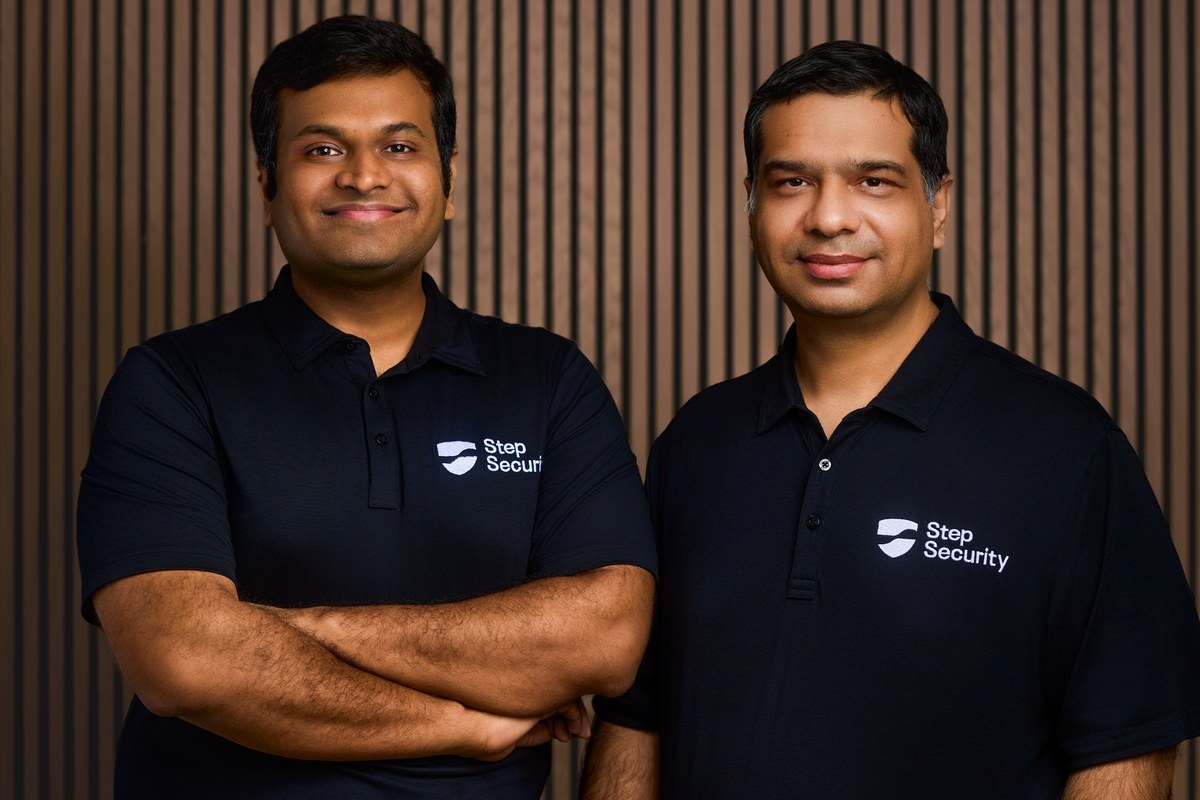
- 2021 by Varun Sharma and Ashish Kurmi
- Free tier
- Free for public GitHub repos using Harden-Runner
- Team size
- 27 employees across US, Canada, and India
StepSecurity secured 20 million dollars in a Series A financing round led by Elephant, expanding total funding to 23 million dollars after an earlier 3 million dollar seed round in 2024. Existing backers Runtime Ventures, Inner Loop Capital, and SaaS Ventures also joined the investment round, as detailed in GeekWire Startups's report. The Seattle-area cybersecurity company builds defenses for developer laptops, source code repositories, package downloads, and automated continuous integration pipelines against modern software supply chain compromises.
This report details the mechanics behind automated pipeline defense, the rising wave of credential-stealing packages, and the infrastructure choices available to software teams. It provides engineering managers, platform architects, and security practitioners with a thorough breakdown of defensive controls across build environments, package registries, and upcoming artificial intelligence agent sandboxes. Readers will find verified data on enterprise deployment, threat disclosures, open-source protections, and commercial alternatives across the software ecosystem.
01Series A capital and developer pipeline protection
Founders Varun Sharma and Ashish Kurmi launched StepSecurity in 2021 after spending more than two decades combined at Microsoft. Sharma led an Azure Security team focused on developer usability during his fifteen-year tenure, while Kurmi spent nearly eight years at Microsoft before directing cloud security at Uber and infrastructure security at Plaid. Both founders decided to establish the company after directly handling the fallout from the high-profile SolarWinds and Codecov supply chain incidents at their employers.
The founders designed the platform to protect engineering environments where code is created, assembled, and distributed. Attackers frequently inject malicious routines into open-source packages that engineers download during routine development tasks. When executed on an engineer workstation or automated build runner, that rogue code immediately attempts to harvest corporate secrets, administrative passwords, and cloud authentication tokens that unlock downstream corporate networks.
Sharma observed that executing a software supply chain intrusion previously demanded a coordinated, highly skilled engineering squad. Current generative workflows and automated tools now enable individual attackers to construct and deploy sophisticated attack vectors independently. The fresh capital provides resources to harden local machines and build systems before rogue packages compromise critical operational pipelines.
02Compromised agent framework and marketplace tampering
During the week of the funding announcement, researchers investigated two tainted versions of the Microsoft agent-framework library on the Python Package Index. The open-source toolkit serves as the Python foundation for building artificial intelligence agents and records approximately 190,000 monthly downloads. Published on November 17, the unauthorized packages executed credential harvesting routines designed to extract cloud and delivery pipeline credentials immediately upon Python initialization before public quarantine.
The incident follows an October security breach at cryptocurrency exchange Binance that resulted in 6.3 billion dollars in losses. Federal investigators linked that intrusion to North Korea's TraderTraitor collective, while Binance confirmed the compromise initiated on an individual employee workstation. Additionally, an altered version of Anthropic's Claude Code extension appeared on the Cursor marketplace for eleven hours, potentially reaching up to 5,000 users before removal.
StepSecurity documented 56 verified compromises of trusted software dependencies between August 2025 and August 2026. Threat data collected between March 2026 and August 2026 revealed approximately one confirmed software dependency incident every three days. These metrics illustrate an escalating campaign by threat actors targeting development environments as direct bridges into production cloud systems.
Advertisement
Tech Pulse Daily
Get tomorrow's pulse first
Join engineers who read Tech Pulse before stand-up. Free, weekday mornings.
03Runtime process inspection and quarantine buffers
The company established its defensive footprint through Harden-Runner, a utility provided without cost to public open-source repositories. The software monitors automated continuous integration runners on GitHub by tracking system processes, network sockets, and file system modifications to detect unauthorized activity. Over 20,000 open-source repositories maintain the agent today, representing steady growth from 3,000 active projects during the 2024 seed round.
Telemetry from active open-source runners previously helped the security team detect the March 2025 compromise of tj-actions, an automation add-on deployed across GitHub workflows. Alongside workflow monitoring, the company sells commercial software to secure developer workstations and code repositories. Its Secure Registry service intercepts outbound package retrieval requests, blocking confirmed malicious releases and isolating newly uploaded packages from public hubs such as npm.
Note: Public GitHub repositories utilizing Harden-Runner on hosted infrastructure can access Secure Registry without subscription fees. The free tier enforces a default two-day holding period for JavaScript dependencies to give security teams evaluation time, with planned rollout for Python, Java, Ruby, and Rust packages.
04Revenue expansion and package defense competitors
StepSecurity reported that annual recurring revenue multiplied fivefold during 2024, expanded another fivefold in 2025, and continued at a fivefold pace through 2026. While the business keeps specific dollar receipts private, enterprise customers using the technology include Circle, Dexcom, Kong, Mercari, Chainguard, and XBOW. Headcount has grown to 27 employees across the United States, Canada, and India, expanding from four staff members at the seed stage.
Sharma manages operations from Sammamish while Kurmi directs technical engineering from Kirkland, keeping the distributed team aligned across time zones. The remote-first structure supports enterprise software deployments while continuously tracking open-source supply chain disclosures across international registries. This structure provides operational continuity for technical engineering squads that maintain global package distribution pipelines.
Commercial competition across the developer security segment remains well-funded and active. San Francisco startup Socket raised 60 million dollars at a one-billion-dollar valuation in May to identify malicious dependency code. Established enterprise vendors such as Sonatype, JFrog, and Endor Labs also distribute package filtering platforms designed to stop compromised dependencies before engineers install them.
05Agent sandbox isolation and engineering headcount
Looking forward, the company plans to introduce security monitors tailored specifically for artificial intelligence agent sandboxes. As autonomous agents generate code and manipulate corporate data, they routinely download and execute public software dependencies within isolated environments. The startup argues that an employee requesting a spreadsheet from an autonomous agent exposes systems to the same dependency injection risks faced by traditional software engineers.
To execute on this technical roadmap, the company intends to double its workforce over the next twelve months. Recruitment efforts will prioritize security research specialists, software engineering roles, and customer-facing sales and marketing staff. Remote employees will join an organization anchored by Sharma in Sammamish and Kurmi in Kirkland as organizational demand for supply chain validation accelerates.
Frequently asked questions
What does StepSecurity protect against?
StepSecurity protects developer laptops, source code repositories, package downloads, and CI/CD pipelines against software supply chain attacks. It prevents malicious open-source packages from stealing credentials and infiltrating corporate networks.
How does Harden-Runner monitor GitHub workflows?
Harden-Runner monitors automated GitHub builds by inspecting system processes, outbound network connections, and file system modifications. It alerts maintainers when unexpected behaviors occur during build execution.
What are the terms for using Secure Registry?
Secure Registry is free for public GitHub projects that run builds on GitHub infrastructure and use Harden-Runner. The free tier enforces a default two-day waiting period on JavaScript packages, with support for Python, Java, Ruby, and Rust planned.
Which recent security compromises prompted developer tool defenses?
Recent incidents include two compromised versions of Microsoft's agent-framework package on PyPI, an eleven-hour malicious Claude Code extension on the Cursor marketplace, and the October Binance breach originating on an employee laptop.
Sources

Author
Dillip Chowdary
Writes Tech Bytes coverage of AI, engineering, and the tools that actually ship. Editor of Tech Pulse Daily.
Related on Tech Bytes
Advertisement