Stoke Space lines up $150 million Pentagon loan for a second launch pad
Stoke Space has a conditional $150 million Department of War loan to build a second Cape Canaveral launch pad for Nova Block 2, slated to debut in 2029.
By Dillip Chowdary • Oct 27, 2026 • Source: GeekWire Startups
Kent, Wash.-based Stoke Space has a conditional commitment for a $150 million loan from the Department of War's Office of Strategic Capital to build a second Cape Canaveral launch pad for a larger fully reusable rocket, GeekWire Startups's report said. Kurt Schlosser dated it Monday, October 26, 2026, at 3:13 p.m. and 3:14 p.m. The pad would serve Nova Block 2, designed to carry up to 15 metric tons to low Earth orbit, five times the capacity of Nova Pathfinder.
Readers who follow U.S. launch sites, military space missions, and reusable rockets are the audience. The account covers the loan, the second pad, Nova Block 2, Nova Pathfinder, and Stoke's federal work. A Series E of roughly $1 billion, less than two months earlier, took total funding to about $2.3 billion.
Stoke Space lines up $150 million Pentagon: what actually changed
The October 26 commitment is not a closed loan. Stoke Space still has to meet a list of financial, legal, technical, and due-diligence requirements before the $150 million from the Office of Strategic Capital is final. The Department of War said the loan would be paired with private capital to pay for the pad. Less than two months earlier, Stoke raised roughly $1 billion in a Series E round, and that round brought the company's total funding to about $2.3 billion.
The project that money would build is a second launch pad at Cape Canaveral, beside the Florida site Stoke already uses. The new pad would serve Nova Block 2, designed to carry up to 15 metric tons to low Earth orbit, five times the capacity of Nova Pathfinder. Stoke plans to fly Nova Pathfinder first, from the existing pad, in early 2027. Nova Block 2 is slated to debut in 2029. Stoke has yet to launch a rocket to orbit.
Stoke Space lines up $150 million Pentagon: how it works
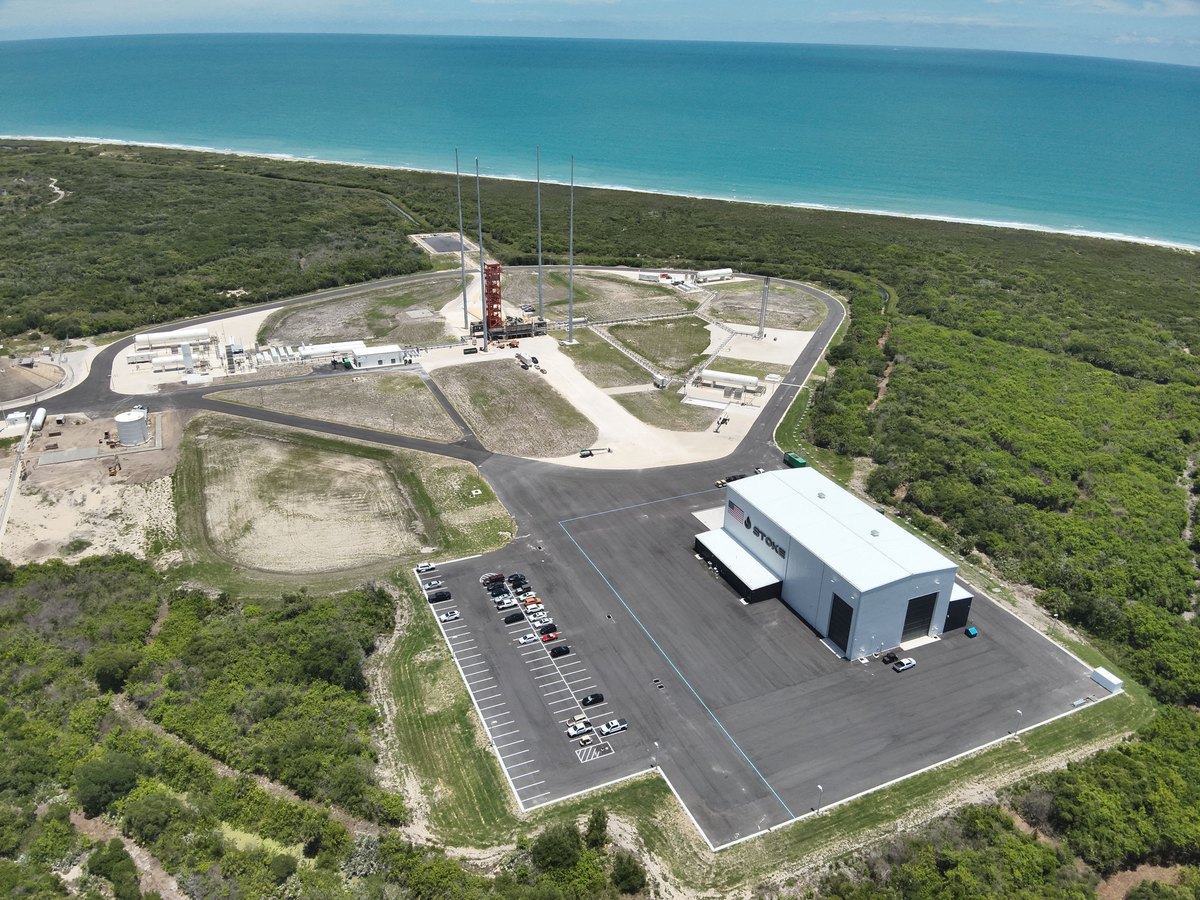
The Office of Strategic Capital was set up in 2022 to draw private investment into technologies seen as critical to national security. The following year, Congress gave the office power to make loans and loan guarantees to companies in those fields. Space launch is one of the technology categories it targets. The Stoke arrangement is a conditional loan of $150 million, and the Department of War said it would be paired with private capital to pay for the second pad at Cape Canaveral.
Nova is designed so both of its stages can return and fly again. The booster flies itself back for recovery. The upper stage uses a metal heat shield cooled by liquid hydrogen that circulates through channels inside it, to survive the heat of reentry. Only SpaceX, with its much larger Starship, is pursuing the same goal, and has not fully achieved it yet. Stoke has yet to launch a rocket to orbit. Stoke's June NASA partnership on that upper-stage return is unfunded.
Advertisement
Tech Pulse Daily
Get tomorrow's pulse first
Join engineers who read Tech Pulse before stand-up. Free, weekday mornings.
Stoke Space lines up $150 million Pentagon: why it matters now
Jordan Sebold, senior managing director for investments at the Office of Strategic Capital, said in a statement that adding launch infrastructure would "enhance the overall capacity and resilience of the commercial space industrial base." David Lorch, the office's director, said in the news release, "By expanding domestic launch facility capacity, this investment enables launch service providers to ensure our commercial and defense partners have reliable, high-cadence access to space." Those comments came with the conditional $150 million commitment announced on Monday.
Stoke plans to launch Nova Pathfinder first, from the existing Cape Canaveral pad, in early 2027. Nova Block 2, at five times Pathfinder's capacity and up to 15 metric tons to low Earth orbit, is slated for 2029, and the second pad is for that rocket. In 2025 the Space Force added Stoke to the pool that can compete for national security missions under Lane 1 of the program's third phase. Stoke cannot bid until it completes a successful orbital flight.
Stoke Space lines up $150 million Pentagon: who is affected
Blue Origin veterans Andy Lapsa, the chief executive, and Tom Feldman, the chief technology officer, founded Stoke Space in 2019. The company has about 400 employees. Most are at the 168,000-square-foot factory and headquarters in Kent, Wash. About 50 are at the Moses Lake test site, which is expanding from 75 to 550 acres, and about 50 more work at Cape Canaveral. GeekWire asked Stoke for comment and had not received a response when the October 26, 2026 story was published.
In 2025 the Space Force added Stoke to Lane 1 of the third phase of its national security launch program, the tier for newer launch companies and less demanding payloads. Stoke cannot bid until a successful orbital flight. The Defense Innovation Unit awarded a $4.5 million contract in 2024 to study rapid cargo delivery to orbit, and possibly back to Earth. In June, NASA chose Stoke as one of 37 companies for unfunded partnerships focused on returning Nova's upper stage safely through the atmosphere.
Stoke Space lines up $150 million Pentagon: what to watch
The $150 million stays conditional until Stoke meets the financial, legal, technical, and due-diligence requirements. The Department of War said private capital would be paired with the loan to pay for the second Cape Canaveral pad. Stoke plans the first Nova Pathfinder launch from the existing pad in early 2027. The company has yet to launch a rocket to orbit. Stoke cannot bid on Lane 1 national security missions in the program's third phase until it completes a successful orbital flight.
Nova Block 2 is slated to debut in 2029 on the second pad, designed to carry up to 15 metric tons to low Earth orbit, five times the capacity of Nova Pathfinder. In June, NASA included Stoke among 37 companies in unfunded partnerships to return the upper stage through the atmosphere. The 2024 Defense Innovation Unit contract, worth $4.5 million, studied rapid cargo delivery to orbit and possibly back to Earth. SpaceX has not fully achieved the same goal with its much larger Starship.
Developer Action Items
- ☐ Map where SpaceX sits in your stack (SDK, API key, billing, data-processing addendum).
- ☐ Hold the $150 million figure to the primary report; do not brief a number that is not on the record.
- ☐ Hold non-urgent migrations until the integration or use-of-proceeds roadmap is public — day-one coverage is not a ship signal.
- ☐ If you are mid-contract or mid-POC, ask the vendor what changes for existing customers this quarter.
- ☐ Write the single decision this forces: stay, dual-source, or exit.
Stoke Space lines up $150 million Pentagon FAQ
How large is the Stoke Space loan, and is it final?
The Department of War's Office of Strategic Capital made a conditional commitment for a $150 million loan to build a second launch pad at Cape Canaveral. It is not final until Stoke meets financial, legal, technical, and due-diligence requirements. The Department of War said the loan would be paired with private capital to pay for the pad.
What is Nova Block 2, and when does it fly?
Nova Block 2 is the larger fully reusable rocket the new pad would serve. It is designed to carry up to 15 metric tons to low Earth orbit, five times the capacity of Nova Pathfinder, and it is slated to debut in 2029. Stoke plans to launch Nova Pathfinder first, from the existing Cape Canaveral pad, in early 2027, and has yet to launch a rocket to orbit.
Can Stoke Space bid on Space Force missions?
In 2025 the Space Force added Stoke to Lane 1 of the third phase, the tier for newer launch companies and less demanding payloads. Stoke cannot bid on those national security missions until it completes a successful orbital flight.
How is Nova designed to fly again?
Both stages are designed to return and fly again. The booster flies itself back for recovery, and the upper stage uses a metal heat shield cooled by liquid hydrogen that circulates through channels inside it. Only SpaceX, with its much larger Starship, is pursuing the same goal, and it has not fully achieved it yet.
Who runs Stoke Space, and how big is the company?
Blue Origin veterans Andy Lapsa, the chief executive, and Tom Feldman, the chief technology officer, founded Stoke in 2019. The company has about 400 employees. Most are at a 168,000-square-foot factory and headquarters in Kent, Wash., about 50 are at the Moses Lake test site, which is expanding from 75 to 550 acres, and about 50 more work at Cape Canaveral.
Sources

Author
Dillip Chowdary
Writes Tech Bytes coverage of AI, engineering, and the tools that actually ship. Editor of Tech Pulse Daily.
Related on Tech Bytes
Advertisement