Swift Saw the Secrets of Space Before Falling to Earth
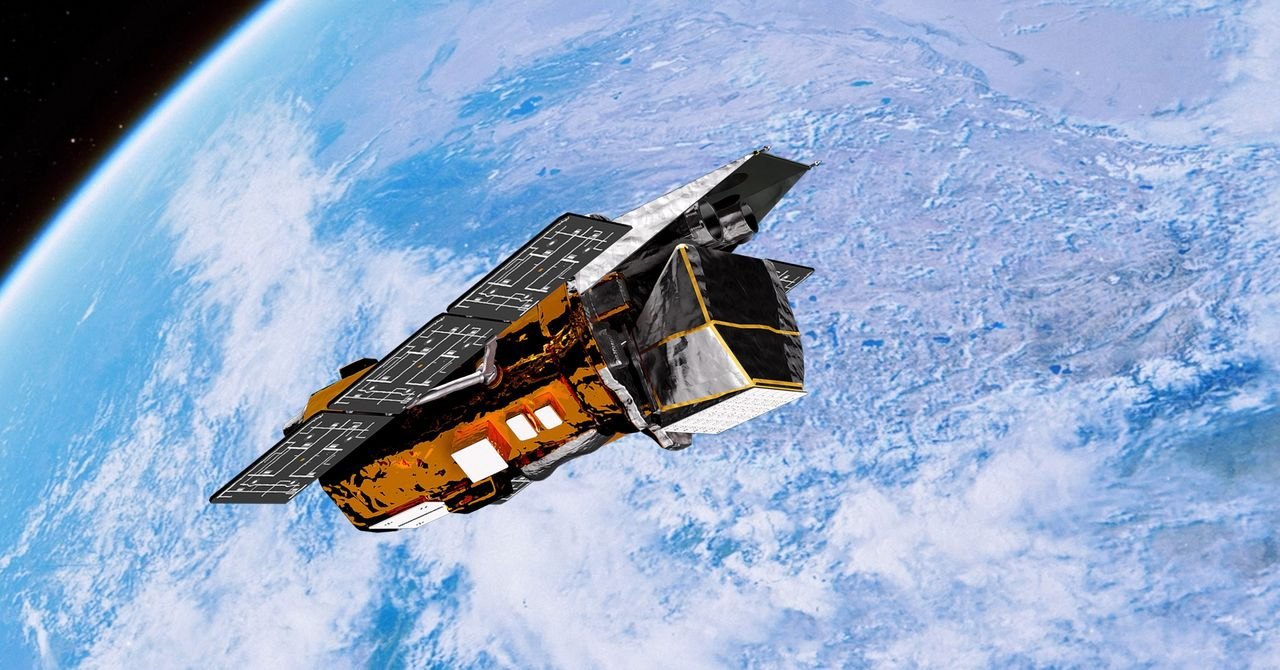
NASA's Neil Gehrels Swift Observatory reentered over North Sumatra on November 4 after just under 22 years, once a $30 million LINK rescue was canceled.
By Dillip Chowdary • Nov 29, 2026 • Source: Wired
At a glance
- Observatory
- Neil Gehrels Swift Observatory
- Launch
- November 20, 2004
- Reentry
- November 4, North Sumatra
- Rescue contract
- $30 million, September 2025
- Closest approach
- 12 to 15 kilometers
- Public archive
- About 12 terabytes
The article has to follow the news-post template and use only facts from the Wired piece.The Wired piece has a clear order: launch and instruments, the one-minute burst chase, the public archive, then the abandoned LINK rescue.The draft is one word over the paragraph limit and leaves out “small satellite.NASA's Neil Gehrels Swift Observatory has concluded its scientific mission, which spanned just under 22 years, according to Wired's report. As its orbital altitude fell below 275 kilometers (171 miles), it could no longer continue stable astronomical observations. On November 4 it reentered the atmosphere over North Sumatra, Indonesia.
This piece covers Swift's telescopes, the one-minute burst routine, the public archive, and the Katalyst rescue NASA canceled. It is for readers who follow gamma-ray astronomy and low-Earth-orbit satellites and want the altitudes, the contract price, and the final observation date.
01Burst Explorer launch and rename
Swift had been launched on November 20, 2004, as the Swift Gamma-Ray Burst Explorer, and it began operations the following month. In addition to a gamma-ray-burst alert telescope, it was equipped with ultraviolet and visible-light telescopes as well as an x-ray telescope.
It was designed as a multi-wavelength observation satellite capable of rapidly pinpointing the locations of gamma-ray bursts, the most powerful explosions in the universe. In 2018, following the death of its first principal investigator, Neil Gehrels, NASA renamed the mission in his honor.
02One minute to the afterglow
Development of the Swift space telescope was driven by the difficulty of tracking gamma-ray bursts. S. Bradley Cenko, the mission's principal investigator at NASA's Goddard Space Flight Center, said: "Swift was designed as a satellite dedicated to studying gamma-ray bursts, outbursts that came and went so quickly that no one could target them with large telescopes to learn more."
- Detect the burst Swift detected a gamma-ray burst.
- Pinpoint the location It pinpointed the burst's location.
- Relay the position It relayed the location to other observatories.
- Swivel and image It swiveled its telescope to capture images before the afterglow faded.
That sequence of operations was usually finished in about a minute. Speed was particularly critical for short gamma-ray bursts, in which the emissions end in less than two seconds. Before Swift was launched, it was not possible to pinpoint the location quickly and accurately enough to observe the afterglow.
03GRB 050509B and the archive
In May 2005, Swift quickly turned toward the gamma-ray burst GRB 050509B, which lasted only 0.03 second, and detected 11 x-ray photons. This was the first short gamma-ray burst for which an afterglow was detected. The observation corroborated long-standing theoretical models suggesting that short bursts are most likely caused by the merger of two neutron stars, celestial bodies with a mass comparable to the sun compressed to the size of a city.
Advertisement
Tech Pulse Daily
Get tomorrow's pulse first
Join engineers who read Tech Pulse before stand-up. Free, weekday mornings.
Astronomers could request target-of-opportunity observations, and commands could be sent from the ground in as little as a few minutes. Swift's flexible observation planning supported monitoring from minutes to months, with up to 75 distinct celestial objects per day. Swift also sent alerts to other space- and ground-based facilities to coordinate additional observations.
Swift observed more than 2,000 gamma-ray bursts and more than 1,400 supernova explosions. It witnessed stars being torn apart by black holes, monitored active galaxies, and conducted all-sky x-ray surveys, work that contributed to approximately 7,000 scientific papers. The full dataset, about 22 years of brightness measurements and more than 1.5 million ultraviolet and visible-light images, is public and amounts to about 12 terabytes.
04Drag, no thrusters, Katalyst
Swift circled in low Earth orbit, where the outermost atmosphere still creates air resistance, and it lacked thrusters to maintain its orbit. Altitude fell from approximately 585 kilometers (364 miles) at launch to about 363 kilometers as of June 18, 2026. Increased solar activity expanded Earth's atmosphere, so the telescope descended faster than initially predicted.
NASA engineers had long predicted a drop to approximately 300 kilometers by the fall of 2026, when a recovery spacecraft could no longer approach safely. NASA issued no standard request for proposals and instead asked three companies that already held technology development contracts to explore orbital services. In September 2025 it signed a $30 million contract with space startup Katalyst Space Technologies, and a NASA photograph shows the Swift Space Telescope at its September 2003 completion with its first principal investigator, Neil Gehrels, beside it.
- Capture and dock LINK was to capture and dock with Swift using three robotic arms.
- Raise the orbit LINK would raise Swift to a safe operational altitude.
- Resume observations Scientific observations would resume after that raise.
Only one year was available to complete this task, so Katalyst manufactured components in-house when suppliers could not meet their deadlines and streamlined testing procedures. LINK, a small satellite, was launched on July 3, 2026, aboard a Northrop Grumman Pegasus XL rocket.
05Twelve kilometers, then October 20
During in-orbit testing, LINK's attitude-control system malfunctioned, and capturing Swift and raising its orbit would be difficult. On August 19, NASA and Katalyst canceled the operation and redefined the mission as an in-orbit demonstration. LINK raised its orbit to align with Swift, deployed its three robotic arms, simultaneously fired its three ion thrusters, and approached to 12 to 15 kilometers (7 to 9 miles).
Note: NASA announced LINK would not approach Swift any closer during the remainder of its operational life in orbit, and LINK reentered Earth's atmosphere on September 25. The Swift operations team planned to observe as long as possible and on August 26 restarted the ultraviolet and visible-light telescopes and the x-ray telescope, shut down in preparation for the rescue, and captured images of Tycho's supernova remnant about 13,000 light-years away. Below 275 kilometers Swift lost a stable lock, and the final observation on October 20 concluded the scientific mission.
"Swift delivered an incredible, lasting return on investment for the nation, designed for a two-year primary mission but productive for more than 10 times as long," said Sean Domagall-Goldman, director of the Astrophysics Division at NASA headquarters. NASA is considering ways to utilize and expand its existing fleet of space telescopes so it can still respond to cosmic phenomena after Swift is gone. The account was first published in WIRED Japan and translated from Japanese.
Frequently asked questions
When did NASA's Swift observatory reenter Earth's atmosphere?
The Neil Gehrels Swift Observatory reentered on November 4 over North Sumatra, Indonesia, after its altitude fell below 275 kilometers (171 miles). It could no longer hold a stable lock on targets, and the last scientific observation was on October 20. The mission had lasted just under 22 years.
When did Swift launch, and what telescopes did it carry?
Swift launched on November 20, 2004, as the Swift Gamma-Ray Burst Explorer and began operations the following month. It carried a gamma-ray-burst alert telescope, ultraviolet and visible-light telescopes, and an x-ray telescope. In 2018 NASA renamed the mission for Neil Gehrels, its first principal investigator, who had died.
What did Swift see in the short burst GRB 050509B?
In May 2005 Swift turned to GRB 050509B, a burst that lasted only 0.03 second, and detected 11 x-ray photons. That was the first short gamma-ray burst with a detected afterglow. The detection fit models in which short bursts come from two neutron stars merging, each with about the sun's mass squeezed to city size.
Why did NASA and Katalyst cancel the LINK rescue?
In September 2025 NASA signed a $30 million contract with Katalyst Space Technologies so LINK could dock using three robotic arms and raise Swift's orbit. LINK launched on July 3, 2026, aboard a Northrop Grumman Pegasus XL, but an attitude-control malfunction made capture difficult and the docking was canceled on August 19. LINK approached to 12 to 15 kilometers, was not to come closer, and reentered on September 25.
How large is the public Swift data set?
The public archive is about 12 terabytes. It holds about 22 years of brightness measurements and more than 1.5 million images from the ultraviolet and visible-light telescopes. Swift's observations, including more than 2,000 gamma-ray bursts and more than 1,400 supernovae, contributed to approximately 7,000 scientific papers.
Sources

Author
Dillip Chowdary
Writes Tech Bytes coverage of AI, engineering, and the tools that actually ship. Editor of Tech Pulse Daily.
Related on Tech Bytes
Advertisement