Teenage Engineering launched an instrument amp with a ton of built-in
Teenage Engineering launched the EP-35, a $399 battery-powered amplifier with phantom-powered XLR, guitar, line inputs, and wireless Auracast stereo pairing.
By Dillip Chowdary • Oct 24, 2026 • Source: The Verge
Teenage Engineering launched the EP-35, a multi-input, battery-powered portable instrument amplifier equipped with onboard digital effects processors and wireless multi-speaker linking. As detailed in The Verge's report, the hardware release marks the Swedish electronics company's direct expansion into dedicated amplification after prior design leaks. Available immediately for $399, the unit combines physical inputs for electric guitars, studio microphones requiring phantom power, line-level gear, and wireless Bluetooth audio inside one portable enclosure.
This report covers the physical connections, audio processing engine, hardware limitations, wireless linking capabilities, and modular accessory ecosystem announced for the EP-35. The analysis is targeted at multi-instrumentalists, traveling synthesizer performers, solo vocalists, and electronic musicians evaluating whether the simplified preset interface and unified battery-powered form factor meet live busking, desktop monitoring, or portable rehearsal demands without requiring external mixing boards, extension cords, or separate direct boxes.
Teenage Engineering launched an instrument: what actually changed
The EP-35 marks Teenage Engineering's first standalone entry into multi-instrument amplification, expanding the brand beyond compact synthesizers and samplers into active sound reinforcement. Instead of designing specifically for one instrument type, the hardware features dedicated rear connections for line-level sources, electric instruments, and microphones simultaneously. The back panel incorporates a line-in port, a 1/4-inch guitar input, and a balanced XLR input for microphones. Crucially, the internal preamplifier provides phantom power, allowing vocalists to connect studio condenser microphones on the move without carrying separate outboard power supplies.
Beyond physical analog ports, the hardware supports wireless audio streaming over Bluetooth alongside multi-speaker broadcast networking via Auracast. Musicians can stream backing tracks directly from mobile devices while performing with live instruments plugged into the rear ports. Auracast enables multiple EP-35 units to link together wirelessly without physical patch cords across a performance space. When two amplifiers are paired in stereo, users can physically tilt a unit left or right to set the appropriate stereo channel automatically through internal orientation sensors, bypassing digital menus entirely.
Teenage Engineering launched an instrument: how it works
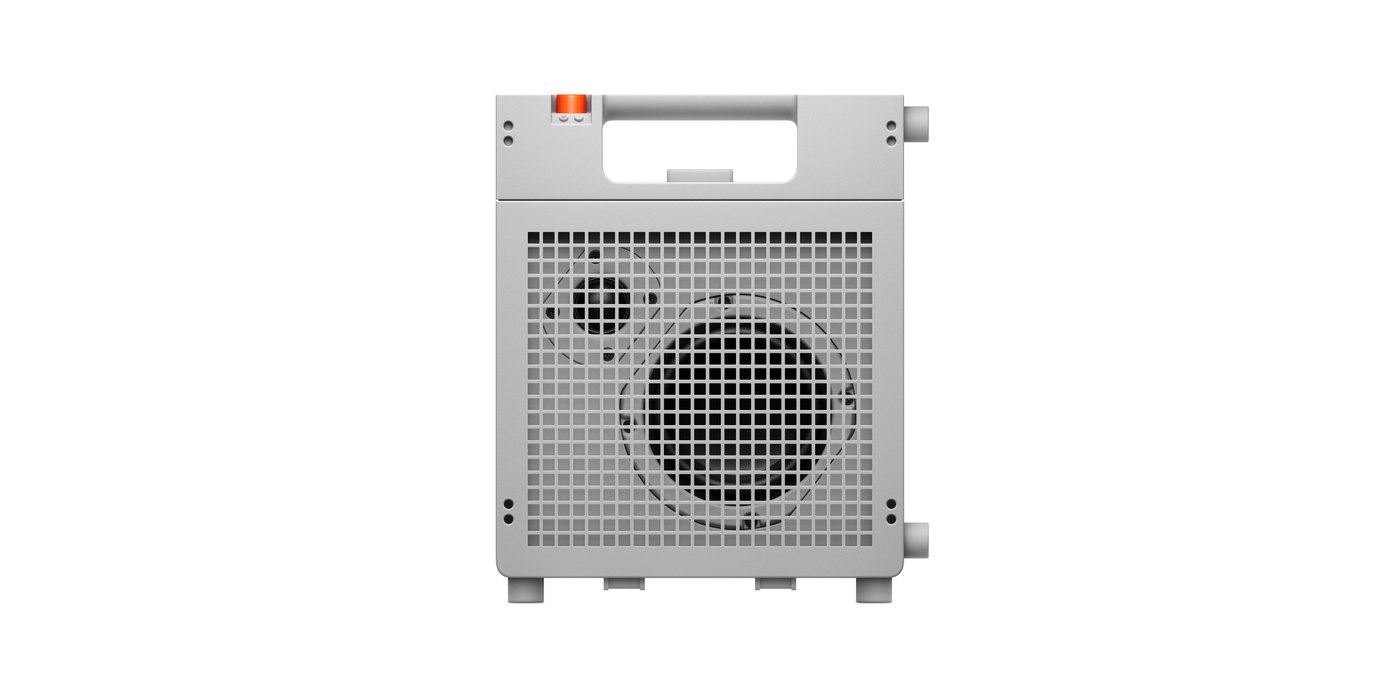
Audio processing across the EP-35 relies on separate digital effects engines that handle incoming guitar and vocal signals through isolated paths. Instead of providing deep parameter controls for adjusting delay times, modulation rates, or feedback, the system implements style-based presets. The guitar channel features presets like blues, indie, or twang, applying preconfigured combinations of effects to the incoming signal. Performers adjust the overall processing depth using a single control knob that changes the effect amount, prioritizing rapid stage adjustments over manual algorithmic programming during live sets.
The dedicated vocal channel follows the same single-knob design with presets tailored for singing. Performers can select settings such as radio for bandpass frequency shaping or robo choir for robotic harmonies, controlling processing intensity with the channel knob. While this streamlined layout allows quick adjustments during live sets, it restricts granular tone sculpting for musicians who want custom equalization, threshold settings, or fine delay modulation. Signals from the inputs and Bluetooth stream run through the internal amplifier, powered by rechargeable batteries for complete mobility.
Advertisement
Tech Pulse Daily
Get tomorrow's pulse first
Join engineers who read Tech Pulse before stand-up. Free, weekday mornings.
Teenage Engineering launched an instrument: why it matters now
Mobile sound setups typically require buskers and solo artists to transport separate acoustic amplifiers, portable PA speakers, external mixers, and power supplies. The EP-35 consolidates phantom-powered condenser microphone support, guitar amplification, line audio inputs, and wireless streaming into one battery-operated unit. Built-in phantom power on a battery speaker is especially valuable for mobile performers, who often face microphone compromises away from wall outlets. Musicians can deploy studio vocal microphones in remote outdoor locations without needing external battery packs or dedicated preamps.
The inclusion of Auracast linking and physical tilt detection introduces modular expansion uncommon in portable speaker cabinets. Instead of running balanced XLR cables to link monitors or daisy-chaining auxiliary outputs with patch cables, performers can expand sound coverage by synchronizing multiple EP-35 speakers over the air. Tilting paired cabinets to assign stereo channels eliminates complex software pairing routines on stage. Priced at $399, the combination of battery power, multi-channel inputs, and wireless clustering reduces stage equipment weight and cable clutter for traveling musicians.
Teenage Engineering launched an instrument: who is affected
Multi-instrumentalists and solo acts gain the most practical utility from the EP-35's input layout. Street buskers and acoustic performers who sing while playing guitar or portable synthesizers can plug their entire setup into one speaker without bringing an external mixer. Electronic musicians can route line-level synthesizers into the line-in port while utilizing the 1/4-inch guitar jack and XLR vocal input at the exact same time. The battery-powered design removes the need for wall outlets, simplifying travel transport, cable packing, and stage preparation.
In contrast, audio purists and technical studio players will face clear constraints from the fixed preset structure. Players seeking fine parametric equalization, tap-tempo delays, or discrete effect chains cannot adjust individual parameters within the presets. Because settings like blues, indie, radio, and robo choir bundle predetermined processing stages behind a single knob, users cannot modify individual components independently. Musicians with dedicated pedalboards may treat the built-in effects as basic conveniences rather than full replacements for specialized outboard hardware rigs or studio signal chains.
Teenage Engineering launched an instrument: what to watch
The platform's long-term utility extends through Teenage Engineering's companion accessory line designed for the EP-35. The company announced the amptenna, an add-on accessory that connects to the speaker to convert the unit into an FM radio for broadcast listening or audio sampling. For live performance control, the manufacturer introduced the EP-127 KO Pedal, a wireless MIDI foot controller that pairs with the amplifier. The pedal provides extra physical control over the built-in effects while unlocking an onboard looper and metronome during performance.
The EP-127 KO Pedal also includes an expression pedal jack that enables foot-controlled volume adjustments across a selected channel on the amplifier. Equipped with a standard 3.5mm MIDI output and Human Interface Device support, the pedal can also control external synthesizers, other pedals, or computer video playback on a desktop machine. With the EP-35 available now at $399, musician adoption will depend on how effectively the single-knob effects presets, wireless Auracast speaker clustering, and companion pedal integration hold up during demanding real-world performances.
Developer Action Items
- ☐ Verify the claim on the official Teenage Engineering launched instrument page (or The Verge), not from this recap alone.
- ☐ Name the surface that moved — API, policy, model, hardware, or commercial terms — before you Slack the thread.
- ☐ Assign one owner a day to read the primary material and decide: this-sprint, this-quarter, or noise.
- ☐ Do not change production on day-one coverage. Watch the vendor changelog and one independent write-up first.
Teenage Engineering launched an instrument FAQ
What inputs and connections are built into the Teenage Engineering EP-35?
The amplifier includes a rear line-in port, a 1/4-inch guitar input, and a balanced XLR input that provides phantom power for condenser microphones. It also supports wireless audio streaming over Bluetooth and multi-unit broadcasting via Auracast.
How much does the Teenage Engineering EP-35 cost and when is it available?
The EP-35 amplifier is priced at $399 and is available immediately from Teenage Engineering.
How does stereo pairing work with multiple EP-35 units?
Multiple EP-35 units link wirelessly using Bluetooth Auracast. When configuring two units for stereo playback, tilting an enclosure to the left or right automatically sets that unit to the corresponding stereo channel.
What accessories were announced alongside the EP-35 amplifier?
Teenage Engineering introduced the amptenna, an accessory that turns the amp into an FM radio, and the EP-127 KO Pedal, a wireless MIDI controller with looper and metronome functions, expression pedal volume control, a 3.5mm MIDI output, and HID computer control support.
Sources

Author
Dillip Chowdary
Writes Tech Bytes coverage of AI, engineering, and the tools that actually ship. Editor of Tech Pulse Daily.
Related on Tech Bytes
Advertisement