The $8 Linux Computer (2022) news update
The eight-dollar Ox64 board runs Linux on a tri-core BL808 RISC-V chip, requiring an RP2040 serial bridge and patched software tools during early bring-up.
By Dillip Chowdary • Nov 08, 2026 • Source: thelittleengineerthatcould.blogspot.com
Pipelining Linux into ultra-low-cost silicon reached a notable milestone with the Ox64, an eight-dollar single-board computer featuring three distinct RISC-V processing cores. Hardware developer Bram documented the initial bring-up process in thelittleengineerthatcould.blogspot.com's report, demonstrating how the microcontroller-sized hardware operates as a UNIX machine with memory management units rather than running a stripped-down kernel. The platform pairs a small physical footprint with the core architecture required to execute standard operating system kernels on open hardware.
This technical analysis covers the initial board setup, hardware connections, flashing tools, and console milestones needed to boot the Ox64. It is designed for embedded developers, kernel programmers, and hardware hobbyists seeking a realistic view of board bring-up. Although the eight-dollar price offers an accessible entry point to RISC-V computing, booting requires overcoming multiple tooling obstacles, building an external serial bridge, and patching programming scripts before an operating system image can be loaded into system memory.
$8 Linux Computer (2022) news update: what actually changed
The launch of the eight-dollar Ox64 established an accessible price point for developers seeking to run Linux on physical RISC-V hardware. Unlike earlier low-cost development platforms that lacked memory management units and ran stripped-down kernels, the Ox64 incorporates capable RISC-V processing cores that support full UNIX multitasking models. The board features three distinct, heterogeneous cores integrated onto its BL808 silicon rather than symmetric compute units. This architecture allows the device to resemble a basic microcontroller on the outside while maintaining the internal processing infrastructure needed for full operating system execution.
Despite the low cost and capable processor cores, early adopters face significant hardware constraints out of the box. During initial hardware evaluation, the onboard Ethernet networking, integrated Wi-Fi radio, and microSD card interface were completely non-functional. The board cannot currently load an operating system from an external storage card or establish wireless network connections. Developers must treat the hardware as an early-stage experimental platform where basic peripheral support remains inactive, requiring external programming cables, local serial links, and manual firmware flashing before any complex networking tasks can proceed.
$8 Linux Computer (2022) news update: how it works
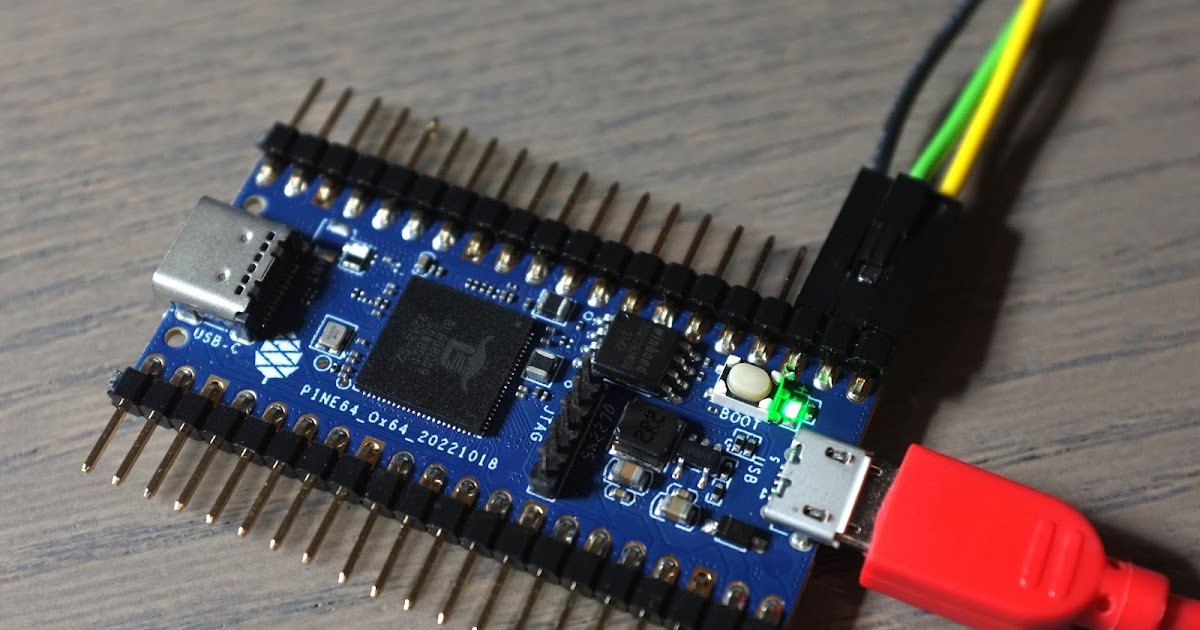
Programming the Ox64 differs fundamentally from common hobbyist microcontrollers such as the Arduino, ESP32, Stamp-C3, or Raspberry Pi Pico, which accept compiled code directly across native USB connections. The Ox64 instead requires programming strictly through its hardware UART pins on GPIO14 and GPIO15 alongside a ground connection. In addition, the vendor-provided flashing software named BLDevCube crashes on launch when running under Ubuntu Linux on modern Wayland display sessions. This failure occurs due to missing antialiasing keys in the GNOME settings daemon, forcing users to switch their desktop environment to Xorg.
Hardware serial connections created another major barrier when standard USB-to-UART adapters like the CH340G failed to complete serial handshakes in the flashing utility. Bram resolved this communication problem by converting an Adafruit KB2040 board, powered by a Raspberry Pi RP2040 chip, into a dedicated serial bridge. Flashing the RP2040 with picoprobe firmware via UF2 transfer allowed direct pin-to-pin communication: RP2040 GPIO-4 connected to Ox64 GPIO-15, and RP2040 GPIO-5 connected to Ox64 GPIO-14. When Dev Cube still failed to flash the hardware, the process transitioned to the command-line bflb-mcu-tool utility.
Advertisement
Tech Pulse Daily
Get tomorrow's pulse first
Join engineers who read Tech Pulse before stand-up. Free, weekday mornings.
$8 Linux Computer (2022) news update: why it matters
Operating the Python-based bflb-mcu-tool required manual source code intervention before it could communicate with the Ox64. Developers had to edit the bflb_interface_uart.py file inside the local Python site-packages directory to strip out DTR and RTS signal manipulation routines that interfered with the connection. Once modified, the tool communicated across serial port /dev/ttyACM2 at a baud rate of 2000000. Supplying board power through the onboard MicroUSB port while connecting the RP2040 to the host workstation over USB-C enabled successful flashing of the initial low_load_bl808_m0.bin firmware image onto the M0 core.
The resulting console output verified that the fundamental hardware subsystems successfully initialized over the serial bridge. Boot messages confirmed that dynamic memory initialization succeeded with a heap size of 156 Kbyte, announced the start of the E907 core, established an mtimer clock frequency of 1000000, and verified that PSRAM clock initialization completed. This successful handshake demonstrates that sub-ten-dollar RISC-V hardware can reliably bring up internal memory and secondary cores. Establishing functional serial communication creates a critical working foundation for subsequently flashing the D0 core and loading a full operating system.
$8 Linux Computer (2022) news update: who is affected
Embedded developers and electronics hobbyists expecting a streamlined installation workflow will find the Ox64 significantly more challenging than typical single-board devices. The requirement to use external UART pins, configure custom microcontrollers as serial bridges, and bypass native USB programming limits immediate adoption for beginners. Developers relying on generic CH340G serial dongles or default Wayland desktop environments must adjust their physical wiring and software configurations. Setting up the platform demands comfort with low-level hardware debugging, manual Python script modifications, and direct terminal interaction rather than automated graphical installation wizards and one-click flashing utilities.
Low-level firmware engineers and open-source RISC-V enthusiasts benefit most from this development milestone because it offers an affordable platform for kernel bring-up experimentation. However, teams building production Internet of Things appliances, wireless controllers, or embedded network devices cannot currently use the board due to inactive networking and storage controllers. The absence of functional Wi-Fi, Ethernet, and SD-Card hardware means developers cannot yet deploy networked applications or read filesystems from removable media. For now, the hardware remains strictly suited for system hackers developing initial bootloaders and testing raw silicon capabilities.
$8 Linux Computer (2022) news update: what to watch
The next immediate milestone for the Ox64 involves completing the remaining multi-core bootstrap steps required to boot an operating system kernel. Bram noted that after initializing the M0 core, developers must flash corresponding code to the D0 core and prepare the main Linux image. Observers should track whether the open-source community integrates UART fixes directly into bflb-mcu-tool so future users can avoid manually editing Python library packages. Upstream bug fixes for the official BLDevCube flashing software under Wayland will also determine whether Linux users can configure the hardware without switching display managers.
Longer-term viability depends on achieving software support for the non-functional physical interfaces, particularly the microSD card slot, onboard Wi-Fi radio, and wired Ethernet. Enabling external storage is essential for loading standard Linux distributions, user-space utilities, and persistent filesystem images that cannot fit into onboard memory. If community contributors stabilize peripheral drivers and document straightforward flashing steps for the BL808 chip, the Ox64 could establish a durable standard for ultra-cheap RISC-V compute boards. Progress on these driver repositories will indicate when the device matures from an experimental microcontroller into an everyday Linux machine.
Developer Action Items
- ☐ Verify the claim on the official Linux page (or Hacker News Best), not from this recap alone.
- ☐ Name the surface that moved — API, policy, model, hardware, or commercial terms — before you Slack the thread.
- ☐ Assign one owner a day to read the primary material and decide: this-sprint, this-quarter, or noise.
- ☐ Do not change production on day-one coverage. Watch the vendor changelog and one independent write-up first.
$8 Linux Computer (2022) news update FAQ
What processor cores are on the Ox64 board?
The Ox64 is powered by a BL808 chip containing three distinct, capable RISC-V cores including M0, D0, and an E907 core with memory management unit support.
How much does the Ox64 cost and what features currently work?
The board costs eight dollars, but at the time of initial testing, onboard Wi-Fi, Ethernet, and the microSD card slot were completely non-functional.
How do you flash firmware to the Ox64?
Flashing requires UART connections across GPIO14 and GPIO15 using a tool like bflb-mcu-tool and an RP2040-based bridge like the Adafruit KB2040 running picoprobe firmware.
Why did the official BLDevCube software fail on Ubuntu?
BLDevCube crashed under Ubuntu on Wayland because of missing antialiasing settings in the GNOME settings daemon, requiring users to run the tool under Xorg.
Sources

Author
Dillip Chowdary
Writes Tech Bytes coverage of AI, engineering, and the tools that actually ship. Editor of Tech Pulse Daily.
Related on Tech Bytes
Advertisement