The Android camera app that doesn’t overprocess adds new color grading sets
VWFNDR released camera app MBL 2.0 with spatial color profiles and an iPhone expansion after crossing 300,000 Android downloads since its May 2026 launch.
In short
Photographers wanting unprocessed DNG captures · Over 300,000 downloads since May 2026 · Android and Apple iPhone · Apply NATURAL, NIHON, or B+W profiles
By Dillip Chowdary • Nov 19, 2026 • Source: 9to5Mac
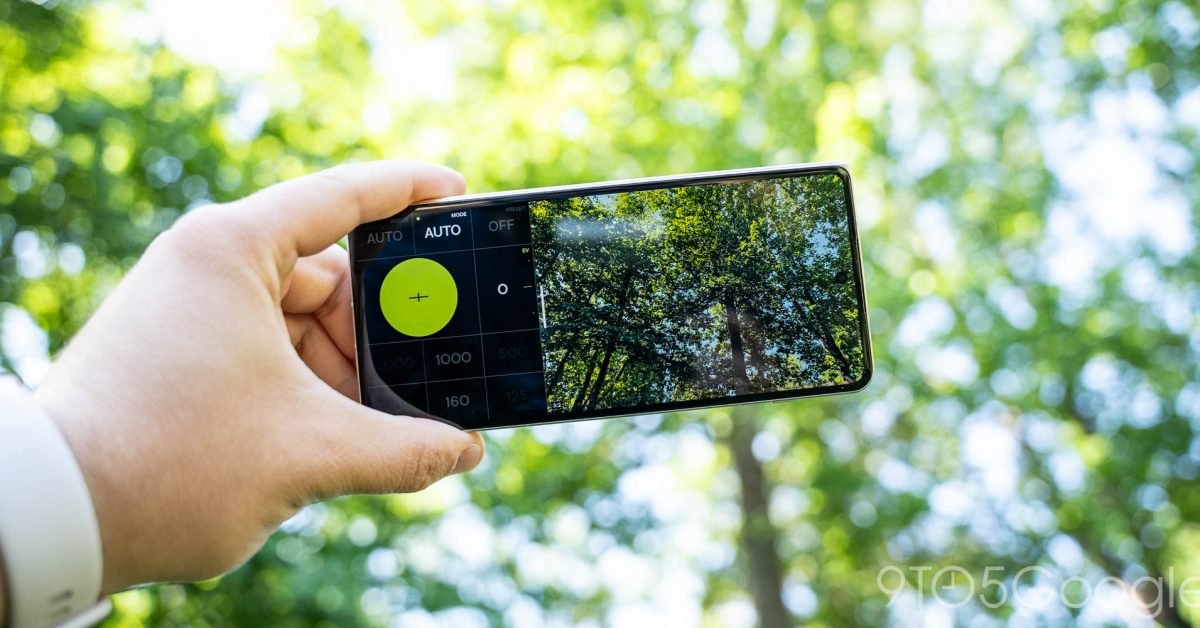
At a glance
- Who it is for
- Photographers wanting unprocessed DNG captures
- The number
- Over 300,000 downloads since May 2026
- Available
- Android and Apple iPhone
- What to do
- Apply NATURAL, NIHON, or B+W profiles
- Product
- VWFNDR + MBL version 2.0
- Standards
- Apple Content Credentials C2PA support
Camera studio VWFNDR released version 2.0 of its MBL mobile photography application after passing 300,000 downloads since its initial May 2026 debut, according to 9to5Mac's report.
This release is designed for photographers who want natural image files free from excessive computational sharpening. Users can apply new spatial color grades on Android or install the photography tool on iOS devices.
01Android origins and download growth
VWFNDR first launched the MBL camera tool exclusively on Android in May 2026 to counter heavy computational image processing. The software focused on delivering a minimal digital aesthetic alongside an interface that shifted dynamically based on shooting conditions. It matched the raw file fidelity found in Google Pixel Camera software by recording direct digital negative assets.
The platform achieved steady adoption among mobile shooters seeking authentic texture rather than algorithmically smoothed captures. The app accumulated more than 300,000 downloads over its initial operating period on Android devices. That traction established the foundation for expanding the software into an updated version that introduces new rendering capabilities.
Most consumer smartphone cameras apply aggressive edge enhancements and heavy noise reduction by default. VWFNDR designed MBL to preserve subtle grain patterns and gentle tonal transitions directly from camera sensors. Photographers adopted the utility specifically because it preserved scene authenticity while generating clean raw captures for manual post-production workflows.
02Spatial engine and frame grading
The version 2.0 update introduces dedicated color profiles labeled NATURAL, NIHON, and B+W directly into the capture pipeline. Rather than applying a standard lookup table with rigid adjustments, VWFNDR built a proprietary spatial engine to process image exposures. This system evaluates luminosity and tonal balance across the frame to preserve critical shadow depth and highlight clarity.
The developer noted that MBL still records unprocessed Bayer RAW DNG files while the companion JPG uses one of the three profiles. Because the spatial rendering engine operates like a dedicated desktop editor, local contrast shifts smoothly across bright and dark elements. The underlying raw digital negative remains completely unaltered for archival storage and separate color work.
This approach prevents the blown highlights and crushed darker tones that often plague conventional mobile color filters. Users receive an immediate rendered JPG with character alongside a pristine digital negative containing every byte of sensor exposure data. The resulting files offer immediate sharing utility without sacrificing the flexibility required for serious photographic editing.
03Release version comparison metrics
Advertisement
Tech Pulse Daily
Get tomorrow's pulse first
Join engineers who read Tech Pulse before stand-up. Free, weekday mornings.
The transition to version 2.0 represents a major expansion in platform reach and imaging features across mobile ecosystems. The baseline release established the camera pipeline on Android, while the updated iteration expands toolsets and brings the software to Apple hardware.
| Metric or Feature | VWFNDR + MBL 1.0 | VWFNDR + MBL 2.0 | | Download total | 0 at launch | Over 300,000 | | Supported platforms | Android only | Android and iOS | | Color grading profiles | Single standard look | NATURAL, NIHON, B+W | | DNG capture format | Bayer RAW DNG | Bayer RAW DNG | | Hardware integration | Adaptive mobile UI | iPhone 18 Pro aperture control | | Authenticity standard | Standard metadata | Apple Content Credentials |
The changes maintain baseline digital negative handling while introducing specialized hardware controls for modern sensor architectures. Mobile creators can review the operational metrics between the two software generations to evaluate workflow additions across both operating systems and sensor configurations.
04iPhone ecosystem and hardware controls
After remaining an Android exclusive since May 2026, VWFNDR is now expanding the camera application to the Apple ecosystem. Early mobile releases historically arrived on iOS before receiving Android ports, making this expansion an uncommon reversal of typical release paths. The iOS edition delivers the same minimal processing philosophy that defined the original utility.
The iPhone release integrates direct hardware support for the variable aperture mechanisms present on iPhone 18 Pro devices. Physical aperture manipulation allows photographers to manage depth of field and light transmission optically rather than relying on synthetic lens blur. This mechanical integration complements the non-destructive software rendering pipeline across varied lighting environments.
Photographers working with high-end iOS hardware gain manual authority over physical exposure parameters without triggering aggressive default operating system corrections. The software bridges physical camera controls with raw file delivery to replicate traditional camera handling on portable devices. Users obtain direct optical control alongside clean DNG output for studio production.
05Content credentials and authenticity checks
The iOS version also introduces integration with Content Credentials, which represents Apple's implementation of the Coalition for Content Provenance and Authenticity standard. This cryptographic framework embeds verifiable provenance metadata directly into captured media files at the point of exposure. The record establishes that a photograph represents authentic optical capture rather than synthetic generation.
With generative AI tools producing increasingly photorealistic imagery, photographic authentication has become critical for working photojournalists and commercial artists. The C2PA metadata confirms the camera source, capture parameters, and editing chain without compromising visual quality. Viewers can inspect the cryptographic history of an image to verify that the file originated from a camera sensor.
By coupling natural exposure rendering with cryptographic authenticity standards, VWFNDR positions the application as a dependable capture tool for documentary production. The software safeguards raw digital negatives, applies nuanced spatial profiles, and secures the provenance of finished photographs. Creators maintain full creative control while preserving the verifiable integrity of their optical work.
Frequently asked questions
What new features are included in VWFNDR + MBL 2.0?
The update adds NATURAL, NIHON, and B+W color grading profiles powered by a custom spatial engine. It also expands the application to iPhone with support for variable aperture on iPhone 18 Pro and Content Credentials.
How does color grading work in VWFNDR + MBL?
Grading is processed through VWFNDR's spatial engine, which adapts across the frame like a raw editor to protect highlight and shadow detail. The app applies the grade to the rendered JPG while saving an untouched Bayer RAW DNG alongside it.
What iPhone hardware is supported by the new release?
The iPhone version supports the variable aperture hardware on iPhone 18 Pro. It also integrates Content Credentials to verify that photos are authentic captures rather than AI-generated imagery.
How many downloads has VWFNDR + MBL received?
The camera application has been downloaded over 300,000 times on Android since launching in May 2026.
Sources

Author
Dillip Chowdary
Writes Tech Bytes coverage of AI, engineering, and the tools that actually ship. Editor of Tech Pulse Daily.
Related on Tech Bytes
Advertisement