The Cloud Is Just Someone Else's Computer – They Let It Burn
An AWS data center failure in Virginia and a Cloudflare typo knocked Coinbase and thousands of websites offline, pushing teams toward bare metal servers.
By Dillip Chowdary • Nov 15, 2026 • Source: soargram.io
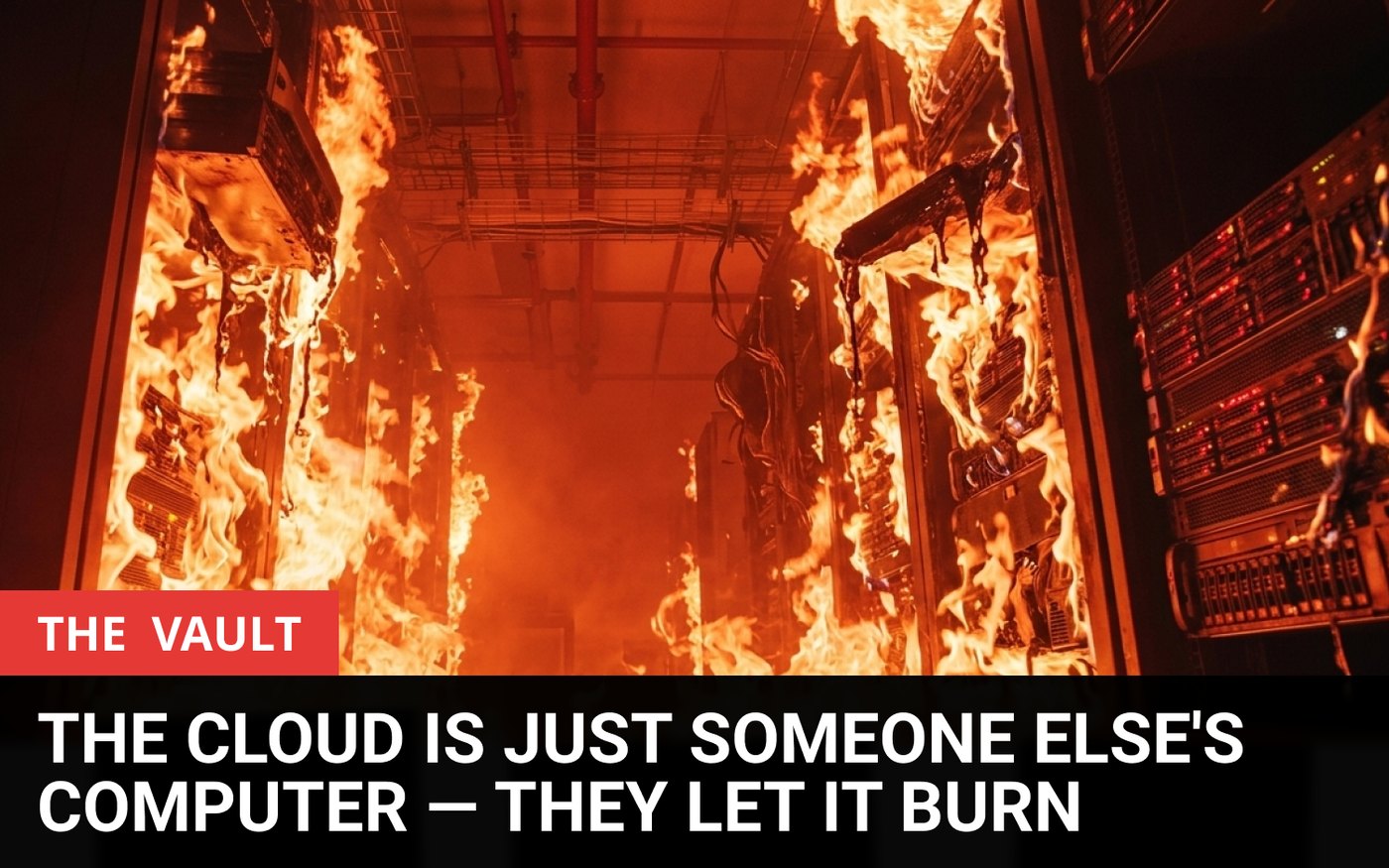
Analysis published by The Vault on soargram.io's report details how physical vulnerabilities in centralized data centers repeatedly trigger widespread service disruptions. A broken cooling system in a Virginia AWS facility forced Coinbase offline last May, while an automated script typo made thousands of websites invisible. These incidents highlight the fragility underlying modern hosted cloud infrastructure.
This report breaks down the physical realities of data center environments, provider concentration risks, and the technical factors prompting engineers to revisit bare metal architectures. It is written for systems architects, operations engineers, and technical leaders evaluating shared cloud dependencies. It details how physical facilities, power cables, and cooling pipes govern real-world operational reliability.
01Physical data center failures in Virginia
Recent outages have dismantled the notion that cloud computing operates as an immaterial, frictionless platform. When ambient temperatures surged within a Virginia AWS data center last May, the thermal spike disrupted server operations across the building. The breakdown demonstrated that distributed networks remain tethered to physical walls, power cables, and cooling pipes subject to mechanical failure.
The immediate consequence of the Virginia facility overheating was a complete blackout for cryptocurrency exchange Coinbase. Critical transaction systems went offline because the underlying host servers could not operate in high ambient temperatures. The incident showed that a localized environmental control failure can instantly incapacitate high-value financial platforms relying on third-party data center availability.
A separate incident involving an automated Cloudflare script underscored how software deployment bugs amplify hardware concentration. A single typo inside a routing script propagated across central distribution systems, instantly blinding thousands of customer websites to incoming traffic. These compounded events revealed that centralization bundles both hardware vulnerabilities and automated software mistakes into shared operational points of failure.
02Cooling pipes power cables and servers
Data centers function as physical buildings governed by strict thermodynamic limitations. Server racks generate intense heat, requiring active cooling pipes and electrical power conduits to remain viable. If an air conditioner unit malfunctions, room temperatures rise rapidly until protective thresholds trigger automatic server shutdowns to prevent permanent physical damage.
At the network routing layer, major edge providers manage traffic flow using automated global orchestration scripts. When engineers deploy updates, configuration rules propagate simultaneously across shared routing fabrics. A typographical error within a single configuration script can misdirect or drop traffic requests entirely, cutting network paths for thousands of hosted web services in an instant.
These operational dynamics demonstrate that cloud systems remain physical machines managed by automated administrative software. The computational layer cannot separate itself from ambient room temperatures, liquid cooling circulation, or deployment pipelines. When a single mechanical component or line of automation code breaks, the promise of transparent abstraction dissolves into basic hardware constraints.
Advertisement
Tech Pulse Daily
Get tomorrow's pulse first
Join engineers who read Tech Pulse before stand-up. Free, weekday mornings.
03Centralized provider dominance and fragility
The technology industry spent a decade trading a decentralized web structure for the convenience of centralized hosting providers. Migrating infrastructure into large cloud ecosystems simplified initial application deployments. However, this transition concentrated global internet traffic into a small cluster of massive operators, creating unprecedented systemic dependency across independent platforms.
This consolidation produces hidden economic risks for companies that assume vendor redundancy protects them from catastrophic disruption. When thousands of digital services depend on shared facilities in a single geographic zone, risk does not disappear; it aggregates. An infrastructure breakdown in Virginia ceases to be a localized utility problem and instead becomes an industry-wide outage affecting commercial markets.
The illusion of resilience often prevents development teams from confronting the vulnerability of multi-tenant setups. Marketing claims of high availability obscure the reality that hardware remains concentrated in specific geographic buildings. As centralized platforms experience recurring outages, organizations face mounting financial and reputational costs for outsourcing fundamental infrastructure resilience to a few corporate giants.
04Coinbase downtime and script typo disruption
Financial institutions and trading systems felt the direct impact of hosting failures when Coinbase became unreachable during the AWS outage. The digital exchange relies heavily on Virginia-based cloud compute capacity to process real-time transactions. When thermal issues downed the host machines, users were unable to access accounts, demonstrating how cloud failures paralyze high-stakes financial operations.
Simultaneously, independent web operators experienced severe visibility losses due to the configuration error in Cloudflare script management. Web properties across multiple industries found their domain names unresolvable, cutting off visitors and disrupting online revenue streams. The affected website owners had executed no changes to their own applications, yet suffered complete downtime because upstream traffic proxies distributed corrupted routing instructions.
These incidents exposed how broadly shared dependencies affect online businesses that believe they operate independently. Whether running a financial exchange or a content platform, digital products share identical points of failure inside vendor server clusters. When an environmental system fails or an orchestration command misfires, the blast radius impacts diverse sectors without distinction or warning.
05Return to bare metal server infrastructure
In response to recurring vulnerabilities, systems engineers are quietly reassessing multi-tenant cloud hosting in favor of bare metal server deployments. Rather than relying on managed virtualization layers, engineering teams are provisioning dedicated physical hardware. This architectural pivot provides direct control over host configuration, operating environments, and physical workload distribution.
Bare metal deployments remove the shared risks inherent in centralized provider architectures. Teams that maintain independent servers are insulated from configuration errors introduced by global edge networks and shared tenant clusters. While self-hosted hardware demands dedicated operational management, it eliminates cascading outages triggered by neighboring tenant workloads or external facility cooling failures.
This movement reflects a growing industry acknowledgment that high availability requires deliberate architectural design rather than blind trust in cloud branding. Organizations prioritizing uptime are choosing dedicated computing environments to safeguard their operations from remote physical breakdowns. As data centers face thermal limits and automated networks grow complex, bare metal infrastructure offers a reliable path toward true operational resilience.
Cloud Is Just Someone Else's Computer – They FAQ
Why did Coinbase experience downtime during the AWS outage?
Coinbase went dark because an AWS data center in Virginia overheated after an air conditioning unit broke. The resulting thermal breakdown forced servers to halt operations to prevent equipment damage.
How did a script typo cause thousands of websites to disappear?
A single typo in an automated Cloudflare script corrupted routing instructions across shared network infrastructure. The configuration error immediately rendered thousands of customer websites invisible to public web traffic.
What physical components make cloud infrastructure vulnerable to failure?
Cloud platforms rely on physical data center buildings equipped with power cables, walls, and fluid cooling pipes. If air conditioning or cooling systems fail, accumulated ambient heat forces servers into emergency shutdowns.
Why are systems engineers migrating back to bare metal servers?
Engineers are adopting bare metal infrastructure to escape the hidden costs and shared failure domains of massive cloud providers. Operating dedicated physical hardware protects organizations from multi-tenant thermal failures and third-party configuration typos.
Sources

Author
Dillip Chowdary
Writes Tech Bytes coverage of AI, engineering, and the tools that actually ship. Editor of Tech Pulse Daily.
Related on Tech Bytes
Advertisement