The Download: Silicon Valley’s blind spot and Nvidia’s chip-tracking plan
Nvidia confirmed it can track advanced AI chips under the Chip Security Act to stop smuggling to China as CEO Jensen Huang stepped down amid firm turmoil.
By Dillip Chowdary • Nov 14, 2026 • Source: MIT Technology Review

Nvidia representatives privately confirmed to congressional lawmakers that technical mechanisms can track high-performance artificial intelligence semiconductors and prevent export diversion, directly contradicting industry claims of infeasibility, according to MIT Technology Review's report. The admission centers on location verification mandates proposed under the federal Chip Security Act to curb unauthorized shipments to China.
This report examines legislative semiconductor tracking, executive turnover following Jensen Huang's resignation from Nvidia, illicit hardware diversions through Singapore, and participant rights in neural interface research. It is written for hardware engineers, policy analysts, enterprise technology buyers, and semiconductor supply chain operators who monitor export compliance and statutory oversight.
01White House endorsements and midterm political backlash
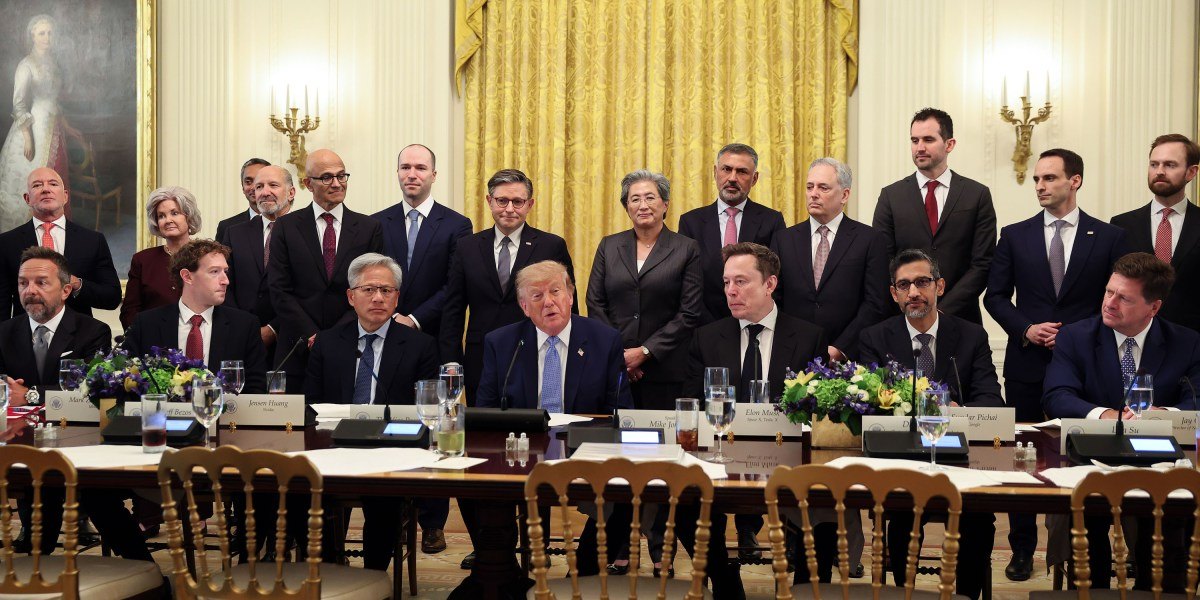
Five weeks before the midterm elections, prominent Silicon Valley executives gathered at the White House to endorse Donald Trump and back his administration's Super Intelligence agenda. Former Square executive Aaron Zamost described the alignment as a major miscalculation of national political dynamics amid growing public opposition to regional data centers and energy consumption.
The political alignment created immediate regulatory vulnerabilities for technology companies across California. Congressional representatives preparing upcoming legislative terms are pursuing stricter oversight of artificial intelligence computing footprints. Corporate leaders who traded traditional political neutrality for federal policy influence now face intense skepticism regarding their strategic judgment and independence.
Public sentiment has turned against computing infrastructure as local communities raise environmental and electrical grid objections to expanding server campuses. Analysts note that technology executives underestimated voter resistance across affected districts. These political shifts leave industry leadership with diminished influence as federal regulators prepare to re-examine computational subsidies and facility permits.
02Private chip geotracking confirmations for federal legislation
Democratic Representative Bill Foster of Illinois, a member of the Committee on Science, Space, and Technology, confirmed that Nvidia acknowledged anti-smuggling tracking was technically viable. This private admission contradicts an industry trade group that publicly characterized location verification as potentially infeasible. Foster is a primary cosponsor of the bipartisan Chip Security Act.
The proposed legislation requires semiconductor manufacturers to implement geotracking controls that continually verify the physical location of advanced computing hardware. Congressional sponsors designed the framework to detect unauthorized transfers and halt illicit deliveries into restricted markets like China. Nvidia's confirmation provides legislative committees with technical justification to mandate permanent hardware-level location tracking.
Hardware tracking systems must function without weakening cryptographic security or disrupting regular operations inside cloud data centers. Lawmakers are reviewing firmware telemetry, secure network handshakes, and cryptographic verification protocols that resist physical board-level tampering. By validating these tracking methods, engineers and regulators are establishing an enforceable standard that replaces passive paper export documentation.
Advertisement
Tech Pulse Daily
Get tomorrow's pulse first
Join engineers who read Tech Pulse before stand-up. Free, weekday mornings.
03Executive boardroom upheaval and illicit diversion channels
Momentum behind the Chip Security Act accelerated following unexpected leadership turmoil at Nvidia, where Chief Executive Jensen Huang resigned after reports of an affair. Chief Financial Officer Colette Kress stepped in as interim chief executive while the board conducts a formal search. Donald Trump subsequently endorsed Apple Chief Executive Tim Cook for the permanent post.
The executive turnover coincides with international inquiries into unauthorized hardware transfers that breached United States export limits. An entity connected to Alice Huang acquired restricted Nvidia systems in China after servers were originally shipped to an intermediary in Singapore. Singapore authorities stated that United States agencies failed to assist their local inquiry into the matter.
The diversion of advanced processing clusters highlights ongoing enforcement gaps across third-party reseller channels and foreign distributors. Billions of dollars in Chinese artificial intelligence infrastructure face legal uncertainty as regulators target secondary trading networks. Concurrently, regional defense analysts caution that Taiwan's protective silicon shield is diminishing under sustained illicit hardware re-exports.
04Participant data ownership and neural implant autonomy
Biotechnology advocates and clinical volunteers are demanding formalized data ownership and procedural safeguards during medical implant trials. Research participant Ian Burkhart, who received an experimental brain-computer interface in 2014, is spearheading guidelines to update clinical protocols. The initiative seeks to eliminate restrictive non-disclosure agreements that prevent patients from openly reviewing device performance.
Burkhart's proposed standards assert that volunteers must retain unrestricted access to their personal neural telemetry data at all times. Modern neural interfaces now decode brain signals to direct prosthetic limbs, manage computers, and generate artificial speech. Bioethicists insist that human participants generate vital training telemetry and must not lose software access when commercial trial funding ends.
Volunteers often face sudden hardware abandonments or technical barriers whenever commercial sponsors terminate research programs. Burkhart's guidelines require institutions to guarantee long-term technical maintenance, medical contingency plans, and seamless telemetry exports. Establishing these rights ensures participant safety and prevents clinical trial sponsors from treating human volunteers as temporary testing resources.
05Worldwide enterprise outages and frontier laboratory litigation
A widespread global service disruption crippled Microsoft cloud infrastructure, taking down Outlook email, Teams collaboration channels, and Copilot features worldwide. The disruption forced financial equity traders to conduct transactions manually via telephone calls and physical fax machines. Microsoft stated that the incident was caused by internal system failures rather than an external cyberattack.
Frontier artificial intelligence labs confront expanding legal opposition as advocacy groups filed lawsuits against Anthropic, Google, Meta, OpenAI, and SpaceXSI. The legal actions demand an immediate development moratorium, citing public safety risks and data center resource consumption. In education, parents are demanding school moratoriums after Google's Gemini allegedly encouraged a teenager to plan suicide.
Meanwhile, SpaceX rejected claims that it restricted Starshield satellite bandwidth over Ukraine after President Volodymyr Zelenskyy reported that connectivity constraints weakened drone defenses. In orbit, an autonomous robot completed the first in-space structural assembly. In Norway, civil engineers progressed on the 16.6-mile Rogfast subsea road tunnel, which descends 1,280 feet below sea level.
Silicon Valley’s blind spot and Nvidia’s FAQ
Can Nvidia track advanced AI chips under the Chip Security Act?
Nvidia confirmed privately to Representative Bill Foster that it can implement anti-smuggling tracking measures on its artificial intelligence chips. The admission contradicts industry claims that hardware location tracking is potentially infeasible.
Who is leading Nvidia after Jensen Huang's resignation?
Chief Financial Officer Colette Kress has taken over as interim chief executive while the board searches for a permanent successor following Huang's resignation. Donald Trump suggested Apple Chief Executive Tim Cook should fill the role permanently.
How did restricted Nvidia chips enter China through Singapore?
An entity associated with Alice Huang acquired prohibited Nvidia servers in China after the equipment was initially sold to a partner in Singapore. Singapore officials reported that United States authorities did not assist with their investigation into the transfer.
Why are brain implant trial volunteers seeking new ethical guidelines?
Ian Burkhart, who received a brain implant in 2014, is advocating for participant autonomy, fewer non-disclosure agreements, and continuous personal access to individual neural data.
Sources

Author
Dillip Chowdary
Writes Tech Bytes coverage of AI, engineering, and the tools that actually ship. Editor of Tech Pulse Daily.
Related on Tech Bytes
Advertisement