The FAA Nationwide Ground Stop Is Over: The five-hour ordeal ended Friday
The FAA ended a five-hour nationwide ground stop on Friday after communications failures canceled 6,300 flights and delayed 9,500 across the United States.
By Dillip Chowdary • Nov 14, 2026 • Source: Wired

The Federal Aviation Administration lifted a five-hour nationwide ground stop on Friday evening after communications instability halted air traffic across the United States. The system failure marked the most severe nationwide shutdown of American airspace since September 11, grounding domestic departures as detailed in Wired's report on the communications breakdown. Federal officials confirmed that planes are cleared to fly again while technical teams continue working to stabilize the underlying communications infrastructure.
This report examines the root causes of the nationwide ground stop, the ongoing transition to high-speed fiber networks, and the contractor handoffs between L3Harris Technologies and AT&T. It provides aviation executives, network engineers, airline logistics operators, and passengers with a factual breakdown of flight disruptions, equipment overloads, and federal audit findings. Readers will find verified details on system recovery timelines, pending infrastructure investments, and unresolved project management risks.
01Ground stop impact and flight cancellations
Flight tracking service FlightAware recorded more than 6,300 flight cancellations within, into, or out of the United States by the time officials lifted the ground stop on Friday evening. Commercial carriers also reported more than 9,500 delayed flights during the same five-hour operational window. The disruption halted normal passenger traffic, commercial air freight, and United States mail flights across every major domestic corridor.
Aviation officials confirmed that the immediate operational fallout will extend across the entire weekend and potentially into coming weeks. Airlines must now reposition thousands of displaced aircraft and flight crews across scattered destination hubs to restore published flight schedules. Carriers face ongoing gate congestion, crew duty-hour constraints, and secondary flight cancellations while trying to normalize operations.
Federal personnel noted that clearing the backlog requires progressive clearance protocols across regional air traffic centers. Dispatchers must meter departures to prevent bottlenecks as airports absorb delayed inbound traffic. Logistics teams handling domestic mail and time-sensitive cargo are similarly adjusting distribution routes to compensate for the lost transit hours.
02Telecommunications infrastructure and fiber modernization
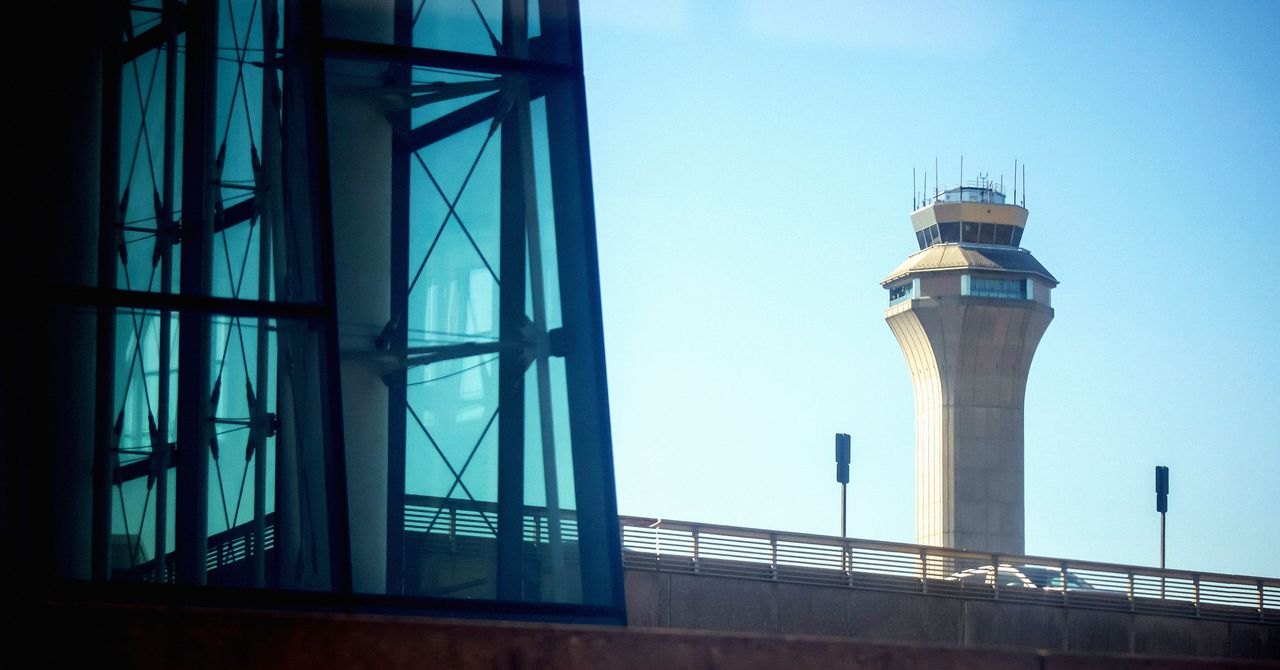
The service collapse originated within the FAA Telecommunications Infrastructure network, commonly known as FTI. FTI functions as the private communications backbone connecting the agency, regional air traffic controllers, and commercial pilots. The agency is currently executing a multiyear overhaul to replace decades-old copper wiring with high-speed fiber-optic lines across national facilities.
Agency leaders stated that transitioning to fiber optics will reduce communications outages, limit outage-related delays, and strengthen operational safety across all flight sectors. The modernized backbone is engineered to support next-generation airspace users, including commercial drones and electric vertical take-off and landing aircraft. Upgraded lines are designed to provide the higher data throughput demanded by these emerging air taxi operations.
The modernization initiative represents the primary communications overhaul for air traffic control facilities across the country. Transition teams must maintain operational availability while splicing new connections and installing physical transmission lines at active facilities. Any localized technical degradation within this primary backbone directly restricts controllers from dispatching aircraft into controlled airspace.
Advertisement
Tech Pulse Daily
Get tomorrow's pulse first
Join engineers who read Tech Pulse before stand-up. Free, weekday mornings.
03Legacy switches and patch overload findings
United States transportation secretary Sean Duffy explained during a Friday evening White House briefing that unwinding the failure will take significant time. Duffy attributed the technical collapse to legacy communications hardware, specifically citing old network switches, aging routers, and a sudden data overload. He noted that the breakdown occurred within the legacy system components that support critical air traffic communications.
United States Department of Homeland Security secretary Markwayne Mullin stated during the same briefing that software patching contributed directly to the hardware failure. Mullin explained that technicians were installing patches into the system while new equipment was being deployed, allowing newer technology to overwhelm older hardware. He added that while authorities see no indications of a cyberattack, complete certainty remains unavailable.
The combined hardware and software strain caused communications channels to fail, leaving controllers unable to coordinate flight movements safely. Federal investigators are reviewing telemetry logs to trace how the patch routine saturated memory buffers across the aging router switches. Technical teams are auditing router configurations to prevent comparable throughput surges from destabilizing remaining legacy connections.
04Contractor transitions and modern network contracts
Government contractor L3Harris Technologies manages the legacy FTI system and previously stated its operational knowledge enables infrastructure upgrades without disrupting airspace traffic. L3Harris reported in May that it had completed 50 percent of the broader modernization project. Earlier this month, the contractor stated that 70 percent of FAA operational sites had received fiber-optic upgrades.
The Trump administration established an official target to complete the modernization of the national air traffic control system by the end of 2028. In August, the FAA awarded AT&T a $73 million contract to replace the FTI network with an entirely new communications platform. While initial funding stands at $73 million, the final value of the AT&T contract is projected to reach billions of dollars.
Telecommunications carrier Verizon was previously selected to build and manage the replacement communications system before the agency selected AT&T. Under the existing transition schedule, L3Harris remains responsible for maintaining and operating the legacy FTI hardware until new networks achieve full deployment. A spokesperson for L3Harris did not respond to requests for comment regarding the ground stop.
05Budget requests and unintegrated project schedules
Prior to the ground stop on Friday, transportation secretary Duffy sent a formal letter requesting congressional leaders approve $30.1 billion to upgrade air traffic control systems and airports. During the subsequent White House briefing, Duffy increased his request, stating that he now wants $50 billion in federal funding. The requested appropriations aim to accelerate modernization initiatives across terminal facilities and communications networks nationwide.
A September report from the United States Government Accountability Office warned that rushing modernization programs could prioritize speed over costs and airspace disruption risks. The watchdog agency discovered that the FAA lacks a well-documented life-cycle cost estimate across its multi-billion-dollar development programs. Investigators concluded that funding projections remain vulnerable without comprehensive tracking metrics.
The GAO review also revealed that the FAA lacks a centralized master schedule to coordinate the massive infrastructure upgrade. Instead, agency personnel manage the project through 11,389 disparate schedules that are not integrated with one another. Federal auditors warned that uncoordinated scheduling across multiple contractors increases the likelihood of system conflicts, equipment overloads, and unexpected operational halts.
FAA Nationwide Ground Stop Is Over FAQ
What caused the nationwide FAA ground stop on Friday?
The ground stop was triggered by communications instability in the FAA Telecommunications Infrastructure network when new technology and software patches overwhelmed aging switches and routers during equipment installation.
How many commercial flights were disrupted by the ground stop?
Aviation tracking company FlightAware reported that airlines canceled more than 6,300 flights and delayed over 9,500 flights within, into, or out of the United States.
Which companies hold contracts for the FAA telecommunications backbone?
L3Harris Technologies operates the legacy network and handles current fiber upgrades, while AT&T was awarded a $73 million contract in August to build an entirely new replacement system.
What risks did the Government Accountability Office identify in the modernization project?
The GAO found that the FAA lacks a well-documented life-cycle cost estimate and relies on 11,389 unintegrated schedules rather than a unified master schedule, potentially risking system disruptions.
Sources

Author
Dillip Chowdary
Writes Tech Bytes coverage of AI, engineering, and the tools that actually ship. Editor of Tech Pulse Daily.
Related on Tech Bytes
Advertisement