The iPhone Duo Is Getting a Limited Version of Face ID
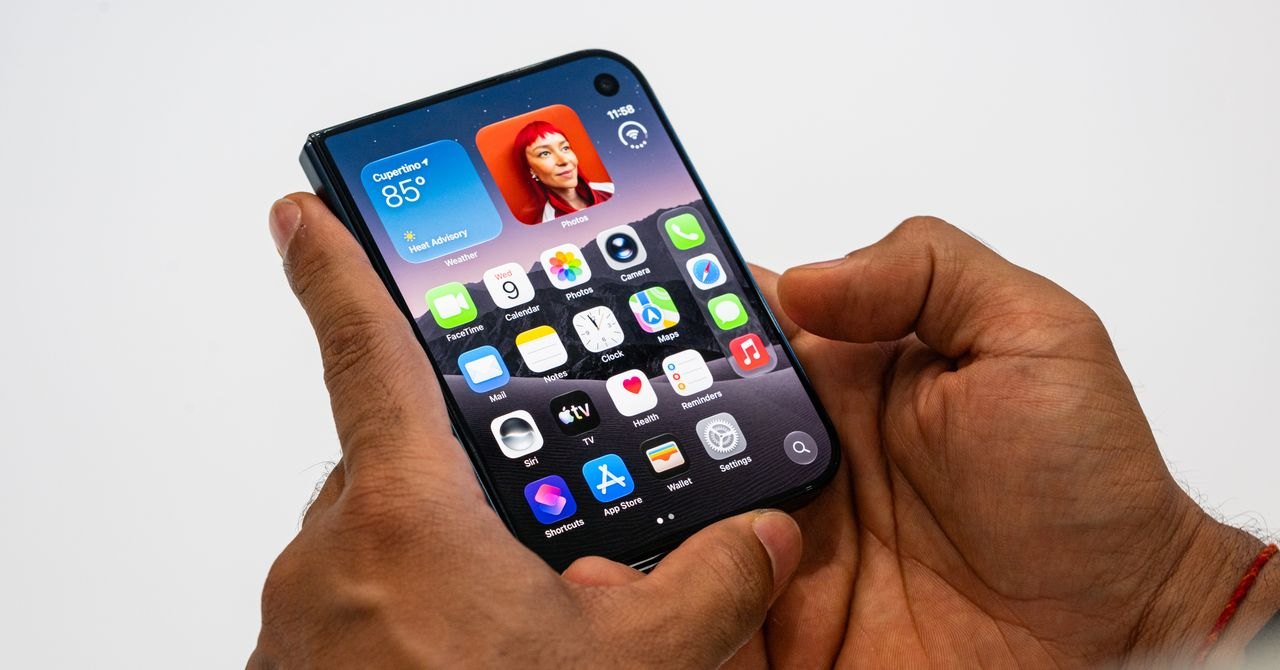
Apple launched the iOS 27.3 developer beta to bring limited face recognition to iPhone Duo using HomeView technology and a forty-five-minute unlock window.
By Dillip Chowdary • Nov 17, 2026 • Source: Wired
At a glance
- Product
- Apple iPhone Duo
- Software version
- iOS 27.3 developer beta
- Announcement date
- Monday
- Biometric hardware
- Touch ID with camera person recognition
- Operating limit
- 45-minute window on front screen only
- Security tier
- A20 Pro Secure Exclave without Apple Pay
Apple announced on Monday that it is bringing facial recognition to the iPhone Duo in the iOS 27.3 developer beta update. The release addresses a major hardware compromise on Apple's most expensive smartphone, as covered in Wired's report on the rollout. Because the folding handset lacks TrueDepth sensor components, Apple is borrowing person recognition technology from its recently launched HomeView smart display.
This report details how the new camera recognition works, its processor boundaries on the A20 Pro chip, and its strict operating limitations. The piece is written for iPhone Duo owners seeking convenient unlocking, mobile software developers tracking iOS 27.3, and enterprise security teams evaluating consumer biometrics. Readers will find exact security constraints, operational requirements, and competitive benchmarks without needing external summaries.
01Folding hardware architecture and biometric space limitations
The iPhone Duo launched as Apple's most expensive smartphone, but it arrived without the company's hallmark Face ID system. Internal packaging created severe engineering constraints inside the folding chassis, which is packed with a mechanical hinge and multiple flexible display layers. These dense internal mechanical components left no clearance for the TrueDepth sensor required for biometric face authentication.
Because spatial limits prevented installing dedicated optical sensors, Apple shipped the iPhone Duo relying exclusively on Touch ID for biometric verification. Device owners must touch a physical fingerprint sensor to confirm their identity, unlock the device, or approve purchases. That hardware design choice removed facial scanning convenience entirely from the initial retail customer experience.
Relying solely on fingerprint authentication created persistent friction for customers accustomed to glance-based unlocks on standard iPhone models. Operating the physical scanner requires deliberate finger placement whenever picking up the phone or taking it from a pocket. Apple developed the new software update specifically to reduce that recurring physical friction point for Duo owners.
02Software delivery and HomeView vision algorithms
Apple initiated the biometric upgrade on Monday by deploying the iOS 27.3 developer beta update to registered testing profiles. The update activates camera-driven face recognition configured specifically for the folding handset's exterior screen. Delivering the capability through a software patch enabled the company to address owner feedback without waiting for future manufacturing cycles.
Because the phone lacks TrueDepth components, Apple borrowed the underlying vision system from its recently launched HomeView smart display. The HomeView uses camera recognition to identify up to six individuals in a household and personalize on-screen content. The hardware also processes ambient voice data for recognition whenever an individual speaks a command to Siri.
Apple engineers adapted those multi-user household visual algorithms to deliver single-user face identification on mobile hardware. The modified framework identifies facial geometry through standard camera optics rather than projecting structured infrared light grids. This algorithmic inheritance enables the phone to confirm an owner's appearance through ordinary camera sensors without additional spatial projectors.
03Secure Exclave isolation on the A20 Pro
Advertisement
Tech Pulse Daily
Get tomorrow's pulse first
Join engineers who read Tech Pulse before stand-up. Free, weekday mornings.
Rather than utilizing the traditional Secure Enclave chip that protects Face ID data, the feature runs in a separate memory partition called the Secure Exclave. This memory-protected space is located inside Apple's A20 Pro processor to isolate biometric computation. The architecture manages camera-derived person recognition data without routing sensitive biometric calculations through standard software environments.
Security analysts emphasize that this software-oriented design introduces clear defensive trade-offs compared to traditional hardware-backed facial authentication. Writing on the implementation, WIRED journalist Lily Hay Newman noted that person recognition remains less comprehensive than Face ID, and could be more susceptible to attacks. Without depth mapping hardware, visual identification relies entirely on two-dimensional camera input.
This security distinction explains why Apple isolates the underlying cryptographic models across distinct processor tiers. Running visual classification models inside the Secure Exclave shields camera feeds from unauthorized applications. However, the system architecture cannot match the physical tamper-resistance provided by the standalone Secure Enclave chip guarding traditional biometric credentials.
04Operating constraints and the 45-minute window
The adapted recognition system operates under strict functional limitations that prevent it from authorizing sensitive user actions. Owners cannot use face recognition to approve Apple Pay transactions, confirm Apple Wallet purchases, or unlock sensitive apps like mobile banking tools. Any operation involving sensitive credentials or financial accounts still requires a physical Touch ID fingerprint scan or manual passcode entry.
The system is designed strictly to unlock the folding handset without forcing the user to tap the physical Touch ID sensor. To maintain device security, Apple established a rule requiring an initial Touch ID or passcode authentication within an active 45-minute window. If that period expires, face recognition deactivates until the user authenticates manually.
Note: For face recognition to work, it needs a recent Touch ID or passcode authentication within a 45-minute window. This capability is also restricted to the front screen and camera, and it does not work if the iPhone Duo is unfolded. Also in iOS 27.3, Apple has added a new toggle that lets you lock your iPhone Duo when you close it.
05Foldable industry biometrics and future hardware roadmaps
Rumors indicate that Apple is racing to bring true Face ID to the second-generation iPhone Duo. However, tight development cycles might delay the TrueDepth sensor until the third generation arrives in 2028. That multi-year development window explains why Apple introduced an interim software-based recognition feature on current hardware.
The broader foldable landscape highlights contrasting biometric approaches among major device manufacturers. Google's newer Pixel folding phones are the only foldables on the US market with secure facial authentication, though it is not as effective in the dark as Apple's Face ID. Meanwhile, Samsung's facial biometrics on Galaxy phones cannot protect sensitive content and are largely used to unlock the device.
| Smartphone model | Facial recognition system | Hardware security tier | Sensitive app authentication | | Apple iPhone Duo | Camera person recognition | A20 Pro Secure Exclave | Blocked; requires Touch ID or passcode | | Google Pixel foldables | Secure facial authentication | Dedicated biometric hardware | Supported, with diminished dark performance | | Samsung Galaxy foldables | Standard camera facial biometrics | Device-level unlock software | Blocked from protecting sensitive applications |
Apple's willingness to roll out a watered-down version of Face ID is a rare compromise for the company. The decision shows just how much of a friction point Touch ID has become for iPhone Duo owners. By leveraging existing camera optics, Apple resolved immediate customer complaints while preparing long-term internal mechanical redesigns.
Frequently asked questions
Does the iPhone Duo support full Face ID authentication?
No, the iPhone Duo lacks the TrueDepth sensor required for Face ID due to space constraints from its hinge and display layers. It instead uses camera-based person recognition borrowed from the HomeView smart display.
Can the new face recognition authorize payments or banking apps?
No, the feature cannot authenticate Apple Pay purchases or unlock sensitive banking apps. Users must still provide a thumbprint via Touch ID or enter a passcode for sensitive authorizations.
What operational limitations apply to the new face recognition feature?
It requires an initial Touch ID or passcode unlock within a 45-minute window and works only on the front screen when closed. It does not function when the device is unfolded.
When is Apple expected to add true Face ID hardware to the iPhone Duo?
Reports indicate Apple aims to add proper Face ID to future folding models, though tight development cycles may push the feature to the third generation in 2028.
Sources

Author
Dillip Chowdary
Writes Tech Bytes coverage of AI, engineering, and the tools that actually ship. Editor of Tech Pulse Daily.
Related on Tech Bytes
Advertisement