The Leap Second Is No More: The metric might not mean much to laypeople
The BIPM will abolish the leap second on May 20, 2027, ending a 55-year practice of adding seconds to UTC and preventing risky negative adjustments.
By Dillip Chowdary • Oct 17, 2026 • Source: Wired
The International Bureau of Weights and Measurements, known as BIPM, announced that it will cease issuing leap seconds by May 2027. The decision resolves a three-decade metrological debate regarding how to synchronize atomic time with Earth's variable rotation. As detailed in Wired's report, authorities added thirty-two leap seconds to Coordinated Universal Time since 1972, with the last adjustment occurring in 2016. Retiring the practice eliminates chronic software outages while avoiding the untested hazards of an unprecedented negative leap second.
This analysis details the technical mechanics behind abolishing the leap second, the operational failures that prompted action, and the climate-driven shifts altering planetary rotation rates. It also examines the severe risks negative leap seconds posed to global infrastructure and reviews mitigation strategies previously adopted by major technology firms. System architects, database administrators, and network engineers managing time-sensitive systems, distributed databases, or application programming interfaces dependent on Coordinated Universal Time will gain essential insight into upcoming standards and long-term timekeeping drift across digital infrastructure.
Leap Second Is No More: what actually changed
The BIPM established that May 20, 2027, will mark the permanent cessation of leap second adjustments to Coordinated Universal Time. The implementation date commemorates the 1875 signing of the Metre Convention creating the BIPM, as well as World Metrology Day. Under this updated framework, timekeepers will halt the intermittent insertion of single seconds that characterized official timekeeping for over fifty years. BIPM time department director Patrizia Tavella confirmed that timekeeping infrastructure will simply accumulate uninterrupted seconds and standard sixty-second minutes without requiring scheduled manual intervention.
The formal policy brings closure to thirty years of intense debate within the international metrological community over astronomical and atomic alignment. Since 1972, thirty-two leap seconds were introduced to compensate for astronomical rotational lag, creating unpredictable synchronization windows for computing networks. Rather than enforcing disruptive adjustments, international authorities concluded that modern technology requires absolute continuity. Halting future leap second additions eliminates these periodic insertion procedures entirely, permitting Coordinated Universal Time to advance steadily alongside atomic measurements without requiring periodic correction pulses across global networks.
Leap Second Is No More: how it works
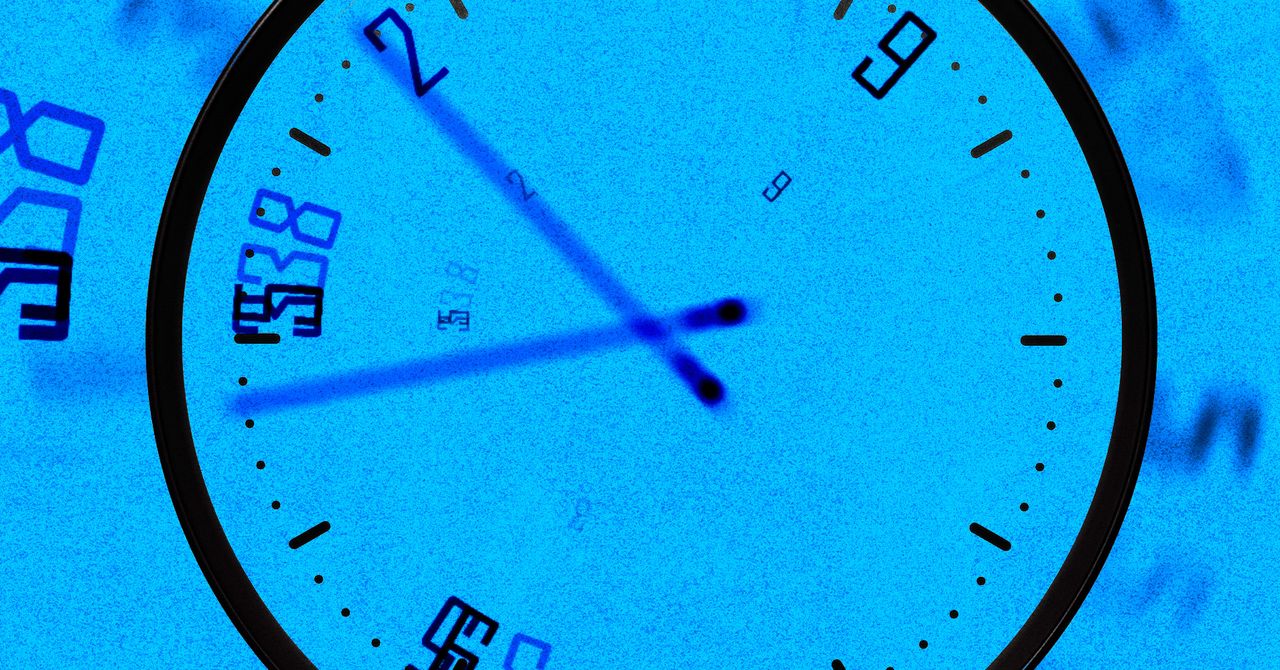
Global timekeeping balances atomic-driven Coordinated Universal Time against astronomical Universal Time, known as UT1, which reflects the physical rotation of Earth. Planetary rotation naturally slows over time due to tidal friction caused by gravitational misalignment between Earth and the moon. Rotational speed is also influenced by the molten core, oceanic circulation, and atmospheric motion. To evaluate alignment discrepancies, the BIPM averages calculations from hundreds of atomic clocks located across the world, comparing that composite atomic measurement directly against astronomical calculations to determine when an adjustment is warranted.
Unlike calendar leap years that occur on a predictable four-year cycle, leap seconds have always been introduced at irregular intervals dictated by planetary behavior. When astronomical time lags behind atomic clocks, metrologists insert a leap second to keep both systems parallel, comparable to adding extra track to align two moving trains. Following the most recent leap second addition in 2016, however, the technical complexity of maintaining that alignment across distributed servers led authorities to abandon the mechanism, prioritizing network stability over precise astronomical synchronicity.
Advertisement
Tech Pulse Daily
Get tomorrow's pulse first
Join engineers who read Tech Pulse before stand-up. Free, weekday mornings.
Leap Second Is No More: why it matters now
Regulatory urgency accelerated after scientists identified the rising probability of a negative leap second, caused by Earth unexpectedly gaining rotational speed. A 2024 study published in Nature demonstrated that climate-driven melting of polar ice caps significantly shifted planetary gravity and rotational momentum. These geophysical disruptions meant that metrologists faced the prospect of subtracting a second from official time as soon as 2029. Such an unprecedented negative adjustment convinced authorities that abandoning the leap second system entirely was far safer than attempting negative time subtractions.
Encountering a negative leap second carried severe operational risks because computing architectures had never undergone real-world testing for subtracted seconds. Judah Levine, a fellow at the US National Institute of Standards and Technology, emphasized that persisting issues with positive leap seconds after fifty years made untested negative adjustments far more dangerous. BIPM time department director Patrizia Tavella affirmed that tests conducted by an industry standards group demonstrated several failures with a negative leap. Those results persuaded regulators to implement the 2027 cutoff rather than risking unvetted adjustments.
Leap Second Is No More: who is affected
Enterprise computing architectures rely heavily on Coordinated Universal Time to maintain transaction order across databases, server logs, and application programming interfaces. Because leap seconds were inserted irregularly every few years, engineering organizations repeatedly struggled to manage unpredictable chronological interruptions. Critical infrastructure suffered disruptions during prior events; in 2012, Australian airline Qantas saw its flight booking system borked when a scheduled leap second corrupted timing routines. These recurring failures demonstrated how minor timing adjustments could paralyze mission-critical systems running on strict chronological sequence.
To protect production infrastructure against past adjustments, technology firms including Google and Meta adopted specialized workarounds. As noted by Judah Levine at the National Institute of Standards and Technology, these companies pioneered a leap smearing method that spreads the extra second across an entire day in minuscule increments. While smearing shielded large platforms, thousands of external systems lacking custom dampening software remained vulnerable to crashes. Eliminating leap seconds permanently relieves software developers and systems engineers of this maintenance overhead, establishing uninterrupted operational stability across global servers.
Leap Second Is No More: what to watch
Abolishing leap seconds does not stop physical divergence between atomic time and astronomical planetary rotation. Over centuries, atomic measurements and astronomical observations will continue to drift apart as Earth's rotation fluctuates. To address cumulative discrepancies over deep time, the BIPM agreed to establish a leap hour mechanism for future generations. Because accumulating thirty-six hundred seconds to form a single leap hour requires millennia of rotational drift, modern software systems and digital infrastructure will experience no operational disruption from the gap throughout the foreseeable future.
Near-term technical requirements depend on which time standard individual applications reference. Patrizia Tavella confirmed that systems relying on standard Coordinated Universal Time require zero updates or operational changes. However, specialized systems dependent on astronomical UT1 must track the mathematical difference between UT1 and UTC, an offset value that will eventually exceed one second. For the overwhelming majority of computing networks, databases, and APIs, Judah Levine observed that eliminating leap seconds means life will have one less hassle as standard time progresses smoothly.
Developer Action Items
- ☐ Verify the claim on the official Framework / Windows page (or Wired), not from this recap alone.
- ☐ Name the surface that moved — API, policy, model, hardware, or commercial terms — before you Slack the thread.
- ☐ Assign one owner a day to read the primary material and decide: this-sprint, this-quarter, or noise.
- ☐ Do not change production on day-one coverage. Watch the vendor changelog and one independent write-up first.
Leap Second Is No More FAQ
When will the leap second officially be eliminated?
The International Bureau of Weights and Measurements will stop issuing leap seconds on May 20, 2027. The date coincides with World Metrology Day and the anniversary of the 1875 Metre Convention.
Why did metrologists decide to abolish the leap second?
Introducing leap seconds frequently disrupted distributed databases and airline booking systems like Qantas in 2012. Additionally, climate change accelerated Earth's rotation, creating an untested risk of needing a negative leap second by 2029 that failed industry tests.
How do major tech companies handle leap seconds today?
Companies like Google and Meta use a smear method that spreads the extra leap second across an entire day in tiny increments. This technique prevented crashes on their internal networks but required ongoing maintenance that smaller systems could not easily replicate.
Will atomic time and astronomical time drift apart without leap seconds?
Yes, atomic time and astronomical time will continue to drift apart as Earth's rotation fluctuates. To address this over the long term, the BIPM agreed to implement a leap hour mechanism in the future, though accumulating 3,600 seconds of difference will take millennia.
Sources

Author
Dillip Chowdary
Writes Tech Bytes coverage of AI, engineering, and the tools that actually ship. Editor of Tech Pulse Daily.
Related on Tech Bytes
Google EnvHarness Enables Self-Evolving Agents to Learn in Dynamics Environments
Read →
Perplexity's Decider V1.2 models now available on AI Gateway
Read →
Apple calls iPhone Duo pre-order demand ‘extraordinary’ as shipping dates slip
Read →
Apple’s new App Store rules crack down on AI nudification and ‘bait-and-switch’ apps
Read →
Today's Tech Pulse briefing
Full briefing →
Advertisement