The maker of non-text AI model Jev valued at $7.5 billion just weeks after
TypeSafe AI's Jev raised $870M at a $7.5B valuation just weeks after its September 15 launch, with a third of Fortune 500 firms already using it.
By Dillip Chowdary • Oct 10, 2026 • Source: TechCrunch
TypeSafe AI closed an $870 million funding round at a $7.5 billion valuation on October 9, 2026, according to TechCrunch's report on the company's rapid post-launch rise. The round was led by Andreessen Horowitz, with Sequoia and existing investor DCVC also participating — all just weeks after Jev, the company's flagship model, launched on September 15 and went viral almost immediately.
This piece covers what Jev actually is and how it differs from large language models, why enterprises adopted it at striking speed, what developers need to know before building on it, and what TypeSafe AI's $7.5 billion valuation signals for the broader automation AI market — relevant for engineering teams, enterprise architects, and anyone tracking the next category of AI infrastructure.
What Maker of non-text AI model Jev valued at $7.5 shipped
TypeSafe AI shipped Jev on September 15, 2026, and the model broke from the LLM paradigm in a single defining choice: it does not output text. Rather than generating prose, code, or structured strings, Jev produces probabilities — what TypeSafe calls "calibrated decisions." The model is built on a transformer architecture, the same foundational technology underpinning most modern LLMs, but its outputs are targeted at machine consumption rather than human reading.
TypeSafe's core claim is that Jev runs significantly faster and uses far fewer tokens than LLMs, and that those gains compound for automation workloads where the receiving system is another computer, not a person. The company launched with the explicit position that human language, while rich, is a poor fit for the low-latency, structured control flows that power software automation. Within weeks of launch, a third of Fortune 500 companies had already begun using the model — a pace of enterprise adoption that ranks among the fastest on record for any AI infrastructure product.
What changed for builders in Maker of non-text AI model Jev valued
Jev removes a translation layer that LLM-based automation pipelines have required since GPT-era tooling became standard. Teams building agentic workflows, API orchestration layers, or robotic process automation have historically needed to parse or structure the text an LLM returns before downstream systems can act on it. Jev's calibrated-probability outputs are designed to be consumed directly by those systems, skipping the text-to-structure conversion step entirely.
| Dimension | Conventional LLM | Jev (TypeSafe claim) |
|---|---|---|
| Output type | Natural language / code | Calibrated probabilities / decisions |
| Token usage | Standard LLM footprint | Significantly fewer tokens |
| Processing speed | Standard LLM speed | Significantly faster |
| Primary use case | Text and code generation | Task automation |
For builders, that table represents both the opportunity and the architectural shift. Any system expecting a text string in response to a prompt requires rethinking before it can integrate Jev. The gains in speed and token efficiency are what attracted enterprise buyers, but capturing them demands output consumers designed for probability distributions rather than natural language.
Advertisement
Tech Pulse Daily
Get tomorrow's pulse first
Join engineers who read Tech Pulse before stand-up. Free, weekday mornings.
How to install or upgrade Maker of non-text AI model Jev valued at $7.5
TypeSafe AI has not released a public SDK, CLI package, or self-serve API endpoint as part of the information available through launch and funding announcement. Enterprise adoption of Jev through a third of the Fortune 500 appears to be driven by direct TypeSafe sales relationships, not a public developer tier. No package registry listing, open-source weights, or installation documentation have been announced. Developers should contact TypeSafe AI directly for access.
# No public CLI or package registry release confirmed as of October 10, 2026.
# TypeSafe AI has not published install commands, SDK packages, or API tokens.
# Contact TypeSafe through official channels for enterprise onboarding.
The $870 million raise gives TypeSafe the capital to build out developer tooling and broaden access beyond its current Fortune 500 cohort. The funding announcement made no commitment to a public release timeline, open weights, or a free tier. Until TypeSafe publishes official installation documentation, any commands or package names should be treated as unverified — none have been released as of this writing.
Gotchas and compatibility in Maker of non-text AI model Jev valued
Jev's output format is its largest compatibility friction point. Any existing pipeline, application, or workflow that receives LLM output as a natural-language string will need to be redesigned from the consuming end to work with Jev's calibrated decision outputs. TypeSafe has not described a compatibility shim, adapter layer, or migration path for teams moving from LLM-based architectures, meaning the re-engineering cost falls on the integrating team.
The model's enterprise-first rollout also means smaller development teams have no confirmed access path. TypeSafe's claim that a third of Fortune 500 companies adopted Jev within weeks of its September 15 launch suggests the company prioritized high-volume enterprise contracts over a broad public release. Individual developers and startups outside those direct relationships should plan for an indeterminate wait, and should begin designing automation systems that can consume probability and decision outputs rather than text — so architectural preparation can happen before API access arrives.
What to watch after Maker of non-text AI model Jev valued at $7.5
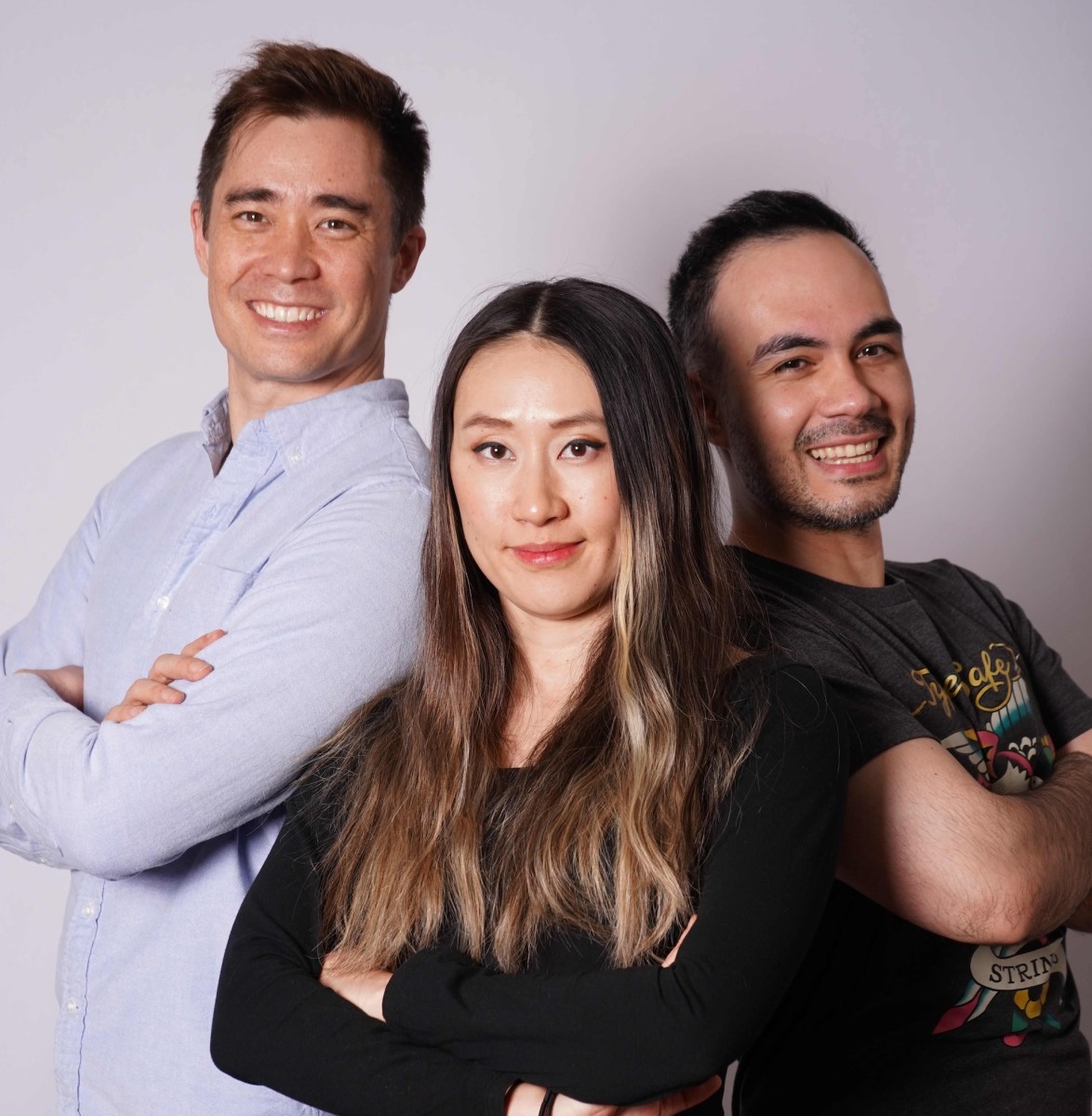
TypeSafe AI's founding team brings direct experience from the institutions that defined the LLM category it is challenging. Co-founder Diogo Almeida was previously a researcher at OpenAI; Sasha Sheng is a former Meta research engineer; and Erik Gafni is an engineer and entrepreneur. The three founded the company in 2024. Andreessen Horowitz leading a $870 million round at a $7.5 billion valuation, alongside Sequoia, signals that the firm's AI thesis now explicitly covers non-text model architectures as a distinct investment category.
Almeida put the company's thesis plainly to TechCrunch last month: "We have been super good at human language for four years, but it's not useful for automation because computers speak a different language." That claim will face its first real pressure test as Fortune 500 deployments reach production scale and edge cases emerge. Whether Jev's speed and token-efficiency advantages hold under enterprise load, whether TypeSafe opens a self-serve developer tier with its new capital, and how the broader AI community responds to a non-text model claiming automation superiority over LLMs will define the company's trajectory through 2027.
Developer Action Items
- ☐ Map where maker non-text AI model sits in your stack (SDK, API key, billing, data-processing addendum).
- ☐ Hold the $7.5 billion figure to the primary report; do not brief a number that is not on the record.
- ☐ Hold non-urgent migrations until the integration or use-of-proceeds roadmap is public — day-one coverage is not a ship signal.
- ☐ If you are mid-contract or mid-POC, ask the vendor what changes for existing customers this quarter.
- ☐ Write the single decision this forces: stay, dual-source, or exit.
Maker of non-text AI model Jev valued at $7.5 FAQ
What is Jev and who made it?
Jev is an AI model from TypeSafe AI that uses transformer architecture but does not output text. It produces probabilities and calibrated decisions intended for task automation rather than language generation.
How much did TypeSafe AI raise and at what valuation?
TypeSafe AI raised $870 million at a $7.5 billion valuation in a round led by Andreessen Horowitz, with Sequoia and existing investor DCVC also participating.
When did Jev launch and how quickly was it adopted?
Jev launched September 15, 2026, and within weeks a third of Fortune 500 companies were already using it — one of the fastest enterprise adoption rates on record for an AI infrastructure product.
Who founded TypeSafe AI?
TypeSafe AI was co-founded in 2024 by Diogo Almeida, a former OpenAI researcher; Sasha Sheng, a former Meta research engineer; and Erik Gafni, an engineer and entrepreneur.
How does Jev differ from large language models?
Unlike LLMs, Jev does not generate text or code. It outputs calibrated probabilities and decisions, and TypeSafe claims it runs significantly faster and consumes far fewer tokens, making it suited for machine-to-machine automation rather than human-readable output.
Sources

Author
Dillip Chowdary
Writes Tech Bytes coverage of AI, engineering, and the tools that actually ship. Editor of Tech Pulse Daily.
Related on Tech Bytes
9to5Mac Daily: October 9, 2026 – Apple’s ‘Welcome home’ launch announced, more
Read →
Apple acqui-hires AI startup founded by former NotebookLM developers
Read →
Android Bench 2 Adds Support for Long-Horizon Tasks, Agentic Evaluation, and Continuous…
Read →
In Other News: AI Used in Korean Bank Breaches, Poem-Guided Botnet, Empire Admin Gets 40…
Read →
Today's Tech Pulse briefing
Full briefing →
Advertisement