The Telephone Changed the World: Comments
James Gleick detailed how AT&T deployed educational films and the four-pound Western Electric model 500 to build a monopoly connecting eighty percent of homes.
By Dillip Chowdary • Nov 15, 2026 • Source: lithub.com
Farrar, Straus and Giroux published a technological history by author James Gleick on November 10, 2026, documenting how the telephone network reordered global communication. Detail on the release comes via lithub.com's report, which traces how corporate dominance and standardized hardware reshaped everyday social conventions across the United States. The retrospective examines how American Telephone and Telegraph established a private infrastructure that carried voice conversations directly into modern life.
This report examines the deployment of corporate educational films, the mechanical specifications of the Western Electric model 500, and the regulatory monopoly held by the Bell System. It is written for network engineers, hardware designers, and communications historians analyzing how early telecom monopolies trained captive consumers. Readers will find an operational review of rotary voice networks, hardware standardization, and centralized infrastructure.
01Classroom film and instructional cinema
Eighty-nine years into the telephone era, AT&T commissioned the Technicolor educational film We Learn About the Telephone, directed by Hollywood filmmaker Jerry Fairbanks. Distributed nationwide, the film played to captive student audiences in primary school classrooms. The production opened with a domestic scene where a young girl named Susie answers a ringing beige telephone with a toy duck.
An older boy named Jimmy demonstrates proper telephone etiquette before handing the receiver to Uncle Bill, who speaks with Captain Adams. This scene depicted an idealized middle-class life familiar from television sitcoms featuring Wally and Beaver, Mike, Robbie, and Chip.
By 1965, the United States maintained one telephone for every four citizens, after residential installations tripled following World War II. Despite achieving the status of a universal household fixture, AT&T determined that customers required explicit instruction. The company used educational films to instill proper habits across millions of school-age users.
02Corporate origin myth and technical lineage
To answer questions about pre-telephone communication, Uncle Bill introduces an animated character named Mister Man. AT&T hired voice actor Mel Blanc, who voiced Bugs Bunny and Daffy Duck, to narrate the sequence. The cartoon traced human messaging through cave runners, Egyptian couriers, Roman horses, knights, cowboys, and Pony Express riders.
The sequence presented non-verbal systems, including smoke signals and naval mirrors, before detailing the electric telegraph. However, Uncle Bill explained that human society required real-time spoken conversation over distances. The film identified Alexander Graham Bell's invention in 1876 as the critical breakthrough that enabled people to transmit voices across long distances.
This narrative formed the foundational origin story for AT&T, which expanded to control more capital and income than most sovereign nations. Bell Telephone Laboratories, the company's scientific research branch, eventually produced eleven Nobel Prizes across physics and chemistry. Through this infrastructure, voice networks bridged physical boundaries and connected distant communities.
Advertisement
Tech Pulse Daily
Get tomorrow's pulse first
Join engineers who read Tech Pulse before stand-up. Free, weekday mornings.
03Western Electric model 500 physical design
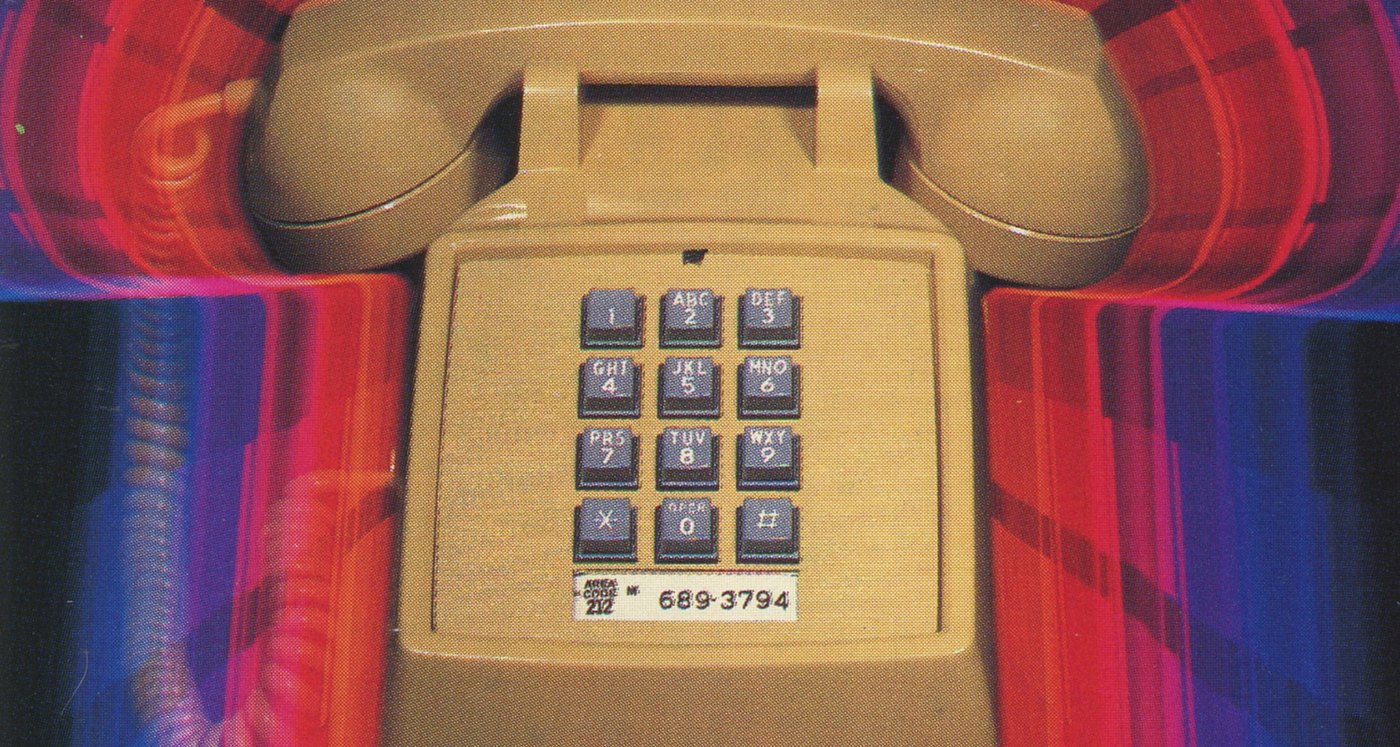
Western Electric introduced the model 500 in 1949, establishing a durable hardware standard that dominated American homes for decades. Weighing four pounds, the unit combined a molded thermoplastic housing screwed to a rigid metal base. A clear plastic rotary wheel with ten finger holes served as the input interface for placing calls.
The wired handset integrated an earpiece and mouthpiece, connected to the base by a heavy coiled cord. The housing allowed users to lift the device with two fingers while nestling the handset between ear and shoulder. Opening the base revealed twin brass bells, a central clapper, and colored wiring.
Incoming calls activated an electromechanical ringer that chimed rather than chirping or playing melodies. The mechanism produced a standardized sound across the country, ringing for two seconds followed by a four-second pause. That electromechanical cadence became a lasting cultural fixture, preserved in television broadcasts and smartphone ringtones.
04Bell System monopoly and device ownership
More than eight in ten American homes maintained a Bell System telephone during the postwar era. Under this industrial structure, customers never purchased their terminals, which remained company property on loan. Federal regulations prohibited competing manufacturers from producing alternative equipment, ensuring hardware uniformity across the national network.
AT&T initially manufactured units exclusively in black before offering ivory, gray, and beige variations. Operating without an on-off switch, the telephones functioned as continuous access points to the carrier network. Subscribers viewed this monopoly as standard, accepting carrier ownership of home hardware as the ordinary state of affairs.
The physical simplicity of the terminal concealed its technological reach, creating immediate communication paths between distant households. By supplying identical leased hardware across urban and rural markets, the monopoly standardized residential communication. The unadorned appliance quietly restructured social interactions across the country throughout the twentieth century.
05Public dialing etiquette and network rules
Despite the interface's simplicity, the Bell System conducted continuous educational campaigns to enforce proper subscriber behavior. Characters Uncle Bill and Mister Man presented explicit instructions to prevent user errors. Subscribers were instructed never to shout into the phone, to speak in normal conversational tones, and to talk directly into the mouthpiece.
The carrier also established strict timing recommendations to optimize network operation and call handling. Callers were directed to answer promptly when their phones rang. Conversely, individuals making outgoing calls were specifically advised to let the telephone ring eight to ten times before hanging up, ensuring central switches had time to route connections.
Dialing required precise mechanical operation to register phone numbers on exchange switches. Callers pulled the finger wheel clockwise to the metal finger stop, then let the dial return freely without manual assistance. Adhering to these physical guidelines ensured that electrical pulse timings routed calls accurately through the company's exchanges.
Telephone Changed the World FAQ
When did the Western Electric model 500 telephone first appear?
Western Electric introduced the model 500 in 1949, featuring a four-pound thermoplastic shell and a clear rotary wheel.
Who voiced the cartoon character Mister Man for AT&T?
Mel Blanc, the vaudevillian actor who voiced Bugs Bunny and Daffy Duck, provided the voice for Mister Man.
What was the mechanical ringing cadence of the Bell System telephone?
The electromechanical bell rang for two seconds followed by a four-second pause.
Sources

Author
Dillip Chowdary
Writes Tech Bytes coverage of AI, engineering, and the tools that actually ship. Editor of Tech Pulse Daily.
Related on Tech Bytes
Advertisement