Theranos whistleblower Tyler Shultz warns that the AI boom is ‘a great
Theranos whistleblower Tyler Shultz warned that AI due diligence is difficult as Elizabeth Holmes's new diagnostics startup Haemanthus raises $20 million.
By Dillip Chowdary • Oct 31, 2026 • Source: TechCrunch
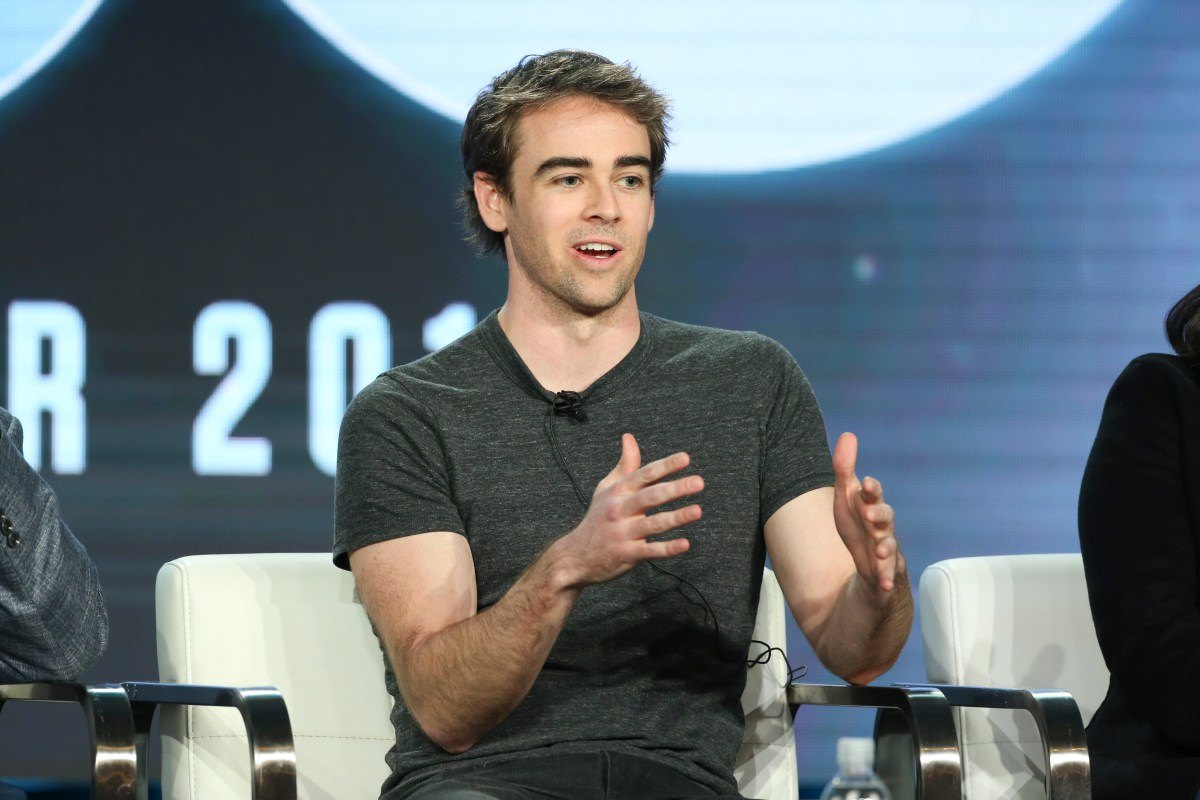
The release of "You Can See Everything," a documentary directed by Nathan Fielder and Lance Oppenheim capturing Elizabeth Holmes before entering federal prison, has prompted Theranos whistleblower Tyler Shultz to issue an urgent warning about fraud risks in the artificial intelligence market. As highlighted in TechCrunch's report, Shultz cautioned in an interview with The San Francisco Standard that the current environment allows founders to deceive investors because assessing technical validity in machine learning systems has become exceedingly difficult.
This analysis examines Shultz's critique of modern venture capital diligence, directly comparing Theranos's historic fundraising playbook with today's artificial intelligence market where unprofitable startups secure unprecedented capital valuations. The breakdown outlines how technical opacity complicates rigorous independent scrutiny, details the emergence of Holmes's new diagnostics venture Haemanthus, and explains why private backers remain exposed to founder manipulation. It is written for technology investors, enterprise software engineers, and compliance officers who must evaluate claims surrounding proprietary machine learning systems against inflated commercial expectations.
Theranos whistleblower Tyler Shultz warns: what actually changed
The documentary film directed by Nathan Fielder and Lance Oppenheim, titled "You Can See Everything," tracks the final weeks of Elizabeth Holmes before she surrendered to begin serving an eleven-year federal prison sentence. The release has renewed public attention while becoming one of the highest-grossing documentaries ever produced. Rather than framing Holmes strictly as a manipulator or victim, the filmmakers focus on her ability to generate sympathy from observers who are already fully aware of her previous federal convictions.
For Tyler Shultz, whose first professional position out of college was working at Theranos, the renewed spotlight reflects Holmes's deliberate effort to orchestrate her public rehabilitation. Shultz served as the primary whistleblower who exposed how the company deployed inaccurate blood testing hardware into retail Walgreens pharmacies, generating unreliable diagnostic outputs for patients. Although Theranos attained a peak valuation of roughly $10 billion, its internal machines processed only a small fraction of clinical samples while staff diverted the rest to standard commercial instruments from outside manufacturers.
Theranos whistleblower Tyler Shultz warns: how it works
During the rise of Theranos, Holmes secured funding by bypassing institutional venture firms in Silicon Valley and targeting wealthy individual backers, including the DeVos and Walton families. Her approach relied on withholding hardware access and scientific validation data under the justification of shielding trade secrets. Former U.S. Secretary of State and Treasury Secretary George Shultz, Tyler Shultz's grandfather, joined the board and invested capital, demonstrating how personal trust and elite relationships replaced rigorous technical verification throughout the organization's fundraising operations.
Shultz stated to The San Francisco Standard that Holmes perfected an angel funding model, transforming informal coffee meetings into commitments of $100 million. In modern artificial intelligence ecosystems, Shultz argues that assessing genuine innovation has grown far more complex than evaluating hardware. He emphasized that differentiating between a truly proprietary architecture and a standard wrapper around ChatGPT presents an immense challenge for outside observers. This lack of transparency offers dishonest operators an ideal opportunity to misrepresent basic software tools as breakthrough proprietary technology.
Advertisement
Tech Pulse Daily
Get tomorrow's pulse first
Join engineers who read Tech Pulse before stand-up. Free, weekday mornings.
Theranos whistleblower Tyler Shultz warns: why it matters now
The timing of Shultz's warning aligns with an unprecedented surge of capital into artificial intelligence firms, many of which command trillion-dollar valuations despite never achieving enterprise profitability. When federal authorities dismantled Theranos, the collapse was widely viewed as a definitive reckoning that would compel financial backers to enforce strict engineering verifications. Instead, rapid commercial expansion has rekindled speculative behavior, prompting Shultz to warn that institutional memory is fading as investors rush to deploy capital into opaque computational platforms without verifying underlying claims.
Compounding these risks is the ongoing commercial activity of Holmes herself, who appears alongside partner Billy Evans in the documentary developing a new diagnostics enterprise named Haemanthus. Described informally by the founders as Theranos 2.0, the startup has reportedly raised approximately $20 million in funding. Shultz pointed out that Holmes is actively laying the groundwork for her second act, using public pity to cultivate a receptive audience for future commercial projects while obscuring past patient harms and her documented harassment of whistleblowers.
Theranos whistleblower Tyler Shultz warns: who is affected
Non-institutional investors and family offices represent the most vulnerable demographic in high-valuation technical bubbles, echoing the investor composition that sustained Theranos through multiple funding rounds. Shultz stressed that when individual financiers transfer massive sums after brief personal interactions, they bestow extraordinary organizational power upon founders without establishing formal governance guardrails. When technical claims are insulated behind nondisclosure agreements or intellectual property claims, angel backers cannot readily verify whether promised algorithmic breakthroughs actually function as advertised by ambitious founding teams.
Enterprise customers and everyday consumers also bear significant exposure when unverified technologies transition from fundraising pitches into active commercial deployments. During the Theranos scandal, real patients received inaccurate medical test results through retail Walgreens wellness centers because corporate executives actively concealed severe diagnostic failures. In the artificial intelligence sector, deploying deceptive software models into critical commercial workflows creates similar operational hazards, leaving enterprise clients and end users to absorb the consequences when fragile third-party wrappers collapse under demanding production environments.
Theranos whistleblower Tyler Shultz warns: what to watch
Industry participants must monitor how venture capital syndicates and private wealth managers adapt their technical due diligence protocols when auditing artificial intelligence startups. Observers should verify whether prospective backers demand verifiable performance benchmarks and inspect code repositories, rather than accepting polished interactive demonstrations at face value. Shultz noted that the informal practice of writing checks following brief thirty-minute meetings should end, as the inability to separate authentic engineering from off-the-shelf application programming interfaces continues to threaten market integrity across the technology sector.
Public attention will also center on the legal and corporate progression of Haemanthus as Holmes prepares for eventual post-incarceration commercial activity. Shultz expressed deep unease regarding how cultural perceptions have shifted, observing that Holmes has evolved into an object of sympathy rather than an accountable felon who endangered public health. Tracking how prospective backers respond to her upcoming commercial ventures will reveal whether the investment community has internalized the consequences of charismatic deception or remains susceptible to recycled claims in emerging markets.
Developer Action Items
- ☐ Map where ChatGPT sits in your stack (SDK, API key, billing, data-processing addendum).
- ☐ Hold the $10 billion figure to the primary report; do not brief a number that is not on the record.
- ☐ Hold non-urgent migrations until the integration or use-of-proceeds roadmap is public — day-one coverage is not a ship signal.
- ☐ If you are mid-contract or mid-POC, ask the vendor what changes for existing customers this quarter.
- ☐ Write the single decision this forces: stay, dual-source, or exit.
Theranos whistleblower Tyler Shultz warns FAQ
Why did Tyler Shultz warn investors about artificial intelligence startups?
Shultz warned that artificial intelligence presents a significant opportunity for deception because conducting technical due diligence on machine learning systems is exceptionally difficult. He noted that investors struggle to distinguish between genuinely proprietary technology and basic ChatGPT wrappers.
What was the peak valuation of Theranos and how did its technology actually function?
Theranos reached a peak valuation of approximately $10 billion despite its blood testing technology never working as claimed. The company used its own machines for only a fraction of tests, secretly outsourcing the remainder to commercial third-party equipment.
What new company is Elizabeth Holmes working on according to the documentary?
Holmes and her partner Billy Evans are working on Haemanthus, a diagnostics startup they refer to as Theranos 2.0. The venture has reportedly raised around $20 million in funding while Holmes serves an eleven-year prison sentence.
Who funded Theranos instead of traditional Silicon Valley venture capital firms?
Theranos raised the majority of its capital from wealthy individual investors and families, including the DeVos and Walton families, as well as former Secretary of State George Shultz. Institutional venture firms largely avoided investing because Theranos refused to share scientific evidence, citing trade secrets.
Sources

Author
Dillip Chowdary
Writes Tech Bytes coverage of AI, engineering, and the tools that actually ship. Editor of Tech Pulse Daily.
Related on Tech Bytes
Advertisement