These startups hope “blended” food will cut our appetite for red meat
Startups like Joyn are rolling out blended beef and mushroom meat after 92% of students in a South Carolina trial voted to put hybrid meatballs on the menu.
By Dillip Chowdary • Oct 21, 2026 • Source: MIT Technology Review
Food technology startups are pivoting away from all-or-nothing meat replacements to introduce blended formulations combining conventional animal meat with mushrooms and vegetables. Rather than trying to eliminate livestock consumption entirely, emerging ventures like Joyn and ingredient makers such as BMC Ingredients are developing hybrid burgers, meatballs, and ground beef cutting meat content by twenty to fifty percent. According to MIT Technology Review's report, commercial pilots are advancing through institutional dining channels, targeting high-volume cafeterias where buyers seek lower carbon footprints without sacrificing culinary texture or moisture.
This report details the operational deployment of blended meat, examining how commercial kitchens, school systems, and institutional caterers evaluate hybrid proteins against standard beef. It provides food service directors, agricultural analysts, and sustainability planners with an objective review of production mechanics, taste evaluations, economic barriers, and climate metrics. As pure plant-based alternatives encounter plateauing demand and sensory fatigue, hybrid formulations offer an incremental pathway designed to curb ruminant emissions across mass dining operations without demanding immediate consumer lifestyle conversion.
These startups hope “blended” food will cut: what actually changed
The shift toward blended meat marks a strategic reversal from venture-backed efforts to eradicate livestock farming entirely. In 2019, Impossible Foods leadership aimed to end animal agriculture by 2035, while Beyond Meat completed a historic public offering. By 2023, employee stock values at Impossible dropped 89 percent from peak levels, Beyond laid off 20 percent of staff, and Good Food Institute data recorded a 10 percent retail sales contraction in 2025. Rather than converting omnivores into vegetarians, developers blend mushroom proteins directly into real meat.
School cafeteria pilots demonstrate practical consumer acceptance for hybrid proteins. In the fall of 2025, consultant Jeff Dodge of K-12 Food Solutions organized testing at Cane Bay High School in Summerville, South Carolina, evaluating a blended formulation called 50/Cut from food startup Joyn. Serving mushroom-infused beef meatballs in marinara sauce from slow cookers to several thousand students, Dodge surveyed participants across lunch periods. Polling showed 92 percent of students favored adding the meatballs to menus, clearing the threshold for inclusion in the 2026–2027 school year.
These startups hope “blended” food will cut: how it works
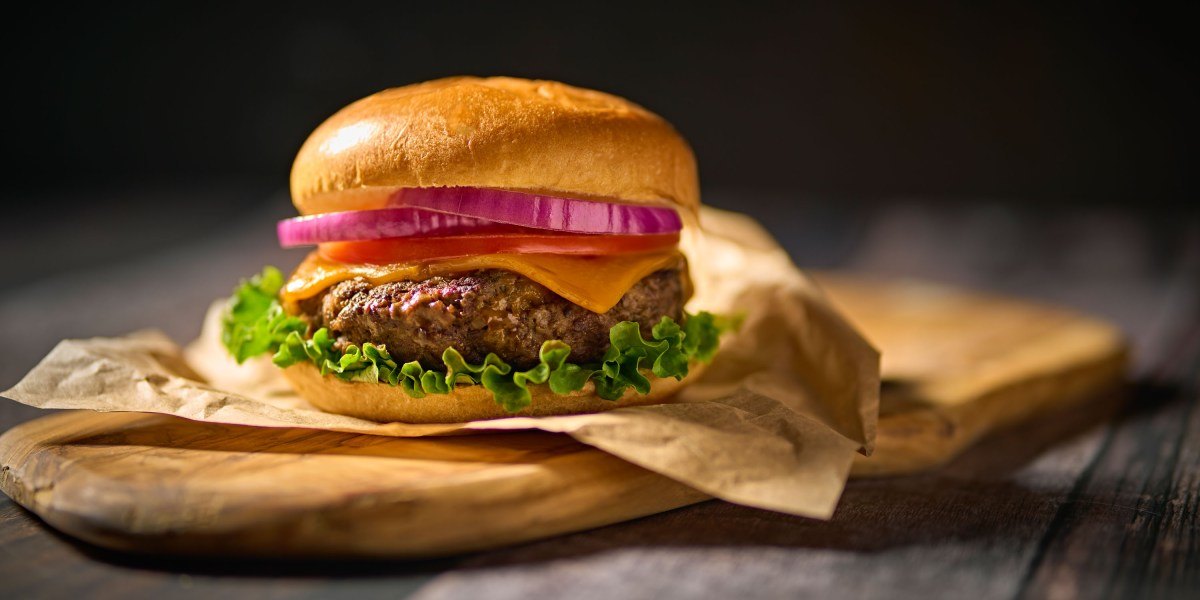
Blended meat integrates plant matter and mushroom mycelium into industrial meat processing lines to preserve animal mouthfeel. Joyn produces its 50/Cut line as meatballs, burger patties, and bulk ground beef. Utilizing mushroom tissue allows the blend to retain natural juices and moisture that lean beef often loses when cooked. Paul Shapiro, cofounder of mushroom protein startup BMC Ingredients, points out that hybrid formulations bypass adoption barriers. While Impossible Whoppers captured roughly 2 percent of sales at Burger King, reformulating conventional patties with 20 percent plants cuts aggregate meat use by one-fifth.
This hybrid approach circumvents sensory shortcomings that plague purely vegan products. Research from alternative protein analysis group Nectar shows that consumers report off-flavors and unpleasant aftertastes five to six times more frequently in plant substitutes than in animal meat. Caroline Cotto, director at Nectar, identifies sensory dissatisfaction as the main obstacle stalling alternative protein adoption. By preserving animal fats and natural connective structures, blended meat maintains authentic beef flavor and cooking chemistry without relying heavily on synthetic additives or soy leghemoglobin to simulate moisture.
Advertisement
Tech Pulse Daily
Get tomorrow's pulse first
Join engineers who read Tech Pulse before stand-up. Free, weekday mornings.
These startups hope “blended” food will cut: why it matters now
Addressing ruminant emissions is a critical climate priority with few technological shortcuts. Livestock production generates between 10 percent and 20 percent of global human greenhouse emissions, with ruminants responsible for nearly two-thirds of that impact. Cattle herds produce four times the emissions of dairy herds per kilo of food, and food represents up to 30 percent of household emissions in the United States. Ruminants also generate 30 percent of human-linked methane, which carries 28 times the global warming potential of carbon dioxide.
Climate modeling shows that renewable energy deployment alone cannot avert catastrophic warming without dietary shifts. Fredrik Hedenus, sustainability professor at Chalmers University of Technology in Sweden, calculated that agricultural emissions will push global temperatures past 2 degrees Celsius above preindustrial levels by 2070 even if fossil fuel burning stops entirely. Cattle grazing drives major Amazon deforestation. A 2024 Harvard survey of over 200 climate scientists highlighted livestock reduction as critical, while a 2022 Nature study found replacing 20 percent of beef halves deforestation.
These startups hope “blended” food will cut: who is affected
The move toward blended meat affects institutional kitchens, industrial processors, and commercial foodservice providers. Commercial meatpackers like Tyson and Perdue previously tested blended lines to diversify raw input risks and buffer against volatile cattle pricing. Institutional food operators, such as public school cafeterias operating under strict budget caps, can adopt hybrid foods like Joyn's 50/Cut to hit sustainability targets without causing meal rejection among students. Fast-food chains can lower supply chain emissions across standard burger patties without forcing diners to alter purchasing habits.
Meanwhile, dedicated plant-based manufacturers are navigating steep commercial challenges. Megan Krogius, spokesperson for Impossible Foods, views sales contractions as a market correction following unsustainable surges between 2020 and 2022. However, plant substitutes face lingering reputational damage from industry-backed lobbying campaigns, such as 2019 advertisements by the Center for Consumer Freedom that branded alternatives as ultra-processed imitations. Despite a study in The Lancet showing plant substitutes are nutritionally superior to red meat, consumer skepticism remains widespread, and Americans consumed 45 billion dollars in beef in 2025.
These startups hope “blended” food will cut: what to watch
Industry analysts must track whether blended proteins achieve commercial pricing parity with pure beef in institutional contracts. United Nations data reveals that global meat production quadrupled between 1961 and 2022, while American vegetarianism remained flat at approximately 4 percent since 1999. In 2025, United States beef consumption expanded by 4.3 percent despite rising store prices. For startups like Joyn and suppliers like BMC Ingredients to succeed, mushroom and plant additives must lower processing costs rather than adding formulation premiums that discourage cash-conscious wholesale buyers.
Future expansion depends on regulatory normalization and institutional menu integrations across public dining sectors. Unlike cultivated lab-grown meat, which faces prohibitive bioreactor expenses and scaling hurdles, blended meat relies on standard equipment already installed in commercial packing facilities. Observers should watch for new district contracts when Cane Bay High School introduces Joyn's meatballs for the 2026–2027 academic year, along with potential supply agreements between ingredient providers and national restaurant franchises seeking measurable carbon reductions without compromising on flavor.
Developer Action Items
- ☐ Verify the claim on the official These startups hope blended page (or MIT Technology Review), not from this recap alone.
- ☐ Name the surface that moved — API, policy, model, hardware, or commercial terms — before you Slack the thread.
- ☐ Assign one owner a day to read the primary material and decide: this-sprint, this-quarter, or noise.
- ☐ Do not change production on day-one coverage. Watch the vendor changelog and one independent write-up first.
These startups hope “blended” food will cut FAQ
What is blended meat and how is it made?
Blended meat mixes conventional animal meat with plant matter or mushroom proteins into products like burgers, meatballs, and ground beef. Formulations like Joyn's 50/Cut replace twenty to fifty percent of animal meat with mushrooms while maintaining traditional texture and moisture.
How did students respond during school cafeteria testing?
During tasting tests at Cane Bay High School in South Carolina, 92 percent of participating students voted to add Joyn's 50/Cut mushroom-and-beef meatballs to the regular cafeteria menu. The response secured menu approval for the 2026–2027 academic school year.
Why are food companies pursuing blended meat instead of pure plant alternatives?
Pure plant-based meat sales fell 10 percent in 2025, with consumers citing off-flavors five to six times more frequently than in real meat. Blended products allow institutional buyers and restaurants to achieve meaningful carbon cuts without requiring customers to adopt a vegetarian diet.
What environmental impact would cutting beef consumption have?
Ruminants generate nearly two-thirds of all livestock emissions and 30 percent of human-induced methane, driving significant global warming and Amazon deforestation. Research published in Nature found that replacing 20 percent of global beef consumption could halve the annual rate of deforestation.
Sources

Author
Dillip Chowdary
Writes Tech Bytes coverage of AI, engineering, and the tools that actually ship. Editor of Tech Pulse Daily.
Related on Tech Bytes
Advertisement