This young startup wants to power floating data centers with the ocean’s
Drogue raised $20 million to deploy floating data centers powered by ocean thermal energy conversion, aiming to launch a multi-megawatt ship prototype by 2028.
By Dillip Chowdary • Nov 14, 2026 • Source: TechCrunch
Drogue, a Washington, D.C.-based startup founded six months ago by former naval aviator Sam Sipe, has raised $20 million to construct floating data centers powered by ocean heat, as detailed in TechCrunch's report. Backed by XYZ Venture Capital, Toyota Ventures, Tamarack Global, Dream, FDVC, Garuda Ventures, Flexcap, Boost VC, and Slow Ventures, the company is preparing a multi-megawatt maritime prototype. The startup is currently purchasing an oceangoing ship to deploy its first operational system on the open water in early 2028.
This report breaks down Drogue's thermodynamic cycle, offshore regulatory progress, and deployment timeline for cloud operators, infrastructure engineers, and hardware architects seeking alternatives to constrained onshore electrical grids. It examines how ocean thermal energy conversion replaces traditional utility substations by exploiting vertical temperature gradients between warm surface currents and cold deep water.
01Twenty million dollars and grid timelines
Drogue was founded six months ago in Washington, D.C., to decouple computing infrastructure from congested terrestrial power grids. Land-based data center developers operate on eight- to ten-year timelines driven by commercial real estate acquisitions, utility interconnect negotiations, and independent system operator queues. Sipe emphasized that artificial intelligence demand grew tenfold over the past three years, creating an operational pace completely incompatible with mainland utility expansion.
To bypass terrestrial delays, Drogue secured $20 million in venture financing from XYZ Venture Capital, Toyota Ventures, Tamarack Global, Dream, FDVC, Garuda Ventures, Flexcap, Boost VC, and Slow Ventures. The funding round enables the startup to build mechanical hardware in its Washington laboratory rather than waiting years for substation access. The company intends to deploy compute capacity on naval hulls where power availability is disconnected from local electrical utilities.
02Multi-megawatt vessels and thermal absorption
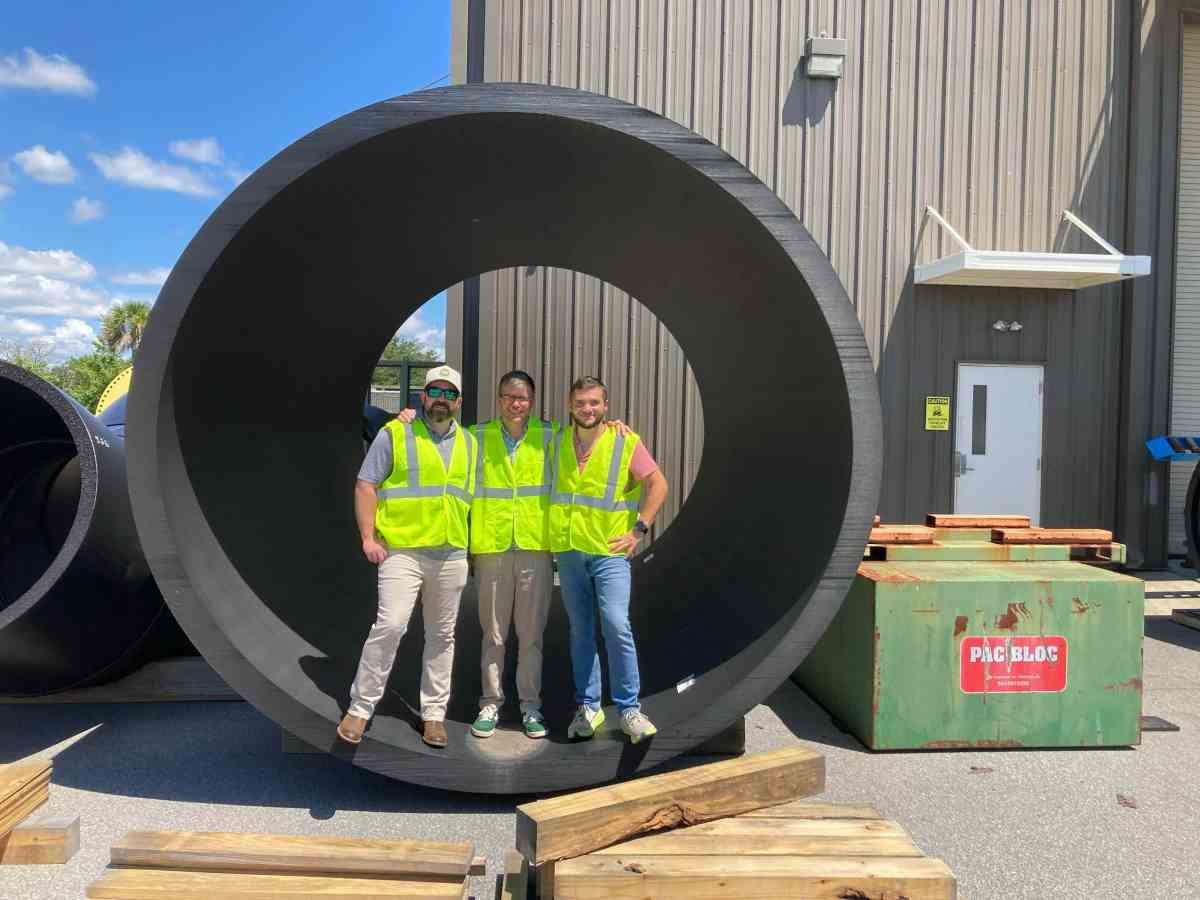
Drogue designed a multi-megawatt prototype that will be installed on a traditional oceangoing ship scheduled to launch in early 2028. Future commercial units will move away from standard ship hulls to adopt floating structures resembling offshore oil platforms. Engineers at the startup's Washington facility are currently using 3D printers and fabrication benches to build out mechanical subassemblies for the inaugural floating deployment.
Sipe conceived the maritime architecture after spending years flying E-2D Hawkeye aircraft off U.S. Navy carriers, observing open ocean energy firsthand.
While conventional developers avoid marine environments because of storm swells, hull corrosion, and biofouling, Sipe viewed offshore waters as an overlooked energy reservoir. He concluded that oceanic energy reserves could easily support heavy computational loads without disrupting maritime ecosystems.
Global warming causes oceans to absorb an additional 5.8 million terawatt-hours of heat energy every year. By comparison, all human civilization consumes roughly 180,000 terawatt-hours annually across industrial, commercial, and residential sectors. Sipe noted that harvesting a fraction of this accumulating thermodynamic heat allows data centers to operate continuously without risking the collapse of local marine temperature differentials.
Advertisement
Tech Pulse Daily
Get tomorrow's pulse first
Join engineers who read Tech Pulse before stand-up. Free, weekday mornings.
03Closed ammonia loops and deep condensers
The startup generates onboard power through ocean thermal energy conversion, a technology originally conceived in the 1950s that operates like a reverse heat pump. Instead of consuming electricity to transfer thermal energy between locations, the system uses natural vertical temperature differentials to generate current. Solar radiation heats surface waters, while deep ocean depths maintain an average water temperature of approximately 39°F, or 4°C.
The operating cycle draws warm surface water to cool onboard data centers before routing that heated discharge to boil liquid ammonia. Ammonia possesses a low boiling point of -28°F, allowing it to rapidly vaporize into pressurized gas under moderate thermal exposure. That pressurized ammonia gas passes directly through an onboard turbine, spinning generators that produce electric power for the servers.
After driving the turbine, the ammonia gas enters a condenser cooled by ocean water pumped from depths of 1,000 meters. The cold deep water flows over the condenser fins to absorb residual heat, converting the ammonia vapor back into liquid form. The warmed cooling water dissipates into the sea, while the sealed ammonia loop continuously recirculates the working fluid back through the cycle.
04Modern pipe manufacturing and capital thresholds
Researchers initially tested ocean thermal energy conversion during the 1980s before abandoning the technology due to material and commercial hurdles. Sipe interviewed veteran engineers from those early trials to determine why previous commercial efforts failed to achieve sustained scale. Those early pioneers confirmed that the thermodynamic cycle operated successfully, but project developers could not raise sufficient capital to achieve the necessary equipment scale.
Significant advancements in pipe manufacturing and heat exchanger production have resolved earlier mechanical bottlenecks that plagued twentieth-century installations. Modern fabrication methods allow Drogue to manufacture durable, large-diameter conduits capable of drawing deep seawater without excessive thermal loss or structural fatigue. These modern materials withstand high water pressure at 1,000 meters while preventing biofouling and seawater corrosion along the condenser loop.
05American Bureau approval and decade deployments
Historical ocean thermal projects struggled to find industrial customers that could consume large amounts of electricity directly at sea. Running long undersea transmission cables back to shore proved commercially unfeasible, while manufacturing physical goods offshore incurred prohibitive transport fees. Data centers provide an ideal customer base because server racks are physically compact relative to power equipment, and shipping computational data wirelessly off vessels is inexpensive.
Drogue secured approval in principle from the American Bureau of Shipping, confirming that its baseline designs satisfy rigorous maritime safety standards. The startup is currently in the process of purchasing its first commercial ship to house the initial multi-megawatt prototype. Sipe stated that each commercial floating platform is engineered to remain deployed at sea for approximately a decade before requiring decommissioning or overhaul.
The startup's operational model mirrors proposals for orbital data centers that seek isolated power sources for compute workloads, without requiring rocket launches. Instead of launching payloads into orbit, Drogue relies on standard maritime hulls and proven seafaring practices that humanity has utilized for centuries. The company plans to validate its technology in less than two years when its first vessel begins crunching bits at sea.
This young startup wants to power floating FAQ
How much funding has Drogue raised and who are the investors?
Drogue raised $20 million from investors including XYZ Venture Capital, Toyota Ventures, Tamarack Global, Dream, FDVC, Garuda Ventures, Flexcap, Boost VC, and Slow Ventures.
How does Drogue generate electricity from the ocean?
The system uses ocean thermal energy conversion by drawing warm surface water to cool servers and boil ammonia into gas at -28°F. That gas spins a turbine generator before deep seawater at 39°F condenses it back into liquid in a closed loop.
When will Drogue launch its first floating data center?
Drogue plans to deploy a multi-megawatt prototype aboard a purchased oceangoing ship in early 2028. Future versions will transition to stationary offshore structures that resemble oil platforms.
Has Drogue received regulatory approval for its maritime data center vessels?
Drogue has secured approval in principle from the American Bureau of Shipping to verify maritime safety standards. The startup is currently in the process of purchasing its first commercial ship for conversion.
Sources

Author
Dillip Chowdary
Writes Tech Bytes coverage of AI, engineering, and the tools that actually ship. Editor of Tech Pulse Daily.
Related on Tech Bytes
Advertisement