Touchscreen OLED MacBook Pro launches this week, here’s how the lineup
Apple will debut its first touchscreen OLED MacBook Pro this week in lighter 14-inch and 16-inch designs priced above existing M5 Pro and M5 Max models.
By Dillip Chowdary • Oct 25, 2026 • Source: 9to5Mac

Apple plans to reverse its decades-long refusal to put touchscreens on Mac laptops by unveiling its first touchscreen MacBook Pro models this week. According to details outlined in 9to5Mac's report, the debut represents the portable lineup's first major design overhaul since 2021. The flagship machines introduce OLED display panels alongside direct finger input, slotting above existing models to create a three-tier professional laptop portfolio. While Apple previously insisted that touch interfaces belonged strictly on iPads rather than notebooks, the new machines arrive alongside a broader silicon and hardware realignment across the Mac family.
This release establishes an ultra-premium tier aimed at power users and creative professionals willing to pay a notable price jump for cutting-edge panel technology, thinner enclosures, and alternate interface options. For software developers, digital artists, and enterprise buyers evaluating hardware upgrades, the announcement realigns the portable Mac catalog into three distinct hardware brackets spanning base M6 configurations to redesigned high-tier flagships. The following breakdown covers the hardware architecture of the new machines, the restructuring of existing configurations, expected pricing across the revised MacBook line, and what to monitor as Apple introduces touch-driven interaction to macOS.
Touchscreen OLED MacBook Pro: the announcement
The arrival of the new laptop ends an era in which Apple kept touch-sensitive displays confined to phones and tablets. The redesigned machines arrive in 14-inch and 16-inch sizes, combining OLED display panels with integrated touch support. According to reporting attributed to Bloomberg's Mark Gurman, these redesigned portables will command a significantly higher price than existing configurations. Rather than replacing the current professional notebooks immediately, Apple is positioning these units as the highest tier in a three-level MacBook Pro structure, keeping current hardware on shelves to cushion the transition.
The updated lineup organizes portable pro systems into base, high-end, and top-tier classifications. The base model features a standard 14-inch enclosure housing an M6 processor paired with lesser thermal capacity. The middle tier retains the currently sold 14-inch and 16-inch models equipped with M5 Pro and M5 Max processors without modifying their industrial design or internal specifications. Positioned above them, the new redesigned machines take the premium spot, offering M5 Pro and M5 Max chip options inside an entirely reworked chassis built around the touch-enabled OLED screens.
What actually changed with Touchscreen OLED MacBook Pro
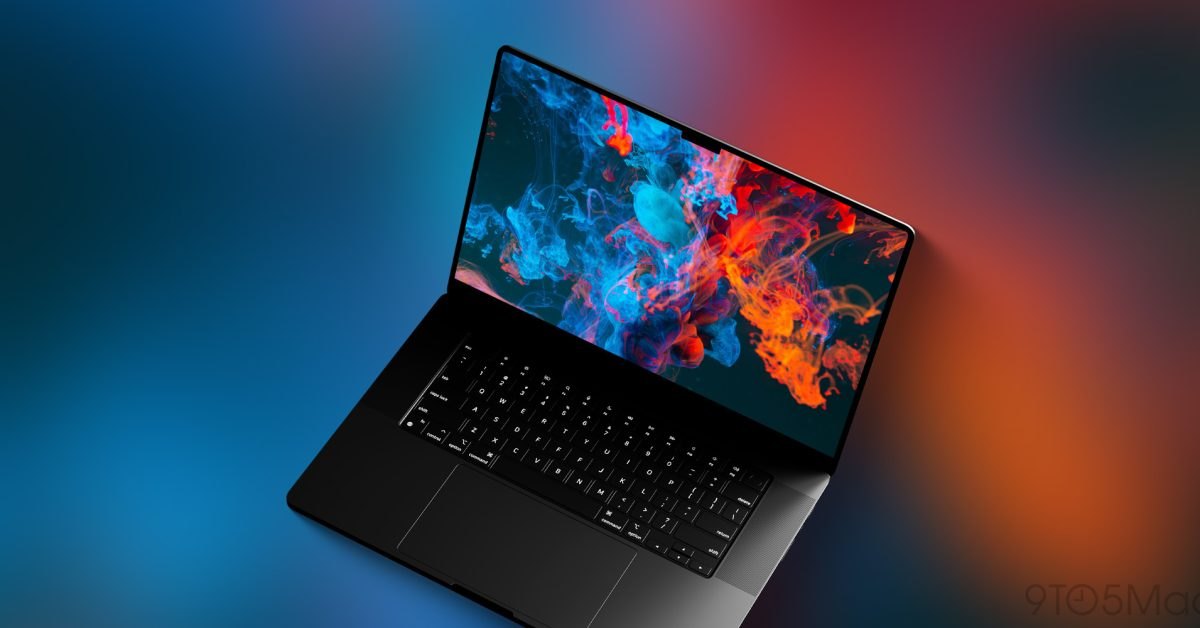
The physical architecture of the flagship MacBook Pro introduces the most substantial hardware alterations the line has seen in five years. The new machines feature significantly lighter enclosures paired with OLED display panels that replace traditional backlights with self-emissive pixels. In addition to direct touch input on the screen glass, the redesign integrates Dynamic Island interface elements at the top of the display and introduces potential hardware support for cellular connectivity, marking another structural departure for Apple's professional notebook catalog.
Beneath the redesigned flagship tier, Apple is rebalancing baseline specifications and display manufacturing commitments across the remaining lineup. Market research from Omdia indicates that Apple will maintain production of its existing miniLED displays for MacBook Pro models through 2028, explaining why the company plans to sell older screen designs concurrently. At the entry level, the upcoming M6 14-inch model is expected to start at $1999 while supplying 16GB of unified memory and 1TB of onboard storage, though recent product history—such as Apple reintroducing a 256GB tier on the Mac mini after previously discontinuing it—leaves open the possibility of a return to 512GB base capacities.
Advertisement
Tech Pulse Daily
Get tomorrow's pulse first
Join engineers who read Tech Pulse before stand-up. Free, weekday mornings.
Who should care about Touchscreen OLED MacBook Pro
Creative professionals, traveling executives, and software developers who depend on visual contrast and flexible input methods will see the most immediate impact from this release. The transition to OLED delivers deeper black levels and higher contrast than existing miniLED panels, benefiting photographers, video colorists, and motion designers who require precise image rendering on location. The addition of direct touch support provides a secondary input channel for scrolling through code, scrubbing production timelines, or marking up interface mockups without requiring an external drawing tablet or peripheral input hardware.
At the same time, the steep premium attached to the redesign means budget-conscious professionals and enterprise fleet managers can look toward the lower tiers without losing raw processing capability. Because the middle tier retains existing 14-inch and 16-inch form factors powered by identical M5 Pro and M5 Max chips, organizations that do not require touch input, Dynamic Island, or lighter physical enclosures can maintain standard hardware deployments. Users who require straightforward performance without interface changes can remain on the proven miniLED platform without paying the price premium demanded by the newly redesigned halo models.
How to try Touchscreen OLED MacBook Pro
Prospective buyers can evaluate the redesigned machines as Apple begins rolling out the hardware this week across its retail stores and online storefront. The broader catalog spans several price tiers, starting at $699 for the entry-level MacBook Neo, moving through the 13-inch and 15-inch MacBook Air at $1299 and $1499, and reaching the base 14-inch M6 MacBook Pro at $1999. In the middle bracket, the existing 14-inch and 16-inch M5 Pro and M5 Max models remain available at their established prices of $2499 and $2999.
For customers aiming specifically for the redesigned OLED touch systems, acquisition requires preparing for higher spending thresholds. Estimates project the redesigned 14-inch M5 Pro and M5 Max models starting around $2999, while the 16-inch counterpart is projected to begin at $3499, with Gurman noting that the final retail figures could start even higher. Hands-on testing will be critical for prospective buyers to verify whether macOS software handles direct touch ergonomics comfortably, to test the lighter weight profile, and to determine whether cellular configurations fit their everyday workflow needs.
What to watch after Touchscreen OLED MacBook Pro
The long-term impact of this release centers on how macOS adapts to touch interaction alongside traditional trackpad and keyboard control. Because Apple designed its desktop operating system around pointer precision, software updates and developer adoptions will dictate how third-party applications handle finger targets, multi-touch gestures, and Dynamic Island integrations. Observers will also track whether Apple adopts touchscreens across consumer portables such as the MacBook Air once manufacturing scale lowers production costs for specialized touch-sensitive OLED assemblies.
Supply chain longevity will also shape Apple's notebook catalog throughout the next two hardware generations. With Omdia confirming that miniLED display manufacturing runs through 2028, Apple possesses the production capacity to keep older display models in circulation for several years to serve price-sensitive enterprise buyers. Observers will monitor whether the base storage on the $1999 entry tier holds at 1TB or retreats to 512GB, matching earlier memory and storage adjustments seen on desktop Macs, and whether cellular data plans materialize as a standard purchase option across Apple's high-end portable configurations.
Developer Action Items
- ☐ Diff the official changelog for Apple / macOS before you bump — APIs, defaults, and removed flags only.
- ☐ Install through the vendor's documented channel in staging; keep a one-command rollback and time-box the canary.
- ☐ Grep your repo for old flag names, lockfile pins, and plugin versions that the notes mark as breaking.
- ☐ Prefer the first patch cut over the day-zero tag unless you have a reason to be on the leading edge.
- ☐ If 9to5Mac did not name a region, plan, or SKU, screenshot the official availability line before you promise it to users.
Touchscreen OLED MacBook Pro FAQ
What display technology does the new flagship MacBook Pro use?
The redesigned flagship MacBook Pro uses an OLED display panel with direct touch support, replacing the miniLED panels used in earlier models.
How much will the redesigned touchscreen MacBook Pro cost?
Projected pricing suggests the redesigned 14-inch model will start around $2999 and the 16-inch model around $3499, though reports indicate retail prices could start even higher.
Which processors power the redesigned touchscreen MacBook Pro models?
The redesigned OLED touchscreen models run on Apple's M5 Pro and M5 Max processors, while the base 14-inch model adopts the standard M6 chip.
Will Apple discontinue the current miniLED MacBook Pro models immediately?
No, existing 14-inch and 16-inch MacBook Pro models with M5 Pro and M5 Max chips will remain in the middle of the lineup, with miniLED production running through 2028.
Sources

Author
Dillip Chowdary
Writes Tech Bytes coverage of AI, engineering, and the tools that actually ship. Editor of Tech Pulse Daily.
Related on Tech Bytes
Advertisement