Transportation secretary blames ‘routine’ equipment upgrade for grounding
A nationwide ground stop canceled over 11,200 flights after an L3Harris fiber upgrade overloaded a Federal Aviation Administration router at a remote facility.
By Dillip Chowdary • Nov 15, 2026 • Source: TechCrunch
A nationwide ground stop halted commercial aviation across the United States after routine maintenance work destabilized Federal Aviation Administration communication systems, according to TechCrunch's report. Transportation Secretary Sean Duffy confirmed that government contractor L3Harris upgraded copper wire to fiber optic cable at a remote facility before hardware failures forced the flight suspension. Federal authorities are investigating whether the incident resulted from installer error by contractor personnel or a defective router.
This technical analysis covers the remote router overload, contractor operations, network stabilization measures, nationwide flight cancellations, and official agency statements regarding automated air traffic tools. Commercial airline passengers, flight operations coordinators, and aviation industry observers can review the verified sequence of technical events that disrupted national airspace.
01Fiber optic transition and router overload
Longtime Federal Aviation Administration contractor L3Harris executed a scheduled hardware upgrade replacing copper wiring with fiber optic cable at a remote facility on Friday. Following the physical cable transition, an associated router overloaded a critical communication system, creating severe transmission instability across air traffic management operations. The resulting failure rapidly interrupted data flow, forcing officials to ground flights nationwide.
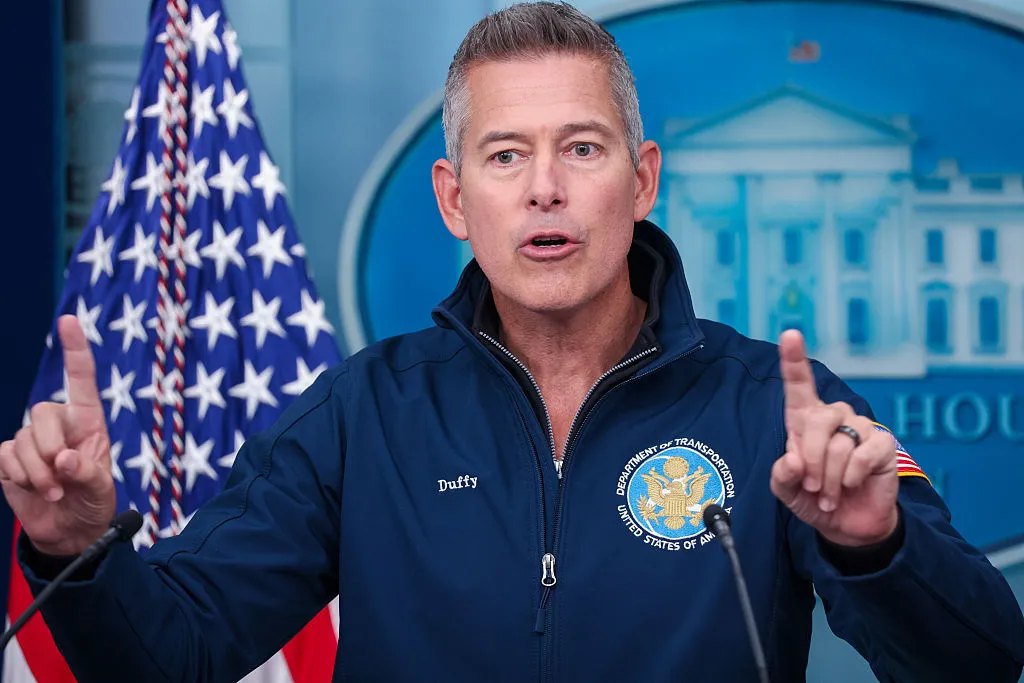
Transportation Secretary Sean Duffy addressed the equipment failure during a Saturday press conference that experienced its own technical difficulties. Duffy stated that investigators are working to determine whether the breakdown stemmed from user or installer error by L3Harris personnel, or whether the contractor deployed a faulty router. Federal teams continue evaluating contractor execution.
Federal leadership emphasized that the project was straightforward maintenance at a remote location rather than a major architectural overhaul. Duffy noted that the routine equipment upgrade unexpectedly crippled core agency communications, prompting a thorough administrative review. Technicians continue assessing why standard physical maintenance triggered widespread disruption.
02Rapid connection floods and CTO mitigation
Federal Aviation Administration acting Chief Technology Officer Rebecca Guy detailed the specific technical signature that disrupted agency communications. Network monitoring teams detected two distinct locations pinging the federal network at an exceptionally high rate, generating roughly one thousand connections every four to five seconds. This connection volume quickly overwhelmed agency infrastructure and caused operational instability.
Technical personnel intervened immediately to stabilize federal operations once engineers pinpointed the origin of the rapid connection floods. Guy confirmed that the agency disabled both pinging locations right away, successfully stabilizing the communication network and initiating an extensive root cause analysis. The targeted action allowed technicians to restore baseline communication capabilities.
The sudden connection surge overwhelmed core routing pathways before technicians severed access to both transmitting endpoints. Federal engineers are currently reviewing hardware telemetry to understand the exact network mechanism that allowed the remote router to flood critical aviation circuits. The ongoing investigation aims to prevent identical transmission loops.
Advertisement
Tech Pulse Daily
Get tomorrow's pulse first
Join engineers who read Tech Pulse before stand-up. Free, weekday mornings.
03Afternoon switchover schedules and federal funding
The decision to conduct physical hardware maintenance at three in the afternoon on a Friday generated immediate public questioning. Industry observers asked why agency contractors scheduled equipment switchovers during active daytime travel rather than conducting the work during late-night maintenance windows. The timing of the switchover amplified operational disruption across busy airport terminals.
Duffy addressed the scheduling questions by distinguishing between central airport hubs and remote facility locations. The transportation secretary explained that while switchovers at major airports occur late at night, routine maintenance at remote installations is regularly performed during daytime hours. Duffy acknowledged that remote work schedules will face administrative reassessment.
Duffy announced that federal officials will reevaluate the scheduling of remote infrastructure upgrades while demanding additional congressional funding. The secretary reiterated across multiple press conferences that Congress must allocate increased capital resources to modernize aging aviation equipment nationwide. Federal officials stressed that aging infrastructure requires sustained financial investment.
04Cirium flight cancellation totals nationwide
The sudden communication blackout created unprecedented disruption across domestic air travel, marking only the third nationwide ground stop of the twenty-first century. Aviation data firm Cirium confirmed that commercial airlines canceled more than 8,200 flights on Friday evening as federal regulators halted departures. The nationwide grounding immediately congested gates and runways across the country.
Flight cancellations and severe travel delays persisted long after technicians stabilized agency networks and lifted the ground stop. Cirium reported that carriers canceled at least another 3,000 flights on Saturday as airlines struggled to reposition aircraft and crews across disrupted airport networks. Operational recoveries were hindered as flight crews exceeded duty limits.
The total volume of canceled departures exceeded 11,200 flights across the two-day disruption, leaving thousands of passengers stranded nationwide. Commercial carriers required extended operational recoveries to restore normal schedules following the isolated equipment failure at the remote FAA site. Ground teams faced substantial passenger backlogs throughout the weekend.
05Air traffic controller tool and contractor scrutiny
The national ground stop occurred just one day after the Federal Aviation Administration announced the rollout of an artificial intelligence tool for air traffic controllers. That automation initiative had already drawn criticism from the air traffic controllers union, which stated it was not consulted during system design. The sequential timing fueled public speculation regarding potential technical overlaps.
Federal Aviation Administration Administrator Bryan Bedford dismissed speculation connecting the flight disruptions to automated software or cyber attacks. Bedford stated that the agency found zero evidence of anything nefarious and zero evidence of anything artificial intelligence-related, confirming an equipment issue with a defective physical component. Technical specialists remain focused on the isolated hardware failure.
Homeland Security Secretary Markwayne Mullin had previously referenced super intelligence when asked if artificial intelligence triggered the incident. Federal aviation officials reiterated that the ground stop was caused entirely by contractor equipment issues during the L3Harris physical maintenance work. Agency leadership confirmed that the investigation remains restricted to physical router components.
Transportation secretary blames ‘routine’ FAQ
What caused the nationwide flight ground stop?
Transportation Secretary Sean Duffy confirmed that routine maintenance upgrading copper wire to fiber optic cable at a remote facility caused an associated router to overload a critical FAA communication system. Investigators are determining whether the issue was contractor installer error by L3Harris or a defective router.
How many flights were canceled during the outage?
Aviation data firm Cirium reported that more than 8,200 flights were canceled on Friday evening, followed by at least 3,000 additional cancellations on Saturday after the ground stop was lifted. This marked only the third nationwide ground stop in the twenty-first century.
How did FAA engineers stabilize the network?
FAA acting Chief Technology Officer Rebecca Guy stated that network monitoring identified two locations pinging the network at a rate of one thousand connections every four to five seconds. Technical teams disabled both locations immediately to stabilize the network while conducting a root cause analysis.
Was the flight disruption linked to artificial intelligence?
FAA Administrator Bryan Bedford stated there was zero evidence of anything nefarious or AI-related, confirming the disruption was strictly an equipment defect. Although the FAA had announced an AI tool for air traffic controllers a day earlier, officials confirmed it was unrelated to the hardware failure.
Sources

Author
Dillip Chowdary
Writes Tech Bytes coverage of AI, engineering, and the tools that actually ship. Editor of Tech Pulse Daily.
Related on Tech Bytes
Advertisement