US loses measles-free status: Pan American Health Organization (2025)
The Pan American Health Organization revoked the Americas' measles-free status after continuous 12-month transmission in Canada drove 12,596 regional cases.
By Dillip Chowdary • Nov 15, 2026 • Source: paho.org
The Pan American Health Organization announced that the Region of the Americas has lost its formal verification as free from endemic measles transmission, according to paho.org's report. The determination follows a regional evaluation showing that sustained viral circulation has persisted in Canada for over twelve months, ending the hemisphere's standing as the first global region to eliminate the disease twice. While all other member nations currently maintain their individual elimination status, the regional verification requires zero sustained domestic chains across all member territories.
This analysis breaks down the commission's epidemiological findings, outbreak vectors, surveillance protocols, and statutory recovery frameworks governing regional re-verification. The report is tailored for health policy analysts, public health practitioners, and clinical researchers monitoring hemispheric disease tracking and immunization benchmarks. It details case metrics across affected nations alongside mandatory laboratory criteria for documenting outbreak containment.
01Regional verification commission and Canadian transmission
The determination came directly from the PAHO Measles, Rubella, and Congenital Rubella Syndrome Elimination Regional Monitoring and Re-Verification Commission. The commission convened in Mexico City from 4 to 7 November 2025 to evaluate comprehensive epidemiological surveillance data across all member states.
Following this technical review, PAHO Director Dr. Jarbas Barbosa endorsed the commission's finding that endemic transmission had officially returned to Canada.
Canadian public health records revealed that active viral transmission has persisted without interruption for at least 12 months. The nationwide chain of transmission originated in October 2024 within the province of New Brunswick and eventually generated more than 5,000 confirmed cases. Although infection curves are currently declining, ongoing transmission remains documented across Alberta, British Columbia, Manitoba, and Saskatchewan.
Dr. Barbosa characterized the verification loss as an urgent setback that remains entirely reversible through coordinated public health measures.
He stated that until measles is eliminated worldwide, the region will continue to face reintroduction risks among under-vaccinated communities. However, he emphasized that sustained political commitment, cross-border cooperation, and aggressive immunization will allow member nations to interrupt transmission again.
02Ten countries and twelve thousand cases
Regional surveillance data documented 12,596 confirmed measles cases across ten countries through 7 November 2025. This caseload represents a dramatic 30-fold increase compared to the total figures recorded throughout 2024. Canada, Mexico, and the United States together accounted for approximately 95 percent of all confirmed infections detected across the Americas.
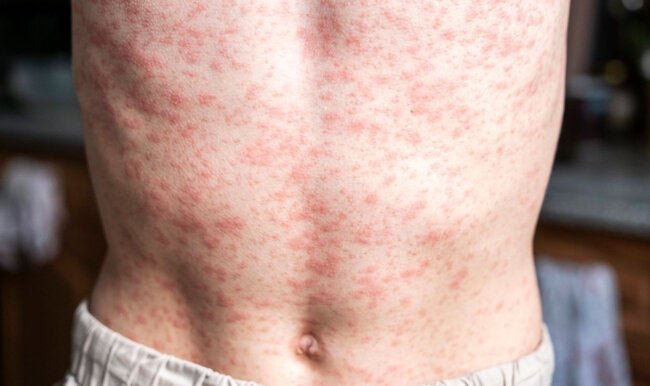
Active viral clusters are currently spreading across Canada, Mexico, the United States, Bolivia, Brazil, Paraguay, and Belize. Public health investigations confirmed that most of these national outbreaks were originally triggered by international imported cases. Transmission has concentrated within under-protected populations, with 89 percent of all recorded infections occurring in individuals who were entirely unvaccinated or had unverified records.
Fatalities have reached 28 confirmed deaths across the hemisphere, with 23 recorded in Mexico, three in the United States, and two in Canada. Epidemiologists identified young children as the most vulnerable cohort during this resurgence. Infants under one year of age registered the highest infection rates, closely followed by children between the ages of one and four.
Advertisement
Tech Pulse Daily
Get tomorrow's pulse first
Join engineers who read Tech Pulse before stand-up. Free, weekday mornings.
03Secondary infection dynamics and historical protection
Measles ranks among the most infectious airborne pathogens known in clinical medicine. A single infected individual can transmit the virus to as many as 18 susceptible contacts in community settings. Beyond acute illness, clinical complications frequently include severe pneumonia, permanent blindness, encephalitis, and fatal respiratory compromise.
These widespread outbreaks disrupt essential community operations while placing severe operational burdens on municipal healthcare infrastructure. Hospital facilities face intense logistical pressure as acute pediatric wards manage complex respiratory complications. Public health personnel must also dedicate extensive laboratory and contact-tracing resources to contain active transmission chains before local community spread widens.
Widespread immunization historically served as the definitive barrier against regional disease transmission. Over the past 25 years, measles vaccination prevented more than six million deaths throughout the Americas, and an estimated 15 million deaths over the last five decades. Maintaining widespread population immunity remains the only proven clinical intervention capable of halting community transmission.
04Sub-target vaccination rates and technical response
Regional immunization levels have dropped significantly below the thresholds required to maintain population-wide herd immunity. In 2024, regional coverage for the second dose of the measles, mumps, and rubella vaccine averaged only 79 percent, trailing the mandatory 95 percent safety target. Furthermore, only 31 percent of regional countries achieved 95 percent coverage for the first dose.
Second-dose coverage proved even more concerning, with only 20 percent of hemispheric nations meeting the 95 percent target in 2024. In response, PAHO deployed technical field specialists to Mexico, Argentina, and Bolivia to assist domestic teams. The organization is also actively tracking heightened outbreak risks across Belize, Brazil, and Paraguay while strengthening localized surveillance infrastructure.
The regional verification commission issued technical guidance directing countries to maintain rapid response activities for every suspected infection. Health authorities must expand and consolidate electronic immunization registries using standardized PAHO guidelines while securing sufficient human and financial resources for laboratory networks. For patients with early rash onset and negative IgM results, clinicians must immediately conduct PCR confirmation tests.
05Action plan criteria and regional recovery
The Americas previously navigated similar public health crises when Venezuela lost elimination status in 2018 and Brazil lost verification in 2019. Through synchronized cross-border vaccination campaigns and tightened disease monitoring, the region successfully interrupted circulating chains and regained its certified status in 2024. Health leadership views this previous recovery as proof that coordinated hemispheric intervention can reverse domestic setbacks.
Regaining regional certification requires strict technical adherence to established international frameworks. A nation that has lost elimination verification must officially demonstrate the complete interruption of endemic transmission for at least 12 consecutive months. This demonstration requires robust, audited epidemiological data covering comprehensive vaccination coverage, laboratory testing, and rapid response timelines for all reported clusters.
Canada is currently implementing an operational action plan structured around the PAHO regional framework to halt domestic viral spread. The strategy prioritizes boosting regional immunization rates, expanding electronic registries, reinforcing sentinel surveillance systems, and deploying rapid containment teams.
Dr. Barbosa stressed that cooperation, solidarity, and science remain stronger than any pathogen when nations coordinate public health interventions.
US loses measles-free status FAQ
Why did the Region of the Americas lose its measles elimination verification?
The region lost its verification because endemic measles transmission was reestablished in Canada, where the virus has circulated continuously for at least 12 months.
How many confirmed measles cases and deaths were recorded across the Americas in 2025?
Surveillance reports documented 12,596 confirmed cases across ten nations by November 2025, alongside 28 deaths including 23 in Mexico, three in the United States, and two in Canada.
What benchmark must be met for a country to regain measles elimination status?
A country must demonstrate the verified interruption of endemic viral transmission for at least 12 consecutive months supported by comprehensive vaccination, laboratory, and surveillance data.
Which age groups face the highest risk during the current outbreaks?
Infants under one year of age are the most affected group, followed closely by young children aged one to four years.
Sources

Author
Dillip Chowdary
Writes Tech Bytes coverage of AI, engineering, and the tools that actually ship. Editor of Tech Pulse Daily.
Related on Tech Bytes
Advertisement