Vulcan rocket fails, destroying 40 Amazon Leo satellites
United Launch Alliance suffered its first failure in 20 years when a Vulcan rocket anomaly destroyed 40 Amazon Leo broadband satellites on flight LV-01.
By Dillip Chowdary • Nov 15, 2026 • Source: The Verge
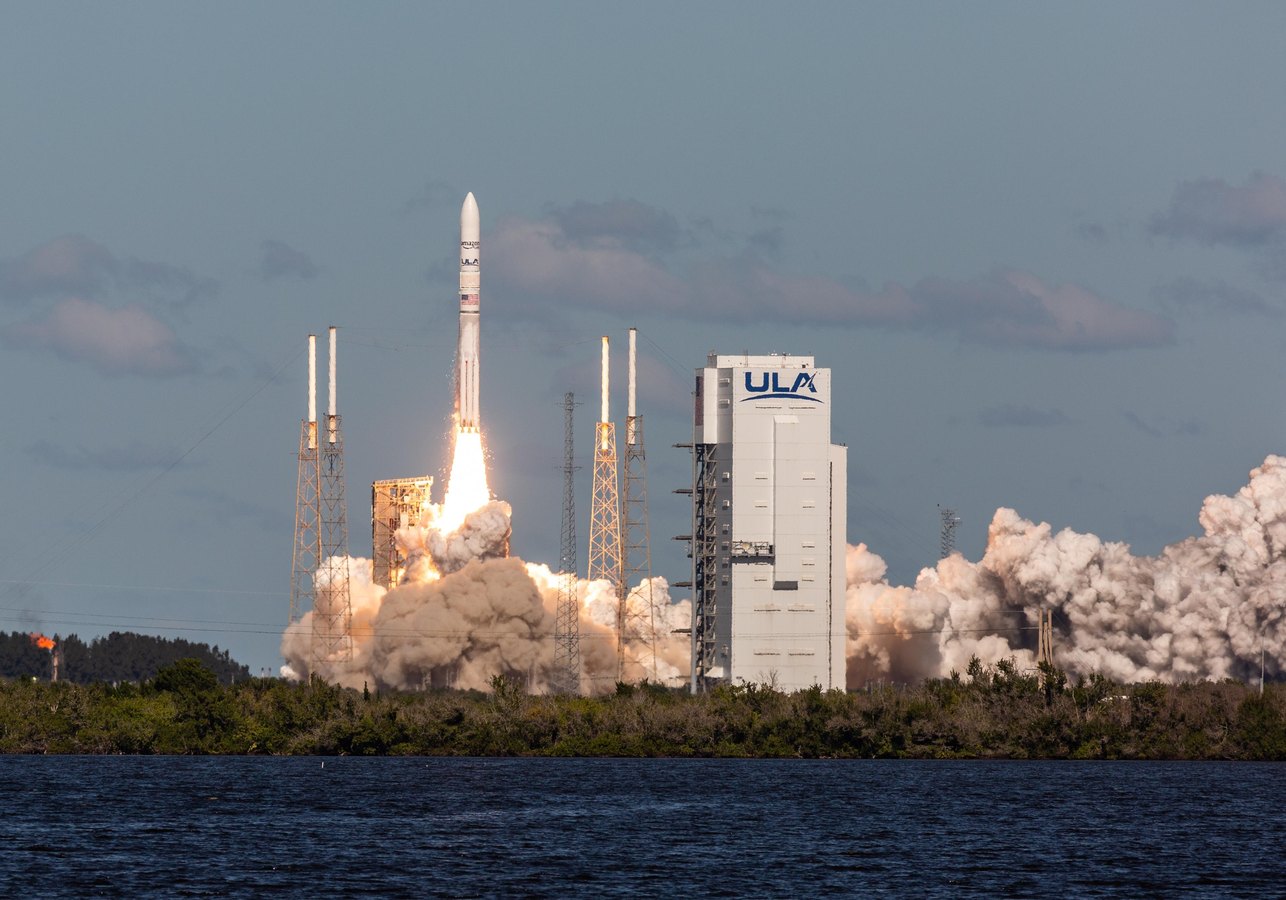
At a glance
- Launch vehicle
- ULA Vulcan rocket
- Mission identifier
- LV-01
- Payload lost
- 40 Amazon Leo broadband satellites
- Launch date
- November 15, 2026
- Launch complex
- Space Launch Complex 41
- Contract total
- 38 purchased flights from ULA
United Launch Alliance suffered an in-flight mission failure on November 15, 2026, when its Vulcan rocket failed to deliver a payload of 40 Amazon Leo broadband satellites to low Earth orbit. As detailed in The Verge's report, the loss represents the first mission failure for the aerospace joint venture across its 20-year history. The mission was intended to begin commercial satellite deployments under Amazon's multi-launch procurement agreement.
This technical dispatch reviews the flight timeline from Space Launch Complex 41, the telemetry anomaly logged during flight, and the contractual relationship between Amazon and United Launch Alliance. The analysis serves satellite network operators, aerospace procurement engineers, and telecommunications analysts tracking low Earth orbit constellation deployments and commercial heavy-lift vehicle reliability. It details verified statements from launch controllers alongside orbital delivery schedules.
01First launch failure in twenty years
United Launch Alliance conducted the liftoff of the Vulcan vehicle on November 15, 2026, carrying 40 Amazon Leo broadband communication satellites. The mission ended in complete loss of the payload before achieving orbit. Aerospace records indicate this incident marks the first operational mission failure in the 20-year history of United Launch Alliance.
The loss occurred during an orbital deployment intended to validate the vehicle configuration for high-rate commercial satellite deployment. Prior to this event, the contractor maintained a pristine orbital success record across its legacy launch operations spanning two decades. The loss of all 40 satellites on board eliminates the entire hardware complement scheduled for orbital placement during the flight.
Launch controllers confirmed that the spacecraft did not reach target orbital parameters after separation sequences failed to execute as planned. Ground tracking stations logged telemetry deviations that prevented the payload from reaching low Earth orbit. The resulting outcome destroyed all 40 satellites intended for Amazon's nascent commercial communications network.
02Ten-minute anomaly during the inaugural mission
The Vulcan booster launched from Space Launch Complex 41 before encountering technical trouble during its ascent phase. Launch controllers tracked normal vehicle operation through initial stages until flight systems registered an unexpected telemetry deviation. United Launch Alliance confirmed that an anomaly occurred exactly 10 minutes into the flight, terminating the delivery profile.
In a formal public statement, United Launch Alliance cited data verified by its Launch Director following the event. The company stated that the Vulcan vehicle suffered an anomaly 10 minutes into the flight and failed to deliver the Amazon mission to orbit. Flight data confirmed the booster could not place the 40 satellites into their intended orbital plane.
Amazon identified the specific flight as the LV-01 mission in its subsequent public disclosure regarding the loss. The retail and cloud company emphasized that inaugural missions carry substantial operational risks during their opening profiles. Flight telemetry gathered during the initial 10 minutes remains the baseline dataset for engineers analyzing the anomaly.
03Amazon broadband constellation and Starlink competition
Advertisement
Tech Pulse Daily
Get tomorrow's pulse first
Join engineers who read Tech Pulse before stand-up. Free, weekday mornings.
The 40 destroyed satellites were designed for Amazon Leo, the company's dedicated constellation engineered to provide low-latency orbital broadband connectivity. Amazon established the Leo project to compete directly with SpaceX's operating Starlink network across global commercial and residential consumer markets. The loss deprives Amazon of essential orbital hardware required to establish commercial coverage.
Amazon has struggled to get its orbital network off the ground so far, according to verified operational deployment tracking. The company has placed only a small portion of the necessary satellites into orbit to challenge SpaceX's established Starlink constellation. The loss of 40 operational spacecraft further delays Amazon's operational deployment timeline.
Competing with Starlink requires sustained launch cadences and rapid orbital deployment of thousands of operational spacecraft. SpaceX currently maintains an active commercial constellation, while Amazon remains in early deployment phases with limited operational hardware in orbit. Replacing the lost 40 Leo spacecraft will require additional manufacturing throughput and launch capacity.
04Thirty-eight contracted flights for Amazon Leo
The failed mission was scheduled as the first of 38 dedicated flights Amazon purchased from United Launch Alliance. Amazon contracted these launches to secure heavy-lift capacity for deploying its planned constellation over multi-year deployment campaigns. The mission was structured to establish the commercial cadence of Vulcan rocket launches dedicated to Amazon.
Amazon responded to the launch loss by affirming continued confidence in United Launch Alliance as an aerospace contractor. Amazon posted a statement on X emphasizing that there is risk with any launch, especially for inaugural missions like LV-01. The company described United Launch Alliance as a trusted partner and noted expectations that the provider will deliver on long-term plans.
The commercial agreement represents one of the largest private launch commitments made for commercial satellite deployment. Future delivery schedules for the remaining 37 purchased flights depend on resolving the flight failure that impacted the LV-01 payload. Amazon indicated it believes the launch provider will incorporate findings from this mission into subsequent vehicle manufacturing and flight preparations.
05Vehicle investigation and future Vulcan launches
United Launch Alliance stated that the precise cause of the 10-minute flight failure remains unclear under initial review. The company initiated an engineering investigation to evaluate telemetry captured prior to the anomaly. Company leadership pledged complete transparency as technical teams examine propulsion, guidance, and stage performance across the flight profile.
Amazon affirmed its expectation that United Launch Alliance will learn critical technical lessons from the failed LV-01 flight profile. Launch partners must verify root causes before clearing the remaining 37 contracted Vulcan vehicles for orbital flight. Technicians at Space Launch Complex 41 will maintain launch infrastructure while engineering reviews proceed.
Investigating teams must evaluate the flight data received by the Launch Director during the inaugural ascent. The joint review will determine necessary vehicle adjustments before Amazon resumes scheduled satellite constellation launches with United Launch Alliance. Further updates will follow as investigators isolate the systems responsible for the anomaly 10 minutes after liftoff.
Frequently asked questions
What caused the ULA Vulcan rocket failure?
United Launch Alliance confirmed that the Vulcan rocket experienced an anomaly 10 minutes after liftoff from Space Launch Complex 41. The exact root cause remains under technical investigation, with ULA pledging transparency as engineering teams evaluate flight data.
How many Amazon Leo satellites were destroyed in the incident?
The launch failure destroyed all 40 Amazon Leo broadband satellites on board the Vulcan vehicle after the rocket failed to deliver the payload to orbit.
How does this mission impact Amazon's satellite deployment agreement with ULA?
The flight was the first of 38 commercial launches Amazon purchased from United Launch Alliance. Amazon reiterated confidence in ULA as a long-term partner following the anomaly on the inaugural LV-01 mission.
Has United Launch Alliance ever suffered a mission failure before?
The November 15, 2026 incident is reportedly the first mission failure experienced by United Launch Alliance in the company's 20-year operational history.
Sources

Author
Dillip Chowdary
Writes Tech Bytes coverage of AI, engineering, and the tools that actually ship. Editor of Tech Pulse Daily.
Related on Tech Bytes
Advertisement