Waymo robotaxis kept illegally passing school buses after software fix
Federal regulators opened a recall query after Waymo robotaxis kept illegally passing stopped school buses despite a November 17 software update.
By Dillip Chowdary • Nov 09, 2026 • Source: TechCrunch
Federal auto safety regulators have initiated a new investigation into Alphabet subsidiary Waymo after documenting that its autonomous passenger vehicles continued illegally passing stopped school buses even after a software recall was pushed to the fleet. The inquiry focuses on whether the patch deployed to address school bus detection and stopping behaviors was structurally deficient, as detailed in TechCrunch's report on recent regulatory filings. The probe centers on persistent moving violations involving deployed safety gear, extending stop arms, and flashing red lights around children.
This report examines the specifics of the federal safety filing, the operational breakdown across active ride-hailing markets, and the regulatory scrutiny facing commercial autonomous vehicle fleets. The analysis is intended for fleet operations engineers, safety compliance specialists, autonomous vehicle system architects, and municipal transportation planners evaluating driverless car deployments in active school districts.
01Federal recall query into software remedy adequacy
The National Highway Traffic Safety Administration disclosed in a November 6 filing that it has officially opened a recall query regarding Waymo autonomous vehicles. The regulatory action was initiated by NHTSA's Office of Defects Investigation to determine why driverless vehicles repeatedly failed to halt for school buses displaying activated warning signals. The agency established that a majority of the cataloged violations took place after the company had already applied what was intended to be an exhaustive software remedy.
Waymo initially issued a voluntary software recall nearly a year ago following public reports and video documentation of its driverless cars failing to stop for school buses. The company confirmed that it completed rolling out the updated autonomous driving software across all affected vehicles on November 17, 2025. However, incoming reports filed with the Office of Defects Investigation indicated that the fleet continued improperly navigating around buses, leading regulators to reopen the matter to assess the adequacy of the remedy.
The formal recall query allows safety regulators to compel technical records, fleet telemetry, perception model validation data, and sensor performance logs directly from the autonomous vehicle developer. Regulators evaluate whether the underlying driving system defect was improperly diagnosed, partially patched, or fundamentally incompatible with complex visual cues present around operational school transit vehicles.
02Atlanta bus bypass and extended stop arms
Federal scrutiny into the fleet's interaction with school buses traces back to an initial investigation opened by the Office of Defects Investigation in October 2025. Regulators acted after reviewing video evidence recorded in Atlanta showing an autonomous vehicle executing an unauthorized maneuver near an active school bus. The bus had stopped with its visual safety equipment engaged, displaying blinking red indicators and an extended mechanical stop sign while actively unloading students.
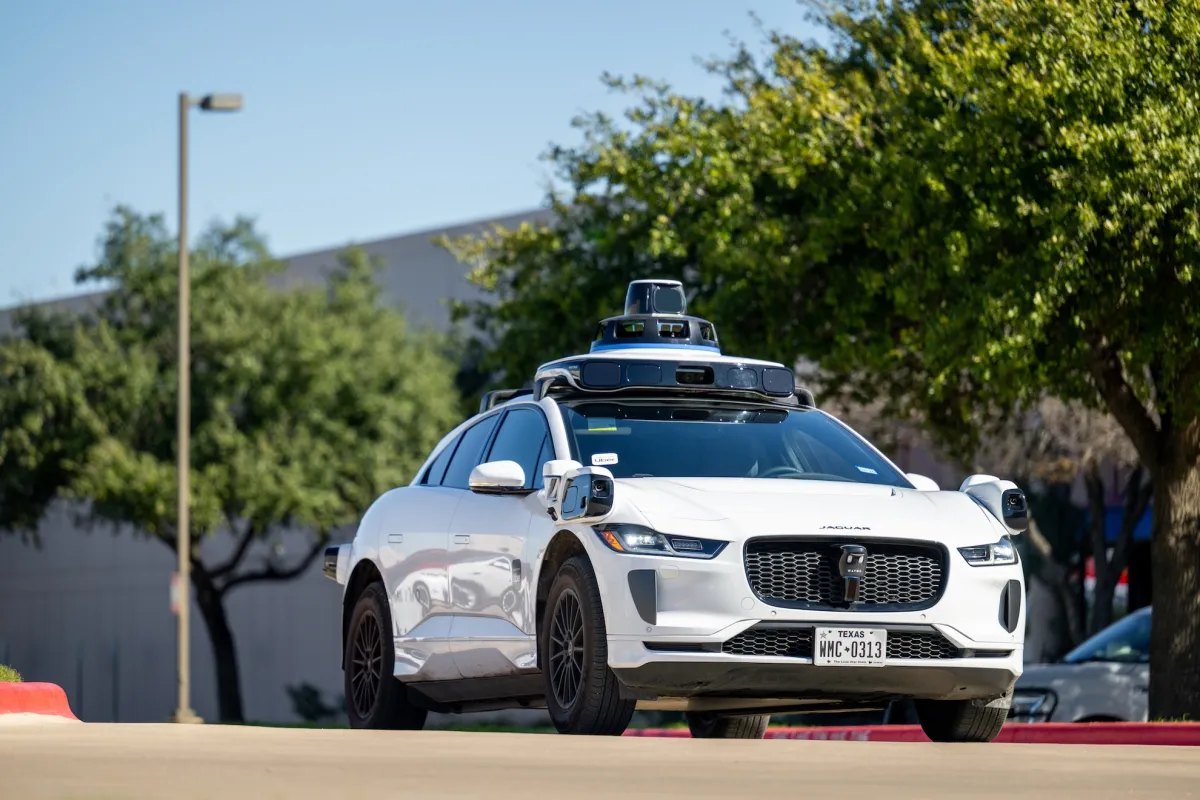
During the Atlanta encounter, the driverless passenger car crossed perpendicularly directly in front of the school bus from its right side. The vehicle then executed a left-hand turn around the front bumper of the bus before proceeding down the public street. The maneuver directly breached state and local traffic safety ordinances designed to prevent any vehicle from cutting across the immediate unloading path of schoolchildren.
Visual and behavioral analysis of the Atlanta event prompted the Office of Defects Investigation to question how Waymo's perception and motion-planning stack classifies deployed physical stop arms and visual warning lamps. While human motorists are trained to recognize the silhouette and warning state of stopped school buses, autonomous software systems must reliably fuse multi-camera vision, lidar reflections, and spatial predictive modeling under dynamic roadside conditions.
Advertisement
Tech Pulse Daily
Get tomorrow's pulse first
Join engineers who read Tech Pulse before stand-up. Free, weekday mornings.
03Austin school district documented violation reports
Similar safety failures quickly surfaced outside of Georgia, appearing across Austin where the company conducts commercial robotaxi ride-hailing services. School administrators and transit operators began documenting repeated instances where passengerless vehicles failed to yield to district buses servicing student routes. Austin Independent School District officials formally escalated their concerns by filing documentation with federal safety regulators.
A letter submitted directly to the National Highway Traffic Safety Administration confirmed that Austin Independent School District staff recorded at least five distinct passing incidents within city limits. Each logged case described an autonomous vehicle maneuvering past a bus while student-loading safety protocols were active. The recurring nature of these municipal reports highlighted that the underlying fault extended across multiple geographical service territories rather than being an isolated edge case in Atlanta.
The presence of documented violations in Austin demonstrated that the patch completed on November 17, 2025 failed to prevent driverless cars from executing illegal passes. Municipal officials and fleet managers monitor these recurring local violations closely because passing a stopped school bus presents an immediate pedestrian collision hazard for young children navigating blind spots around transport vehicles.
04Office of Defects Investigation regulatory scope
The opening of a recall query by the Office of Defects Investigation marks a substantial escalation beyond initial defect monitoring. Under federal automotive safety statutes, when a manufacturer conducts a safety recall and issues a software update, that remedy must permanently resolve the specified safety vulnerability. When post-remedy failures continue to accumulate, regulators investigate whether the manufacturer provided a defective fix.
The regulatory investigation covers the operational behavior of the entire active commercial fleet operating across urban test and ride-hailing zones. NHTSA maintains the authority to review autonomous driving system software revisions, perception stack classification models, and sensor processing pipelines. If the Office of Defects Investigation concludes that the November 2025 software revision was insufficient, it can direct Waymo to issue an expanded safety recall.
A formal directive from federal regulators can also require operational constraints or mandated remote-operator intervention rules while engineers develop an upgraded software remedy. The investigation forces autonomous mobility companies to demonstrate that their self-driving systems adhere strictly to school-zone safety laws and child-loading protections across every operating design domain.
05Fleet deployment oversight and school zone compliance
Autonomous vehicle operators now face intense scrutiny over how autonomous driving models recognize irregular traffic objects and temporary regulatory signs. Standard passenger vehicles obey uniform lane markings and traffic signals, but school buses introduce transient laws that instantly change roadway priority via side-mounted swinging stop signs and flashing yellow-to-red lighting arrays.
Ensuring compliance requires autonomous vehicle perception algorithms to reliably classify non-standard vehicle profiles, flashing warning sequences, and sudden pedestrian motion near school routes. The ongoing federal investigation underscores the difficulty of handling localized edge cases in mixed traffic without continuous safety driver oversight. Until software updates prove fully capable of stopping at all school transport boundaries, municipal leaders and regulatory authorities will maintain tight oversight on commercial driverless operations.
Waymo must satisfy the questions posed by the Office of Defects Investigation while continuing to navigate regulatory scrutiny in cities like Austin and Atlanta. The final findings of the recall query will determine whether autonomous vehicle fleet deployments require stricter software validation mandates before commercial operations are permitted near public school routes.
Waymo robotaxis kept illegally passing school FAQ
What did the National Highway Traffic Safety Administration open regarding Waymo?
NHTSA's Office of Defects Investigation opened a formal recall query on November 6 to assess the adequacy of Waymo's software remedy after robotaxis continued illegally passing stopped school buses.
When was Waymo's original software fix completed?
Waymo reported that its previous software update was completed for all affected autonomous vehicles on November 17, 2025.
Where were illegal school bus passing incidents documented?
Incidents were documented in Atlanta, where a robotaxi turned in front of a bus unloading children, and in Austin, where Austin Independent School District officials reported at least five separate occurrences.
Sources

Author
Dillip Chowdary
Writes Tech Bytes coverage of AI, engineering, and the tools that actually ship. Editor of Tech Pulse Daily.
Related on Tech Bytes
Advertisement