Welcome to Weed Island: How the tiny, self-governing British island
Jersey exported over 9,200 kilograms of medical cannabis in 2025 as Northern Leaf generated £8.4 million from its 100,000-square-foot automated greenhouse.
By Dillip Chowdary • Nov 09, 2026 • Source: Wired

Northern Leaf expanded commercial shipments from its 100,000-square-foot greenhouse in Jersey, exporting £8.4 million ($11.3 million) of medical cannabis flower to the UK and Germany in 2025. As detailed in Wired's report, the British Crown Dependency produced over 9,200 kilograms of medical cannabis exports, with Northern Leaf accounting for 90 percent of the island's total cultivation.
This analysis covers Jersey's conversion of historic tomato greenhouses into pharmaceutical facilities, the operational technologies behind Northern Leaf's yields, the regulatory structure governing exports, and the public health impact on island residents. It is written for healthcare analysts, agricultural operators, and life sciences investors tracking offshore medical cannabis development.
Welcome to Weed Island: what actually changed
Jersey altered its economic strategy by establishing a commercial medical cannabis sector inside legacy agricultural properties across the island. Following the legalization of medicinal cannabis in 2019, Chief Minister Lyndon Farnham promoted policies to develop the self-governing Crown Dependency into an international center of excellence. The initiative repurposed greenhouses previously dedicated to Jersey tomatoes, which had collapsed due to fuel costs and foreign competition. By 2025, territorial cannabis exports exceeded 9,200 kilograms, making the 45-square-mile island an intensive exporter per capita for its population of 100,000.
The commercial sector accelerated after Steven Tan became chief executive officer of Northern Leaf in 2024. The producer had faced financial distress following a failed initial public offering that dropped its valuation to £3.7 million, despite £30 million previously invested in the facility. Tan expanded greenhouse capacity from 25 percent to 75 percent within two years. In 2025, Northern Leaf recorded £8.4 million in exports, generating a quarter of the island's £40 million potato industry on roughly 5 percent of the comparable agricultural land.
Welcome to Weed Island: how it works
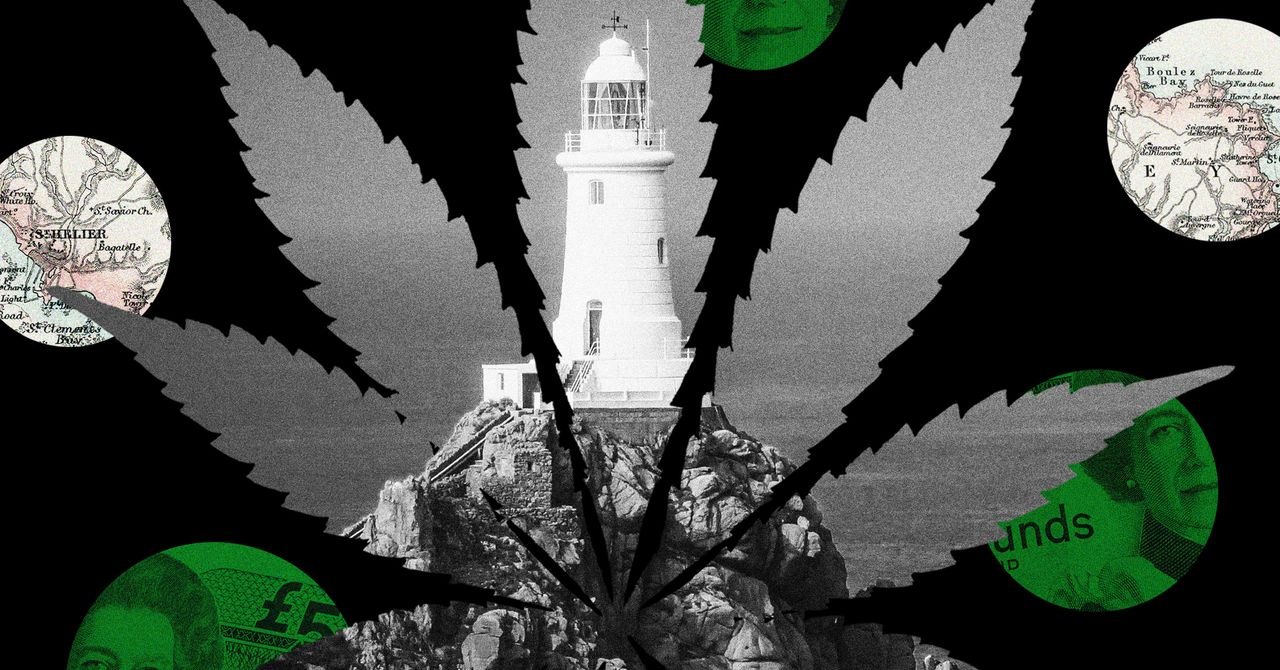
Inside Northern Leaf's 100,000-square-foot greenhouse in St Lawrence, cultivation relies on automated agricultural technology engineered to satisfy strict medical regulations. The retrofitted facility incorporates automated irrigation, environmental monitoring sensors, and industrial air purification to regulate growing conditions. Tan manages distinct medical cannabis strains, including Pink Gasoline, Moon Beam Gelato, Carbon Fibre, and Gorilla Kush, tailoring light and nutrient delivery to individual plant genetics. These closed-loop environmental controls produce consistent floral specimens with sticky buds, satisfying purity benchmarks required by overseas pharmaceutical purchasers before products leave the island.
Production operates under rigorous British oversight coupled with expedited domestic licensing. Facilities are inspected by the United Kingdom Medicines and Healthcare products Regulatory Agency, providing verified assurance of pharmaceutical standards. Sarah Clover, a barrister at Kings Chambers specializing in Jersey cannabis licensing, noted that MHRA inspection certifies production as a recognized gold standard across export destinations. Simultaneously, local officials process paperwork rapidly, allowing operators to submit permit applications on Monday and secure approval by Tuesday. However, Jersey law restricts producers to bulk raw exports, prohibiting local consumer packaging or domestic sales.
Advertisement
Tech Pulse Daily
Get tomorrow's pulse first
Join engineers who read Tech Pulse before stand-up. Free, weekday mornings.
Welcome to Weed Island: why it matters
The emergence of a medical cannabis export industry demonstrates how self-governing territories can build specialized manufacturing sectors alongside legacy financial services. Located 14 miles off the French mainland, Jersey has long attracted high-net-worth capital through zero percent corporate tax and the absence of capital gains levies. Cultivating cannabis on repurposed agricultural land diversifies the island's economic output beyond wealth management. Tan pointed out that while Jersey Royal potatoes generated £40 million in 2025, deploying 20 percent of the island's agricultural land for cannabis could create an industry exceeding total potato revenue.
Jersey's administrative model offers regulatory advantages that larger European economies struggle to match. Sarah Clover observed that uniting strict British MHRA standards with agile local administration creates an operational framework uniquely suited for pharmaceutical trade. Currently, however, statutory limits prevent island operators from processing raw flower into finished consumer packages on site. Evolving local laws to authorize domestic extraction and retail packaging would allow companies like Northern Leaf to retain manufacturing margins, expanding Jersey's profile from an unrefined agricultural exporter into a comprehensive pharmaceutical life sciences hub.
Welcome to Weed Island: who is affected
The island's domestic medical cannabis policies have reshaped local healthcare delivery while raising clinical concerns. Since legalization in 2019, five private clinics have opened in Jersey, prescribing cannabis to roughly 6 percent of the local population. That domestic prescription rate sharply exceeds uptake across larger jurisdictions, where medical cannabis prescriptions reach an estimated 0.4 percent in Germany and 0.1 percent in Britain. Patients reported swift onboarding, securing 30-gram monthly allowances within ten days of medical history reviews. However, Jersey's health minister noted that cannabis is a contributory factor in 22 percent of acute mental health admissions.
Cultivation expansion and wide medical availability have also affected local communities and policing. Residents living near the St Lawrence greenhouse facility have complained about persistent cannabis odors reaching home balconies during operational cycles. Meanwhile, Jersey Police warned that informal resale by patients acting as user-dealers undermines the clinical framework and creates unauthorized supply channels. Nevertheless, official statistics demonstrate a substantial drop in broader illegal narcotics enforcement, with recorded cannabis offenses across Jersey declining from 216 incidents in 2016 to 12 as of July 2026.
Welcome to Weed Island: what to watch
The primary issue shaping Jersey's cannabis industry is whether the States Assembly will amend legislation to permit on-island packaging and consumer product manufacturing. Northern Leaf possesses existing capacity to package finished items, but current statutes restrict shipments to bulk raw flower. Sarah Clover noted the island sits on a policy seesaw determining whether it will remain an upstream raw material producer or expand into pharmaceutical processing. Industry observers are monitoring whether lawmakers update export mandates to unlock value-added processing and support life sciences growth.
Cultivators must also navigate local demographic skepticism and tighter clinical oversight as production grows. Tan continues to address community pushback from an older, culturally conservative island population while managing persistent neighborhood odor concerns. At the same time, healthcare regulators face scrutiny over private clinic prescribing practices following patient reports and high acute psychiatric admission rates. The sector's stability will depend on whether Jersey authorities can address domestic public health concerns and community friction while maintaining the regulatory velocity supporting Northern Leaf's international export trade.
Developer Action Items
- ☐ Map where Welcome Weed Island tiny sits in your stack (SDK, API key, billing, data-processing addendum).
- ☐ Hold the $11.3 million figure to the primary report; do not brief a number that is not on the record.
- ☐ Hold non-urgent migrations until the integration or use-of-proceeds roadmap is public — day-one coverage is not a ship signal.
- ☐ If you are mid-contract or mid-POC, ask the vendor what changes for existing customers this quarter.
- ☐ Write the single decision this forces: stay, dual-source, or exit.
Welcome to Weed Island FAQ
How much medical cannabis did Jersey export in 2025?
Jersey exported over 9,200 kilograms of medical cannabis in 2025. Northern Leaf generated £8.4 million ($11.3 million) of that total, exporting flower to markets including the UK and Germany.
Who regulates medical cannabis production in Jersey?
Growing facilities are inspected by the UK Medicines and Healthcare products Regulatory Agency to certify pharmaceutical standards. Export permits are administered locally by an island team that can process applications within 24 hours.
What proportion of Jersey residents hold medical cannabis prescriptions?
Approximately 6 percent of Jersey's 100,000 residents are prescribed medical cannabis through five private clinics. This rate is significantly higher than the 0.4 percent in Germany and 0.1 percent in the UK.
Can Northern Leaf sell medical cannabis directly to consumers in Jersey?
No, Jersey regulations require Northern Leaf to grow solely for export in bulk. The company is not permitted to sell directly to local patients or package consumer products on the island.
Sources

Author
Dillip Chowdary
Writes Tech Bytes coverage of AI, engineering, and the tools that actually ship. Editor of Tech Pulse Daily.
Related on Tech Bytes
Advertisement