You can now ask Siri AI questions about your health data
Apple released iOS 27.3 beta 2 to developers, restoring Health app queries to Siri AI with inline metric cards, medication logging, and activity ring charts.
By Dillip Chowdary • Nov 17, 2026 • Source: 9to5Mac
At a glance
- Platform
- Apple iOS
- Software build
- iOS 27.3 beta 2
- Release date
- November 16, 2026
- Target audience
- Registered developers
- Public rollout
- Early December 2026
- Platform limit
- iOS enabled, watchOS unconfirmed
Apple released iOS 27.3 beta 2 to registered developers on November 16, 2026, restoring Health app data integration to Siri AI after months of restricted access. According to 9to5Mac's report, the updated build allows iPhone owners to query personal fitness metrics, log daily medications, and review biometrics directly through the generative voice assistant interface.
This analysis details how the underlying large language model parses fitness metrics, renders dedicated visual cards, and bridges legacy voice capabilities with automated multi-step actions. The guide serves mobile developers, Apple ecosystem users, and health tracking enthusiasts evaluating the privacy boundaries and feature parity of Apple's revised artificial intelligence platform.
01Health data access barriers since iOS 27
When Apple launched Siri AI alongside the release of iOS 27.0, the redesigned assistant expanded query support across several native applications while simultaneously removing direct access to health metrics. Strict software guardrails prevented the generative assistant from retrieving stored measurements from the Health application, creating an immediate functional regression for daily health tracking routines.
The restriction marked an unexpected step backward because the older Siri Classic implementation had successfully queried stored health records for several years. Longtime users could routinely retrieve basic biometric statistics through simple voice prompts, whereas early iterations of Siri AI flatly refused to interact with the secure health repository.
Developer feedback following the initial platform rollout emphasized the gap created by separating conversational reasoning from personal health records. Apple maintained those privacy boundaries across early releases until the arrival of the second developer beta of iOS 27.3, which finally reconnects the assistant to the native health database.
02Step count readings and medication logging tools
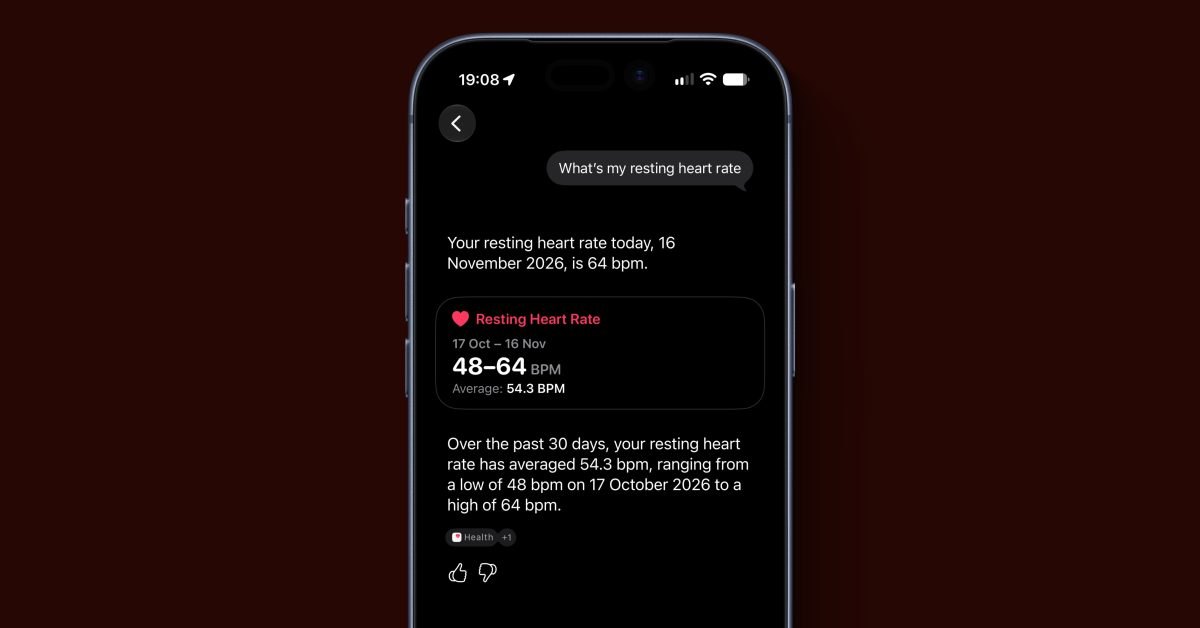
The latest developer beta enables direct inquiries regarding vital physical activity statistics and wellness logging through spoken or typed queries on an iPhone. Users can ask the assistant for their latest heart rate readings, inquire about current step counts, and instantly log scheduled medications without manually navigating individual menus.
The integration pairs core biometric retrieval with interactive health logging routines that update personal databases in real time. Rather than opening separate tracking utilities, users state medication confirmations or request activity progress directly, allowing the voice system to execute updates across connected health records instantly.
| Assistant generation | Health repository access | Natural language reasoning | Multi-action task routing |
|---|---|---|---|
| Siri Classic | Supported direct reads | Unsupported rules engine | Unsupported |
| Siri AI (iOS 27.0) | Blocked by guardrails | Supported generative model | Unsupported for health |
| Siri AI (iOS 27.3 beta 2) | Supported with inline cards | Supported generative model | Supported message actions |
The renewed data pipeline restores functional parity with legacy voice tools while establishing a foundation for advanced conversational interactions. Developers testing the beta can verify how quickly personal health summaries populate when triggered by spontaneous requests across diverse daily activity scenarios.
Advertisement
Tech Pulse Daily
Get tomorrow's pulse first
Join engineers who read Tech Pulse before stand-up. Free, weekday mornings.
03Inline transcript cards and activity ring visualizations
When an iPhone user asks Siri AI for biometric updates, the system generates a natural language spoken response alongside a specialized graphical interface. The assistant renders a compact inline card within the chat transcript, presenting health statistics through visual components borrowed directly from the native Health application.
Requests regarding daily movement goals trigger a graphic representation of the user's activity rings directly inside the active conversation view. Seeing the colored rings fill up in real time provides immediate visual confirmation of physical performance without redirecting the user out of the conversation stream.
These embedded transcript elements combine familiar iconography, consistent color coding, and typography from the mobile operating system into a unified conversational layout. The hybrid design guarantees that quantitative metrics remain distinct and legible alongside conversational text explanations generated by the underlying model.
04Open-ended assistant queries and automated messaging workflows
Beyond returning static numbers, the underlying large language model processes conversational queries that require analytical deduction across historical metrics. Users can ask broad contextual questions such as estimated weekly step trajectories, enabling the system to evaluate accumulated pace rather than simply reciting the current counter value.
The artificial intelligence layer also coordinates multi-step operational tasks that combine health data analysis with native communication services. For example, a user can instruct the assistant to send a message to Chance detailing the current status of their activity rings, completing data extraction and transmission in a single command.
Older voice implementations could never parse multi-intent instructions or chain cross-application tasks together using health information as an input payload. The generative model interprets the underlying intent, formats the requisite metrics into natural prose, and prepares outbound communications without demanding repetitive user confirmations.
05Operating system availability and health interface redesign
Alongside the assistant upgrade, iOS 27.3 introduces a redesigned Health application featuring updated visual interfaces, actionable wellness insights, and restructured fitness suggestions. The overhaul reorganizes aggregated health metrics into distinct views designed to help iPhone owners interpret trends across daily biometric recordings more effectively.
Apple deployed this functionality exclusively within the iOS developer preview, keeping the initial rollout focused on smartphone hardware testing. While developer validation proceeds across mobile handsets, the broader public release of iOS 27.3 remains scheduled for deployment later this year, with general availability expected in early December 2026.
Note: Current Siri AI health query capabilities are active solely within the iOS developer preview build. Integration across connected watchOS devices remains officially unconfirmed, while public release for the finished operating system update is expected in early December 2026.
Frequently asked questions
What health information can Siri AI access in iOS 27.3 beta 2?
Users can query step counts, heart rate readings, and activity rings progress. The assistant also allows users to log medications directly through voice or text prompts.
How does Siri AI present health answers in the chat transcript?
The assistant generates natural language answers accompanied by compact inline cards that use familiar Health app design elements. Inquiries about activity rings render a visual graphic of the rings directly in the transcript.
Can Siri AI perform multi-step actions using personal health data?
Yes, Siri AI can handle complex tasks such as calculating projected weekly step totals or sending messages to contacts regarding activity ring status. These multi-step workflows were not supported by older voice assistant versions.
When will iOS 27.3 be available to the general public?
The software is currently available as a developer beta released on November 16, 2026. A public release is expected later in the year, likely arriving in early December.
Sources

Author
Dillip Chowdary
Writes Tech Bytes coverage of AI, engineering, and the tools that actually ship. Editor of Tech Pulse Daily.
Related on Tech Bytes
Advertisement