After blocking Muse, Amazon now lets users text Alexa to help them shop
Amazon shifted from defending its catalog against external scraping to operating its own first-party conversational shopping channel over text messages.
By Dillip Chowdary • Nov 07, 2026 • Source: TechCrunch

Amazon has launched a direct text messaging capability for its Alexa assistant that enables customers to browse, evaluate, and purchase retail products entirely through SMS conversations. According to TechCrunch's report, the e-commerce company announced on Friday that shoppers can now interact with the Alexa AI agent using regular phone texting to handle their purchasing workflows. The rollout arrives ahead of the holiday shopping period and reflects an industry-wide pivot toward text-based interfaces for consumer agents. By bringing conversational shopping directly into mobile messaging channels, Amazon is providing an alternative to autonomous third-party agents such as Meta's Muse and Instinct.
This analysis breaks down Amazon's text-first Alexa shopping integration, the technical scope of the rollout, and how the underlying service coordinates search, order management, and catalog transactions. It is designed for online shoppers, retail analysts, and platform developers who track conversational commerce and platform platform policies surrounding third-party crawlers. The report details the immediate feature set available to retail buyers, the onboarding pathway for invited accounts, and the competitive shifts shaping proprietary shopping agents across major consumer marketplaces.
After blocking Muse: what actually changed
Amazon shifted from defending its catalog against external scraping to operating its own first-party conversational shopping channel over text messages. In September, the retailer moved to block Meta's Muse agent from querying the Amazon marketplace, preventing the third-party artificial intelligence tool from pulling listing details and pricing data directly. Following that restriction, Amazon initiated its own text-message interface for Alexa, allowing mobile phone users to communicate with the company's proprietary shopping assistant through standard conversational threads rather than relying on external intermediaries or native mobile applications.
The update converts Alexa from a voice-dominated hardware assistant into a ubiquitous SMS shopping assistant that conducts transactions directly inside a customer's message inbox. Rather than navigating product category pages on a browser or speaking aloud to an Echo speaker, users can initiate search requests, place items into a digital cart, and complete orders through natural language text exchanges. The deployment equips Amazon with direct control over the conversational shopping experience, ensuring that catalog interaction and customer purchase histories remain confined within its own transactional infrastructure.
After blocking Muse: how it works
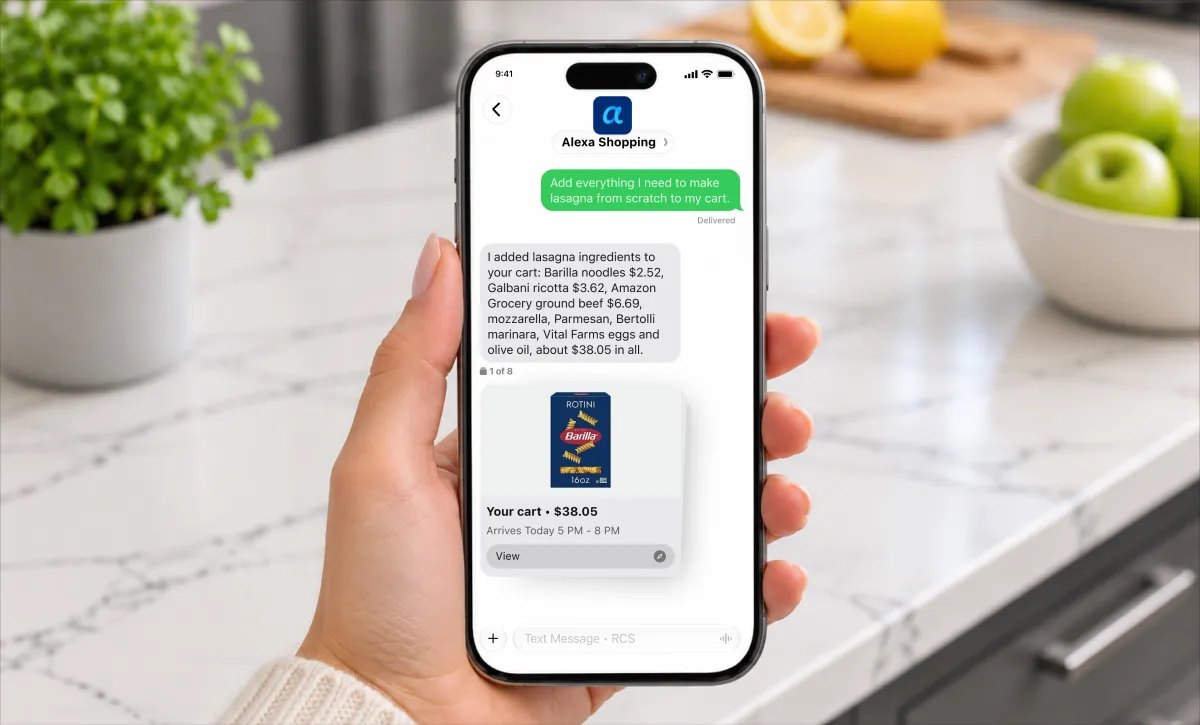
The conversational system relies on natural language processing to interpret shopper requests submitted through standard text messages and translate them into catalog actions. When participating customers text the assistant, Alexa searches Amazon inventory, manages personal shopping lists, tracks price shifts, and checks real-time delivery status for open orders. The interface also accepts image uploads, allowing shoppers to send a photograph of a physical product or a picture of an outfit to initiate visual searches for identical or visually similar listings available across the Amazon marketplace.
Beyond basic item lookups, the text assistant performs web-wide product discovery to compare specifications and prices across different merchandise before finalizing a purchase. Amazon confirmed that the text agent builds on its recent shopping-focused upgrades to Alexa, incorporating ongoing personalization algorithms that study individual user preferences over time. As customers conduct additional transactions and queries through the messaging feed, Alexa logs those historical choices to generate tailored product recommendations and automate cart replenishment within the conversational thread.
Advertisement
Tech Pulse Daily
Get tomorrow's pulse first
Join engineers who read Tech Pulse before stand-up. Free, weekday mornings.
After blocking Muse: why it matters
The rollout represents an effort by major e-commerce platforms to capture consumer demand for text-based artificial intelligence agents while locking out competing third-party bots. Standalone agents like Muse and Instinct have popularized conversational mobile ordering, prompting digital marketplaces to establish proprietary boundaries around inventory data. DoorDash disclosed last month that external third-party agents had placed only hundreds of orders across its delivery catalog in total, leading the company to prioritize developing its own in-house text agent that originally debuted in September.
By launching its own SMS assistant right before the holiday retail rush, Amazon is countering the adoption of third-party shopping aggregators that attempt to intermediate customer transactions. Retaining native control over buyer communication allows Amazon to secure purchase attribution, protect proprietary customer data, and deliver end-to-end shopping journeys without external interference. The strategy confirms that large online marketplaces increasingly view conversational agents as internal platform features rather than open programmatic endpoints accessible to competing technology companies.
After blocking Muse: who is affected
The initial phase of the rollout directly targets select United States customers who receive an introductory text invitation prompting them to activate the conversational service. Customers who receive the outreach message can enable the text assistant immediately and begin issuing shopping instructions, requesting product recommendations, and submitting purchases through their phone's messaging interface. U.S. shoppers who do not receive an invitation during the initial wave cannot access the functionality immediately, though Amazon has established an official waitlist to collect requests from interested shoppers.
The launch also impacts third-party artificial intelligence developers whose external purchasing assistants are systematically excluded from querying Amazon listings. With Meta's Muse blocked from indexing the catalog and Amazon promoting its own integrated texting channel, independent agent builders face technical barriers when attempting to execute automated shopping workflows on the platform. Meanwhile, retail buyers gaining access to the feature experience a streamlined purchasing process that consolidates product search, image matching, comparative research, and package tracking inside a single mobile thread.
After blocking Muse: what to watch
The primary milestone to track in the coming weeks is Amazon's scheduled expansion of the text feature from its pilot cohort to millions of additional shoppers. Observers should monitor how quickly the company clears its U.S. waitlist and whether the messaging agent maintains accurate product matching, price tracking, and order fulfillment during the high-volume holiday peak. Another key indicator will be user retention metrics, specifically whether shoppers adopt text-based ordering for frequent household staples or reserve SMS interactions for infrequent item searches and delivery updates.
The broader competitive response across retail and logistics platforms will also signal whether native messaging agents permanently displace third-party shopping aggregators. With DoorDash concentrating resources on its proprietary text agent and Amazon restricting access to outside crawlers like Muse, competing retail platforms may deploy similar firewalls and first-party SMS assistants. How effectively Alexa adapts to personalized user tastes over extended periods will demonstrate whether text-based commerce delivers durable transaction growth or functions primarily as a seasonal holiday utility.
Developer Action Items
- ☐ Verify the claim on the official Meta / Amazon page (or TechCrunch), not from this recap alone.
- ☐ Name the surface that moved — API, policy, model, hardware, or commercial terms — before you Slack the thread.
- ☐ Assign one owner a day to read the primary material and decide: this-sprint, this-quarter, or noise.
- ☐ Do not change production on day-one coverage. Watch the vendor changelog and one independent write-up first.
After blocking Muse FAQ
How can customers sign up to text Alexa for shopping?
Select U.S. customers receive a text message inviting them to enable the feature, while those without an invitation can join an official waitlist.
What capabilities does the Alexa text shopping agent include?
Shoppers can search inventory, add items to cart, complete purchases, track orders, monitor prices, compare products, and upload photos to find matching listings.
Why did Amazon launch its own text shopping feature now?
Amazon launched the tool ahead of the holiday shopping season after blocking Meta's Muse agent from querying its site in September.
Can the text agent learn customer shopping habits over time?
Amazon stated that Alexa will learn user preferences as customers interact with the service and suggest relevant products accordingly.
Sources

Author
Dillip Chowdary
Writes Tech Bytes coverage of AI, engineering, and the tools that actually ship. Editor of Tech Pulse Daily.
Related on Tech Bytes
Advertisement