AI is the new dating dealbreaker: When Irene moved to San Francisco last
As 26 percent of singles turn to automated tools, ideological divides and $300,000 salaries are turning artificial intelligence into a major dating filter.
By Dillip Chowdary • Nov 07, 2026 • Source: The Verge
Dating platforms and singles in tech hubs face an ideological divide as views on artificial intelligence increasingly dictate romantic compatibility. Following the rise of generative software since OpenAI launched ChatGPT in 2022, tech sentiment has shifted into explicit profile ultimatums, according to The Verge's report on how existential risk, commercial employment, and algorithmic automation govern modern courtship. Platforms are adapting as Hinge provides suggested replies and Bumble develops Bee, its matchmaking assistant.
This report examines how artificial intelligence has become a decisive dating dealbreaker for singles, technical workers, and platform operators. It covers autonomous swiping bots, the relationship strain of existential doom probabilities, the romantic appeal of high engineering salaries, and the ethical implications of confiding in chatbots. Across modern dating pools, technological alignment now carries the weight of political commitments.
AI is the new dating dealbreaker: what actually changed
Values-based filtering on dating apps has expanded beyond conventional politics to include clear declarations regarding software ethics and automation. In San Francisco, singles using Hinge frequently encounter profile prompts rejecting candidates connected to artificial intelligence. Irene, a 25-year-old analyst who moved to the city last year, observed profiles completing prompts with overt hostility toward automated tools or warning against dating anyone using generative software. These statements appear regularly among professionals in the arts, nursing, and graphic design seeking strict personal boundaries against technological disruption.
This sentiment mirrors traditional political stances, appearing alongside partisan affiliations or symbols like the watermelon emoji representing solidarity with Palestinians in Gaza. Rather than remaining an abstract industry debate, personal views on technology now dictate whether daters will interact. Meanwhile, tool adoption has advanced across the broader market. A 2025 study by Match and the Kinsey Institute revealed that 26 percent of singles in the United States use automated tools to enhance dating experiences, demonstrating how algorithmic assistance and ideological resistance have polarized romance.
AI is the new dating dealbreaker: how it works
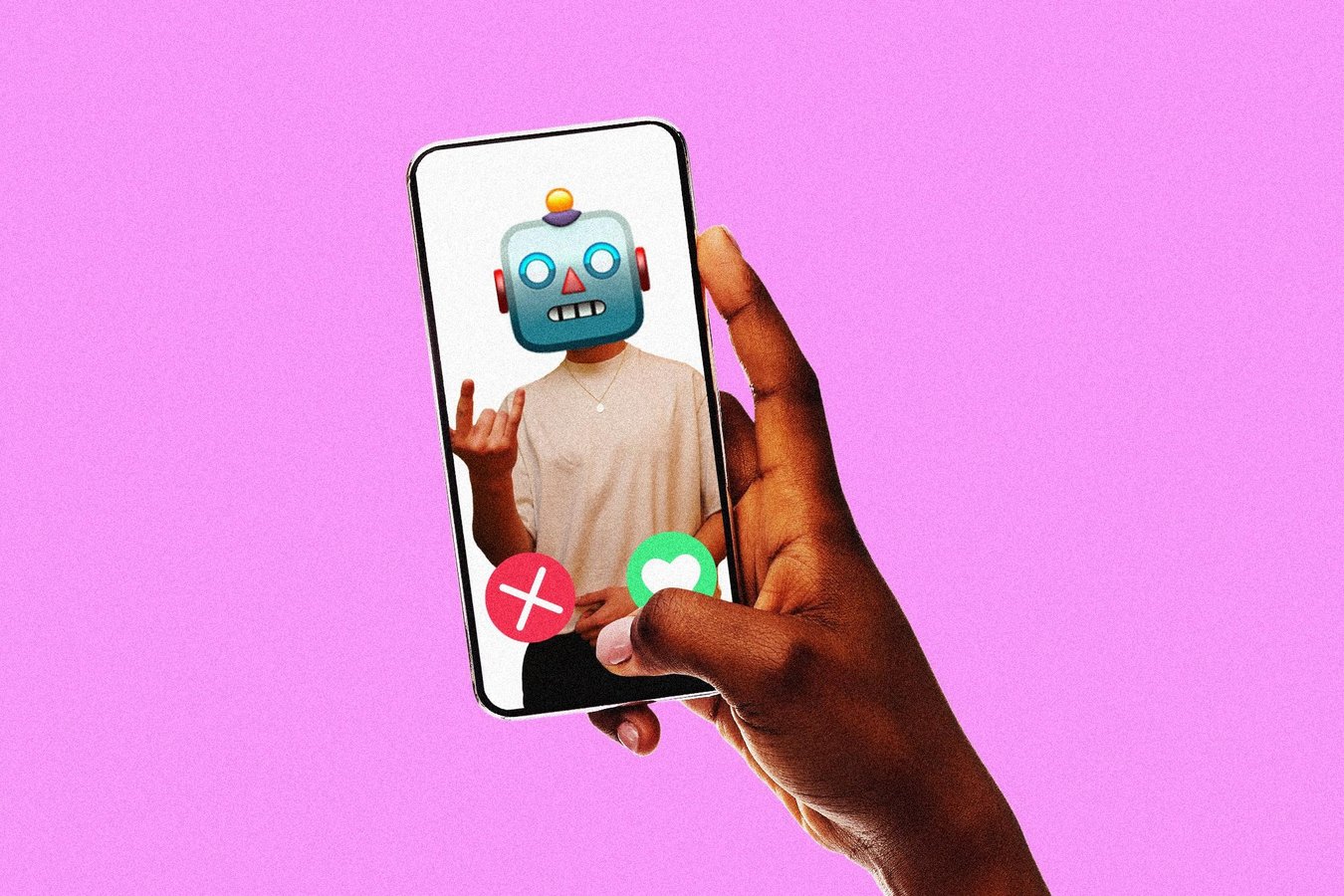
Courtship processes have bifurcated into automated messaging pipelines on one side and strict philosophical screenings on the other. Joseph, a 21-year-old software engineer building a startup while working 14-hour days, automated his Hinge activity through a fine-tuned software agent managed by a virtual assistant in the Philippines. The agent reviews matches, dispatches personalized introductory texts, assesses compatibility, and schedules weekend dates onto his calendar. Joseph reported averaging two dates weekly, treating the workflow as an optimization tactic to eliminate repetitive interactions without alerting dates to the automated setup.
Concurrently, existential evaluations guide romantic decisions for safety specialists. Kyle, a researcher in his early twenties at a Berkeley safety nonprofit initiative, operates under a framework estimating a 10 percent chance that artificial intelligence causes human extinction. Because this hazard disrupts future planning for children or long-term housing over a 15-year horizon, he holds these conversations in person to explain his worldview. Furthermore, emotional habits enter screening criteria: an Elon University study found that 27 percent of Americans use chatbots for emotional queries, while 38 percent share confidences they conceal from romantic partners.
Advertisement
Tech Pulse Daily
Get tomorrow's pulse first
Join engineers who read Tech Pulse before stand-up. Free, weekday mornings.
AI is the new dating dealbreaker: why it matters
Financial divergence across tech creates tangible dating incentives. With expected initial public offerings for Anthropic and OpenAI over the next year, matchmakers note that clients actively specify AI engineers as preferred matches. According to an August report from CBRE, the San Francisco Bay Area added over 20,000 artificial intelligence roles despite regional tech employment contracting 6 percent since 2022. Member of technical staff positions offer average salaries around $300,000, prompting daters to relocate to San Francisco for six months specifically to meet individuals tied to high-value technology companies.
Ethical divisions between industry factions also redefine personal relationship boundaries. Safety researchers view corporate engineering at frontier companies as irresponsible, contending builders ignore societal consequences in pursuit of compensation. Meanwhile, frontier developers like Bryan argue that technical affiliations do not matter compared to fitness, presentation, and conversational flow, though they acknowledge sector wealth remains attractive. Behaviorally, analysts like Andromeda, an emergency medical technician and security analyst, evaluate model treatment as an ethical indicator, suggesting that abusing ChatGPT reveals negative personal traits that will eventually impact relationships with human partners.
AI is the new dating dealbreaker: who is affected
Non-technical workers and creative professionals face direct challenges when dating within tech-centric regions. Individuals employed in arts, design, and healthcare frequently express discomfort with partners contributing to automation that threatens creative labor. Simultaneously, safety researchers experience personal strain when planning for the future. Kyle faces difficulty establishing relationship commitments because his belief in potential existential catastrophe prevents him from envisioning five- or ten-year milestones with dates who do not share his safety concerns, complicating his romantic pursuits despite living in a major metropolitan center.
Dating app users across general demographics are also affected by synthetic interaction without prior notice. Individuals swiping on platforms like Hinge may unknowingly converse with autonomous agents managed by virtual assistants, removing human engagement until in-person meetings occur. Furthermore, romantic partners must navigate the consequences of private chatbot reliance. When partners utilize conversational models for emotional regulation, confiding sensitive details to software instead of sharing them within relationships, human intimacy is altered, creating boundaries between personal emotional processing and shared domestic partnership.
AI is the new dating dealbreaker: what to watch
Platform updates indicate broader automation across relationship services. Bumble launched Bee, an artificial intelligence assistant built for matchmaking, while communications official Natalie Logan confirmed that Bee operates independently of any unannounced swiping modifications. Meanwhile, Hinge maintains automated prompt suggestions to guide conversations. As applications integrate autonomous agents directly into user experiences, matchmaking tools may increasingly screen compatibility before human contact occurs. Observers are monitoring whether dating services will implement verification requirements or transparency disclosures to notify daters when incoming messages originate from synthetic agents.
Market liquidity and shifting conversational norms will determine whether these dynamics spread beyond tech centers. Upcoming initial public offerings for leading artificial intelligence firms will test whether engineering wealth continues skewing matchmaker preferences and housing choices. Concurrently, as conversational chatbots become standard tools for emotional management, daters will need to decide whether offloading emotional expression to algorithms enhances communication or damages genuine intimacy. The evolution of dating profiles over coming years will reveal whether technological dealbreakers remain localized to tech hubs or establish a permanent cultural standard.
Developer Action Items
- ☐ Verify the claim on the official OpenAI / ChatGPT / Framework page (or The Verge), not from this recap alone.
- ☐ Name the surface that moved — API, policy, model, hardware, or commercial terms — before you Slack the thread.
- ☐ Assign one owner a day to read the primary material and decide: this-sprint, this-quarter, or noise.
- ☐ Do not change production on day-one coverage. Watch the vendor changelog and one independent write-up first.
AI is the new dating dealbreaker FAQ
Why are dating app users making artificial intelligence a dealbreaker?
Singles in creative and healthcare fields are rejecting partners who build or use generative tools due to job displacement concerns and moral objections. In tech centers like San Francisco, daters add explicit prompts on Hinge warning that they will not date anyone who works in artificial intelligence or utilizes automated software.
How are singles automating their dating app interactions?
Some daters deploy fine-tuned artificial intelligence agents managed by virtual assistants to swipe, message matches, and schedule calendar dates automatically. A 2025 Match and Kinsey Institute survey found that 26 percent of singles in the United States use automated tools to assist their dating experiences.
How does artificial intelligence employment affect dating preferences?
Impending initial public offerings for OpenAI and Anthropic have made artificial intelligence engineers highly sought after by matchmakers. Despite overall tech talent shrinking 6 percent in the Bay Area since 2022, over 20,000 AI jobs were added, with average researcher salaries reaching $300,000.
How are dating apps integrating artificial intelligence natively?
Hinge offers an automated tool to generate suggested conversation responses, while Bumble launched Bee as an artificial intelligence matchmaking assistant. Bumble communications official Natalie Logan stated that Bee operates independently of any unannounced changes to the platform's traditional swiping mechanism.
Sources

Author
Dillip Chowdary
Writes Tech Bytes coverage of AI, engineering, and the tools that actually ship. Editor of Tech Pulse Daily.
Related on Tech Bytes
Advertisement