Anthropic Ships Claude with Claude: Separating the Brain from the Hands
Anthropic restructured Claude Managed Agents to decouple session harnesses from code sandboxes, reducing startup latency and shielding credentials.
By Dillip Chowdary • Nov 01, 2026 • Source: latent.space
Anthropic has detailed the operational and systems architecture behind its Claude Opus 5.5 model and Claude Managed Agents runtime, outlining how the lab uses its own platform to build, evaluate, and ship software. According to latent.space's report, the engineering details follow financial disclosures from Anthropic's initial public offering filing, which showed a turnaround from a negative 126 percent net loss to a 19 percent GAAP profit over the past year. Trailing twelve-month revenue per employee expanded nearly fivefold during that span, rising from $1.4 million to $6.6 million. The organization operates under paired improvement and investment cycles designed to balance rapid enterprise adoption against the infrastructure and access safeguards demanded by more powerful autonomous models.
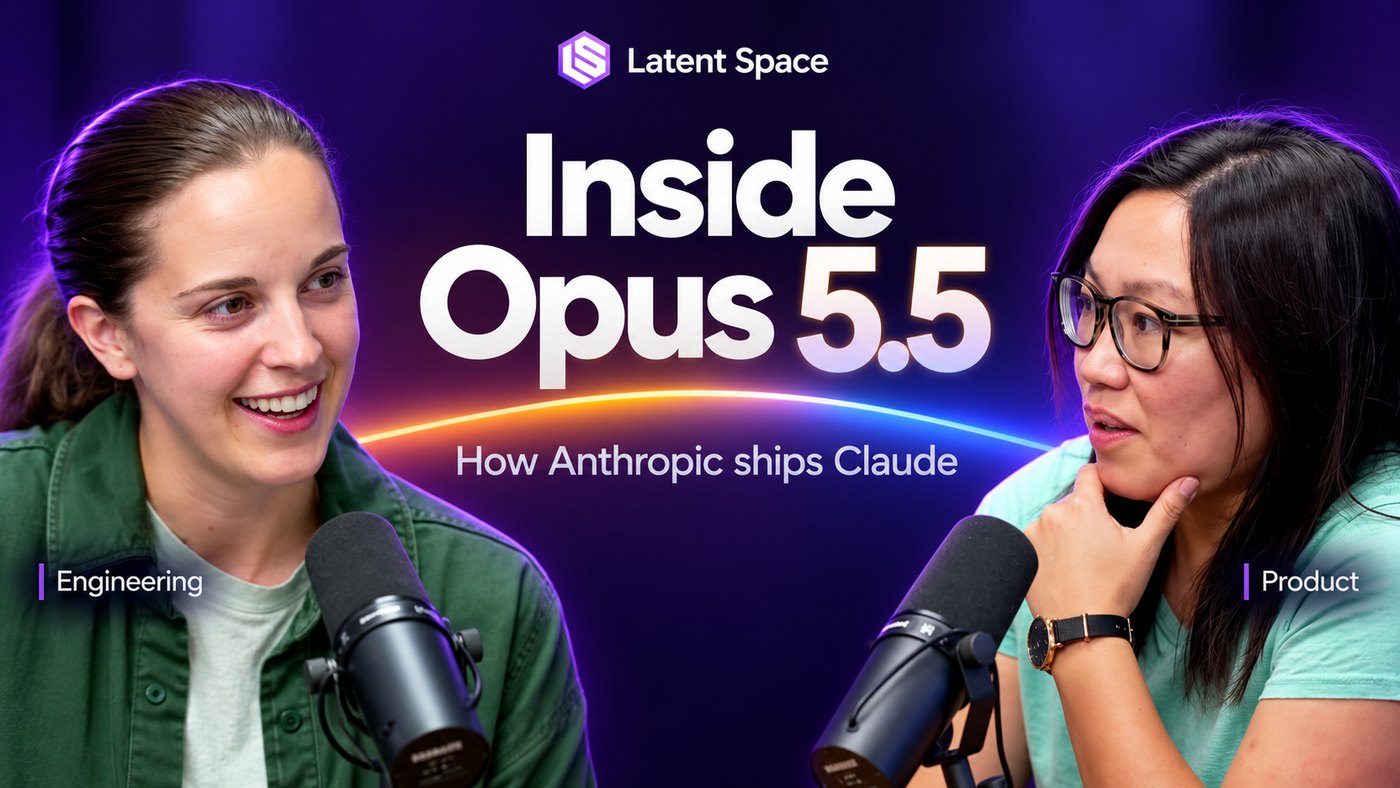
This analysis details how Anthropic decouples execution environments from orchestration harnesses, secures developer credentials against untrusted model outputs, and structures multi-agent memory subsystems. It is written for software architects, systems engineers, and technical platform leads who are deploying long-running coding agents or redesigning API integrations around model reasoning tokens. By examining the infrastructure lessons shared by Anthropic engineering head Katelyn Lesse and product head Angela Jiang, technical teams can understand how production agent platforms manage latency, protect reasoning traces against distillation harvesting, and evaluate autonomous workflows across third-party environments.
Anthropic Claude with Claude: what actually changed
Engineering leadership at Anthropic restructured the foundation of Claude Managed Agents by separating the session harness from the executing sandbox, an architectural pattern they describe as separating the brain from the hands. In earlier agent deployments, the entire coding agent and its execution harness resided inside an isolated virtual machine behind an API interface. That design forced every new task to shoulder cold-start initialization latency before generating a token, and any transient runtime crash inside the execution environment destroyed the entire conversational session and working context. Under the updated Managed Agents runtime, the orchestration harness maintains persistent context and session logs independently, while isolated sandboxes are provisioned on demand strictly to run concrete terminal commands and code executions.
The change also altered how the Claude Messages API communicates with client applications, culminating in a systems-level rewrite of the API layer in Rust to manage CPU scaling bottlenecks. Anthropic also altered how the model exposes its internal chain of thought by preserving thinking blocks across conversational turns. The adjustment prevents third parties from stripping model reasoning traces to distill smaller rival networks, but it also alters API payload structures and requires developers to update custom test harnesses. Model evaluation protocols moved away from relying solely on standard public benchmarks, shifting toward private early-access testing where enterprise partners deploy candidate checkpoints inside idiosyncratic production environments that internal testing suites cannot replicate.
Anthropic Claude with Claude: how it works
The separation of brain and hands enforces an architectural isolation boundary that prevents untrusted code execution from accessing sensitive operational secrets. When an autonomous agent decides to execute a build script, edit a repository, or run unit tests, the persistent harness requests an ephemeral sandbox. Generated shell commands and source modifications execute in an environment stripped of persistent service tokens and private API keys. Network containment filters restrict sandbox egress to prevent unauthorized external data exfiltration. If a task requires access to protected internal services or remote APIs, those credentials remain stored on the platform side and are attached through a mediating proxy that checks destination permissions before forwarding traffic.
Multi-agent coordination in Managed Agents builds on these same primitive isolation structures to achieve persistent memory through an asynchronous background process called dreaming. Rather than burdening the primary agent context with bloated conversation logs, a secondary background agent inspects completed work sessions, synthesizes critical milestones, and writes durable summaries back into long-term memory stores. Harness developers can keep the baseline orchestration loop lightweight and predictable, layering specialized verifiers and parallel worker agents on top of the shared session without destabilizing the core agent runtime. When a sandbox encounters an out-of-memory error or fatal system signal, the harness captures the failure trace, discards the damaged environment, and instantiates a clean container without severing the user session.
Advertisement
Tech Pulse Daily
Get tomorrow's pulse first
Join engineers who read Tech Pulse before stand-up. Free, weekday mornings.
Anthropic Claude with Claude: why it matters now
These architectural shifts arrive as frontier model capabilities create unprecedented systems pressure on enterprise deployment infrastructure. Claude Opus 5.5 has held the position of the consensus top-performing large language model for a month following its launch, driving massive enterprise traffic surges that turn standard compute costs into strategic balance-sheet factors. As model context windows expand and agents undertake multi-step autonomous tasks, ordinary overheads such as CPU utilization across API gateways and the cost of repeated un-cached context tokens compound rapidly. Anthropic structured the Opus 5.5 release around reducing operational costs relative to earlier Opus versions, emphasizing prompt caching optimizations to lower per-token pricing for long context workflows.
At the same time, the line between software engineering and scientific research has blurred across production teams. Improving an agent harness now requires continuous empirical experimentation, where developers formulate a behavioral hypothesis, measure execution traces against rigorous task evaluations, and systematically patch harness regressions. Because more capable models introduce elevated deployment risks, Anthropic has diverted significant product and engineering resources toward runtime containment, model routing classifiers, and strict safety guardrails. Providing developers with hardened sandboxes and proxy-mediated credential access allows organizations to deploy autonomous coding tools without exposing internal production credentials to prompt injection attacks or rogue model commands.
Anthropic Claude with Claude: who is affected
Software engineers integrating Claude models into existing IDEs, code generation pipelines, and command-line interfaces face immediate technical updates. Applications consuming the Claude Messages API must account for preserved thinking blocks across multi-turn interactions, ensuring their parsing layers do not drop reasoning metadata or fail schema validation. Teams with legacy agent architectures that encapsulate both orchestration logic and runtime execution in monolithic containers must evaluate migrating toward decoupled runtimes. Doing so eliminates startup latency spikes, reduces infrastructure waste from crashed tasks, and prevents unhandled container termination from wiping user chat sessions.
Security officers and enterprise platform architects gain a vetted blueprint for deploying autonomous tools across sensitive corporate codebases. By adopting a proxy-based credential broker that keeps API tokens outside developer sandboxes, security teams can permit broad code-execution capabilities without granting unchecked network lateral movement. For partner enterprises participating in early access evaluations, the feedback mechanism has transformed from submitting benchmark scores to instrumenting telemetry that catches unexpected edge cases in private codebases. These early evaluators help identify subtle harness bugs, token consumption surges, and model behavioral anomalies before new model weights deploy to general availability.
Anthropic Claude with Claude: what to watch
The immediate engineering horizon centers on how Anthropic scales its Managed Agents primitives to support broader multi-agent ecosystems and parallel verification patterns. The team has stated that immediate platform priorities remain focused on runtime safety, containment safeguards, and model routing rather than prematurely loading the baseline harness with speculative convenience features. Technical leads should monitor whether Anthropic formalizes its dreaming memory mechanisms into standard API endpoints, which would allow developers to run background summarization agents over long-term project repositories without designing custom state-tracking databases.
Performance benchmarks on the Rust-based Messages API and further infrastructure updates will determine how efficiently the platform accommodates long-horizon reasoning tasks. Observers should also track how customer evaluation suites evolve as enterprises move from running synthetic tests to deploying automated verifiers that judge agent-generated diffs. As Anthropic approaches its anticipated public listing following its S-1 disclosures, the lab's ability to maintain high revenue efficiency while providing developers with lower-cost Opus 5.5 inference and secure execution primitives will define whether decoupled agent architectures become the standard runtime model across the industry.
Developer Action Items
- ☐ Diff the official changelog for Anthropic / Claude / Opus 5.5 before you bump — APIs, defaults, and removed flags only.
- ☐ Install through the vendor's documented channel in staging; keep a one-command rollback and time-box the canary.
- ☐ Grep your repo for old flag names, lockfile pins, and plugin versions that the notes mark as breaking.
- ☐ Prefer the first patch cut over the day-zero tag unless you have a reason to be on the leading edge.
- ☐ If HN Claude/Codex/Fable did not name a region, plan, or SKU, screenshot the official availability line before you promise it to users.
Anthropic Claude with Claude FAQ
What does separating the brain from the hands mean in Anthropic Managed Agents?
It is an architecture that keeps the agent session log and orchestration harness persistent while executing untrusted code in separate, on-demand sandboxes. This prevents sandbox crashes from killing the agent session and ensures code execution environments never store direct service credentials.
How does Anthropic protect model reasoning traces from distillation?
Anthropic preserves thinking blocks across multi-turn API requests, maintaining the model's intermediate chain of thought while preventing external developers from stripping reasoning outputs to train smaller competing models.
How is memory implemented in Claude Managed Agents through dreaming?
Dreaming is implemented as a multi-agent workflow where a secondary agent inspects the prior work and session logs of the primary agent, extracts key takeaways, and writes structured memories back into long-term storage.
Why did Anthropic rewrite its Messages API layer in Rust?
The company rebuilt the Messages API in Rust to overcome strategic CPU consumption limits and scaling bottlenecks caused by surging multi-turn agent workloads across its developer platform.
Sources

Author
Dillip Chowdary
Writes Tech Bytes coverage of AI, engineering, and the tools that actually ship. Editor of Tech Pulse Daily.
Related on Tech Bytes
Advertisement