Apple CEO says the company doesn’t ‘want to ship AI for AI’s sake’
Apple CEO John Ternus defended the company's AI position, stating Apple will leverage AI without shipping features for AI's sake after its summer Siri launch.
By Dillip Chowdary • Nov 01, 2026 • Source: TechCrunch
Apple chief executive officer John Ternus defended the company's artificial intelligence strategy and market position following sustained criticism over delayed software features. Speaking in an interview with Wired's Steven Levy and detailed in TechCrunch's report, Ternus pushed back against claims that Apple lags behind rivals. Apple delayed releasing a more powerful version of Siri before finally launching the upgraded assistant this summer.
This report examines Apple's product engineering standards and platform architecture under its new chief executive for developers, product designers, and technology analysts monitoring consumer platforms. As competitors prioritize rapid model releases and autonomous agent experiments, Apple is drawing clear boundaries between standard operating system functions and machine learning integrations, clarifying how Apple will deploy intelligence features without upending its application catalog or abandoning human craftsmanship.
Apple CEO: what actually changed
The formal transition in corporate leadership and the delivery of delayed software updates mark the key developments at Apple. John Ternus officially assumed the chief executive officer position at the beginning of September 2026 after serving as a longtime company executive. Over the past couple years, technology analysts frequently categorized Apple as lagging in artificial intelligence, citing repeated postponements of a more powerful version of the Siri assistant. Apple addressed that backlog by launching the upgraded Siri this summer, resolving prolonged speculation surrounding its voice platform.
During the interview with Steven Levy, Ternus directly addressed ongoing external skepticism regarding Apple's overall deployment pace. While acknowledging that everyone in the technology sector has an opinion regarding software roadmaps, Ternus insisted that he genuinely likes where Apple is currently situated. Rather than conceding ground to competitors who rushed experimental tools into production, Ternus presented the summer launch of the upgraded Siri assistant and Apple's current technical foundation as an intentional, disciplined position structured around sustained user satisfaction rather than speculative public demonstrations.
Apple CEO: how it works
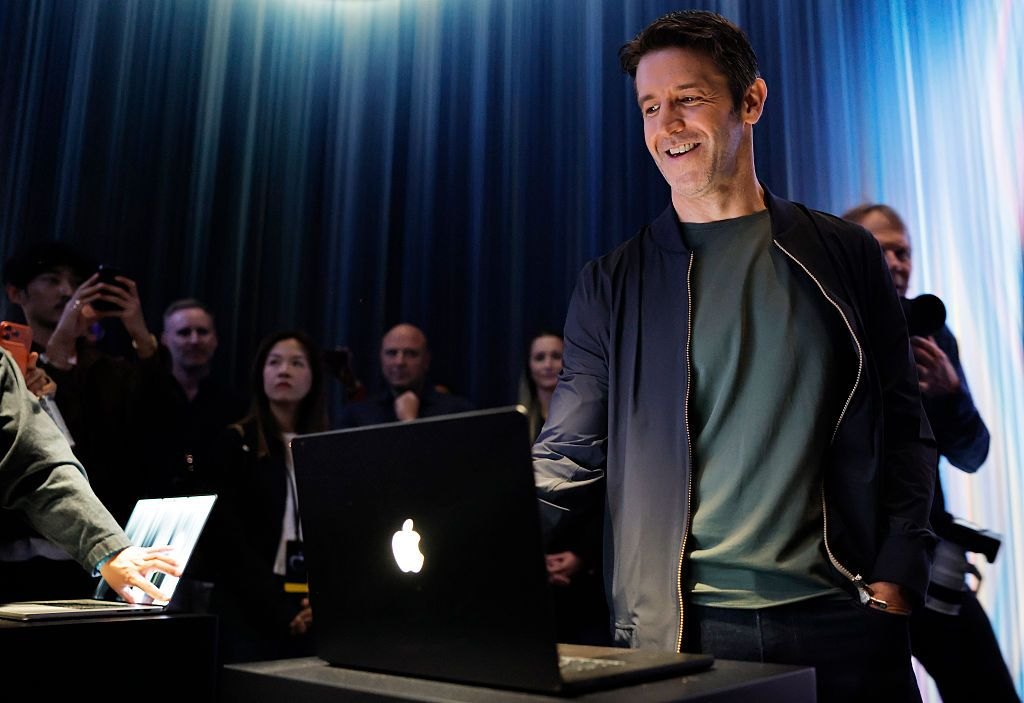
Apple's practical implementation strategy focuses on leveraging machine intelligence across upcoming consumer devices without treating algorithmic processing as an isolated novelty. Ternus confirmed that Apple is absolutely going to leverage artificial intelligence throughout its forthcoming releases, but established a firm operational boundary against shipping artificial intelligence simply for the sake of shipping it. Under this approach, successful implementation occurs when everyday users do not have to think about whether a completed task was executed by machine learning systems or through traditional software programming techniques.
The primary benchmark for evaluating any new feature at Apple remains user satisfaction and interface reliability rather than computational complexity. Ternus stressed that the fundamental question guiding engineering teams is whether they built something customers truly love in their daily routines. By prioritizing intuitive results over algorithmic branding, Apple integrates machine learning capabilities invisibly beneath native interfaces. This design methodology ensures that automated functions enhance standard application workflows without requiring consumers to manage experimental interface paradigms, review probabilistic outputs, or learn specialized command syntax during routine device usage.
Advertisement
Tech Pulse Daily
Get tomorrow's pulse first
Join engineers who read Tech Pulse before stand-up. Free, weekday mornings.
Apple CEO: why it matters now
The executive clarification carries notable significance as the technology sector actively debates whether autonomous software agents will soon displace traditional applications entirely. During the discussion, Steven Levy questioned Ternus specifically on whether artificial intelligence agents might alter Apple's software ecosystem so dramatically that conventional mobile applications become unnecessary. Such a transition would represent an existential disruption for platform operators that rely on native application distribution, direct developer monetization, and curated software storefronts across modern consumer computing devices and mobile operating systems.
Ternus directly rejected the idea that autonomous agents should make mobile applications obsolete, offering a clear defense of human involvement in software creation. While acknowledging that autonomous systems managing digital interactions could theoretically make life easy, Ternus argued that the creation of products remains a deeply human and personal thing that Apple and its developers love doing. This response affirms Apple's dedication to preserving structured application ecosystems against speculative industry predictions that favor fully automated, agent-mediated computational environments over intentional software design.
Apple CEO: who is affected
Software developers building for Apple platforms represent the primary group affected by the company's commitment to application-based architecture. For independent software vendors and engineering teams concerned that platform operators might introduce centralized artificial intelligence agents that bypass third-party software, Ternus's statements provide critical operational assurance. Developers can continue investing in native mobile applications without immediate concern that Apple will deprecate application storefronts, suppress user interfaces, or route user intent away from dedicated software experiences into autonomous system-level automation loops that diminish developer reach.
Consumer hardware owners who depend on Apple devices are also directly impacted by the company's deliberate software deployment cadence. Following the summer launch of the upgraded Siri assistant, customers can expect future artificial intelligence features to arrive as refined, system-level enhancements rather than unstable beta experiments. Users benefit from software capabilities designed to operate quietly within familiar operating system paradigms, avoiding erratic behaviors and frequent navigational redesigns that often accompany rushed artificial intelligence releases across the broader consumer technology market.
Apple CEO: what to watch
Technology analysts and enterprise platform managers must watch how Apple translates this measured product philosophy into upcoming hardware release cycles. The central element to monitor is whether Apple maintains its strict commitment to invisible, utility-driven software features or whether competitive market pressures eventually force the company to spotlight explicit algorithmic branding during future product announcements. Observers will track whether future updates build upon the foundation established by the summer launch of the upgraded Siri assistant and introduce practical workflow enhancements for users.
The technology sector must also observe developer platform metrics and user retention to evaluate whether Apple's rejection of agent-centric application obsolescence holds up against competing ecosystem experiments. As alternative platforms explore autonomous agent interfaces, Apple's defense of human craftsmanship and structured applications will be tested directly against evolving consumer expectations. Monitoring whether users remain satisfied with subtle, integrated software enhancements will determine whether Apple's philosophy of avoiding artificial intelligence for its own sake successfully protects its long-term market standing across the global technology industry.
Developer Action Items
- ☐ Verify the claim on the official Apple page (or TechCrunch), not from this recap alone.
- ☐ Name the surface that moved — API, policy, model, hardware, or commercial terms — before you Slack the thread.
- ☐ Assign one owner a day to read the primary material and decide: this-sprint, this-quarter, or noise.
- ☐ Do not change production on day-one coverage. Watch the vendor changelog and one independent write-up first.
Apple CEO FAQ
Who is the current CEO of Apple?
John Ternus officially became the CEO of Apple at the beginning of September 2026 after serving as a longtime executive at the company.
What did John Ternus say about shipping artificial intelligence features?
Ternus stated that Apple is absolutely going to leverage AI in new products, but stressed that the company does not want to ship AI for AI's sake. He emphasized that the goal is building features people love where users do not have to think about whether AI or traditional software made it happen.
When did Apple release its upgraded version of Siri?
Apple launched the more powerful version of Siri in the summer of 2026 after previously delaying the release.
Does Apple believe AI agents will replace mobile apps?
Ternus pushed back on the idea of agents eliminating apps, stating that while agents could theoretically make life easy, creating products remains a deeply human and personal endeavor that Apple loves to do.
Sources

Author
Dillip Chowdary
Writes Tech Bytes coverage of AI, engineering, and the tools that actually ship. Editor of Tech Pulse Daily.
Related on Tech Bytes
Advertisement